

In 42 years at Daniels, Cindi Fukami has always tied her lessons to teamwork, humanity—and baseball
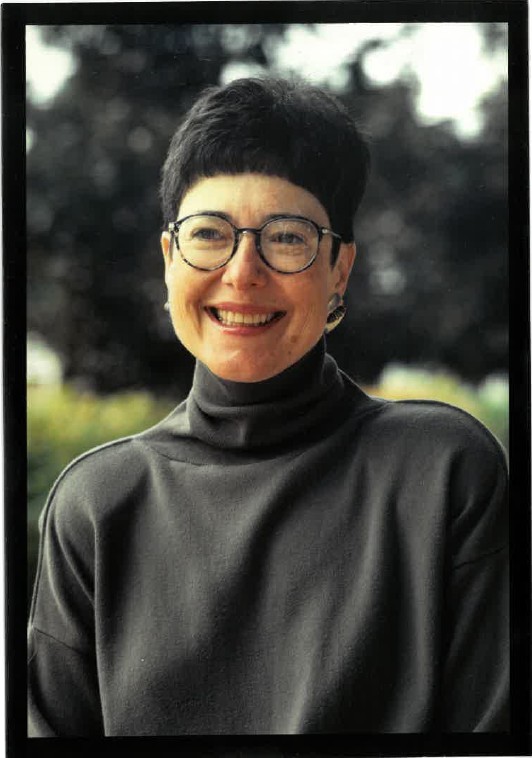 The Los Angeles Dodgers have Shohei Ohtani—a rare breed of superstar who can pitch a 100-mile-per-hour fastball, blast a 500-foot home run and steal bases with ease.
The Daniels College of Business has Cindi Fukami, a management professor who is an MVP-caliber utility player in her own right.
For 42 years, Fukami has done it all: researching, teaching, chairing the management department, designing curriculum, leading classes around the world, teaching students to sail.
This spring, she is taking her curtain call on a hall of fame career—an apt description because, with Fukami, it always comes back to baseball.
“I think it’s such a great game. And when it’s played beautifully, it’s fabulous,” said Fukami, a lifelong devotee of the Chicago Cubs. “What’s great about sports is it has all the same things as business, but you can read about it in great detail every day.
“Things about motivation, things about teamwork, things about leadership.”
All are concepts Fukami knows inside and out. Yes, she studied them extensively to earn an MA and PhD in organizational behavior, but they are also qualities she first learned from her father, who ran a picture frame factory in Chicago’s inner city.
“It was the kind of place where people didn’t expect to be treated like a human being, but my dad did,” Fukami said. “So I learned from watching him. He said, ‘What you get from your workers reflects how you treat them.’”
It was one of the earliest scenes in what Fukami calls her own “little private soap opera”—her way of referring to the lessons she has learned through observation, whether as a teenaged saleswoman in the Sears men’s suit department or a researcher at the University of Illinois. It’s the experience that informed the words she wrote on her PhD application, explaining her interest in the program.
“I said something then that I would still say today, which is, ‘I don’t understand why we can’t treat people better than we do,’” Fukami remembered. “It seems obvious to me that when people feel they are well-treated—if they feel they’re part of an effort, if they feel they’re respected—they will give you everything they have and more.. That’s kind of been my tag line ever since. I really believe in treating people well and leading by example.”
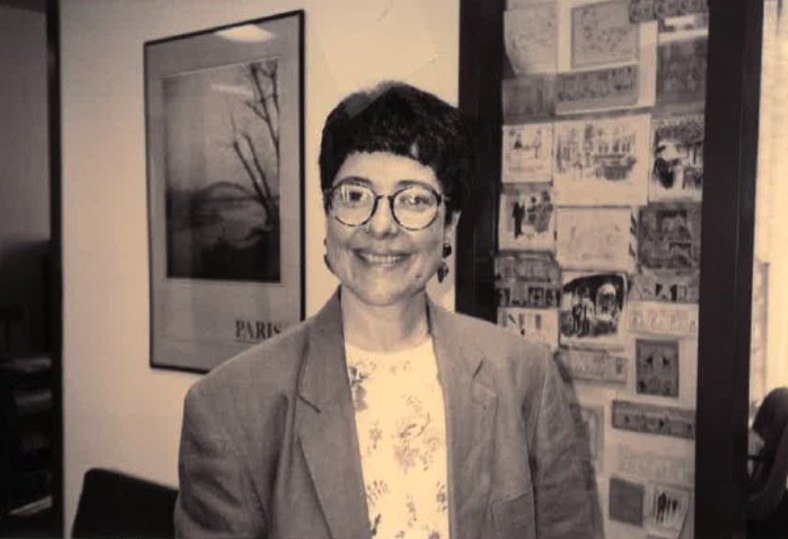 ‘Great teaching is great learning’
Fukami hadn’t been to the Mile High City before taking a job at DU in 1982. She was, however, well aware of its allure, thanks to John Denver’s music and the University’s reputation as a place where faculty instruction and scholarship were equally valued.
To this point in her career, Fukami had been led to believe that faculty could either take a safer, more respected research route, or they could travel a trail toward teaching.
But, “if you look long enough and hard enough, there is a third road at schools that support a balanced approach,” Fukami said last year, when she was honored as DU’s University Lecturer, a distinction no business faculty had previously achieved. “Here [at DU], we call it ‘the balanced teacher-scholar model.’ I started walking down that path and discovered the career I hoped I would have.”
In her University Lecture, Fukami outlined DU’s teacher-scholar model.
It wasn’t exactly clear-cut when Fukami arrived. The University was in dire financial straits. Chancellor Dan Ritchie’s institution-saving term had not yet begun. Fukami was just an untenured assistant professor “with a lot of ideas.”
Quickly, she learned to express those thoughts, prodded by her similarly idealistic senior colleagues. She admired their unofficial “Blue Sky Committee,” and began taking a hard look at the way things were done and took on the heavy lift of making change.
The results were transformative. Fukami and her colleagues developed a new “integrated” MBA program centered on ethics and career-readiness, supported by a team-teaching model. Faculty wrote syllabi together, taught together, graded papers together.
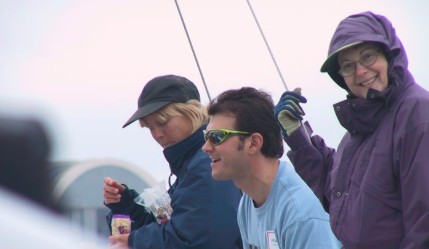
In all, Fukami says she led more than 50 sailing trips for the Executive MBA program.
“It led to this most amazing period of time where we were all learning from each other,” Fukami said. “The secret of great teaching is that it also is great learning. We all learn from each other.”
Fukami and her fellow faculty came to call these spaces “sandboxes,” places to play with new ideas—many of which are still standing as pillars of what Daniels offers its students. Hands-on retreats to The Nature Place grew out of this environment, as did the Executive MBA’s infamous Sailing Challenge (which Fukami has led approximately 50 times).
“Her vision for learning has always been experiential, integrated and profoundly human,” said Naomi Boyd, dean of the Daniels College of Business. “She has shown us that real education doesn’t just prepare students for the world as it is—but for the world as it could be. And that’s what Cindi has done—she’s made Daniels, and DU, more forward-thinking, more student-centered and more impactful.”
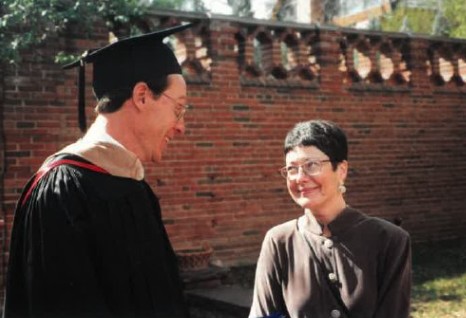 It’s all about the team
Fukami gives a lot of the credit to the team-teaching model, still in use in many of today’s EMBA classes.
“You can do so much more together than you can do by yourself,” Fukami said. “That was a lesson we taught to our students, but we weren’t following it ourselves.
“If there’s one thing that’s a thread through my teaching, it’s ‘practice what you preach.’”
If there’s another thread, of course, it’s America’s pastime.
Fukami’s outlook is inextricable from the sport she would watch after school with her mom, who tuned in on a portable TV as she ironed.
And though she grew up cheering on Chicago Cubs greats like Ernie Banks and Ron Santo, Fukami has always fashioned herself as a player a little less in the limelight.
“Usually the people who are utility players are not well thought of,” she said. “You don’t get to keep your ego when you do that. I will do whatever it takes. I don’t think there’s anything I ever thought was beneath me.”
That attitude certainly didn’t go unnoticed, as proven by the tribute delivered at a retirement party she shared with fellow management professor Doug Allen.
“They are [both] colleagues who are always focused on some greater good than their own personal achievement,” said Dennis Whitmer, a longtime management professor. “They have given all of this to the College with that greater vision in mind.”
In the end, Fukami said, it’s always been about the team. She’s happy to be retiring, but knows that she will miss the academic camaraderie, the spirited—albeit laborious—discussions about curriculum, and the altruistic desire to make the world a better place.
As she makes her exit from the teaching arena, she thinks, naturally, of legendary Yankee Joe DiMaggio.
“He retired at the top of his game and nobody could understand why,” Fukami said. “I think it’s good to go when people are still thinking you’re capable of what you’re doing.
“I gave it everything I had. I was not more important than this place. This place was more important than me.”