Where Business Meet the Slopes
Race and Case brings grad students to Colorado for strategy, skiing and real-world business problem-solving


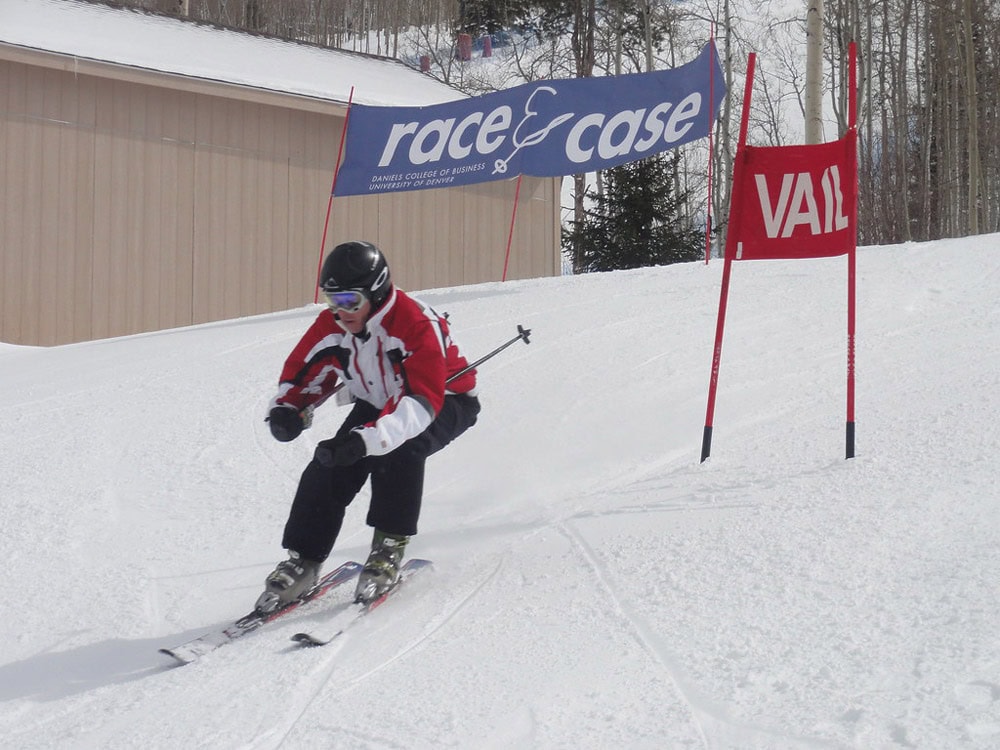
Quick out of the gates. Eyes focused directly on the challenges ahead. A nimble posture, ready to read and react. And a strong finish, putting an exclamation point on your performance.
That’s what it takes to bring home the title on the ski course at Race and Case, one of the signature events at the Daniels College of Business. But it also describes the skills necessary to succeed on stage presenting your business case.
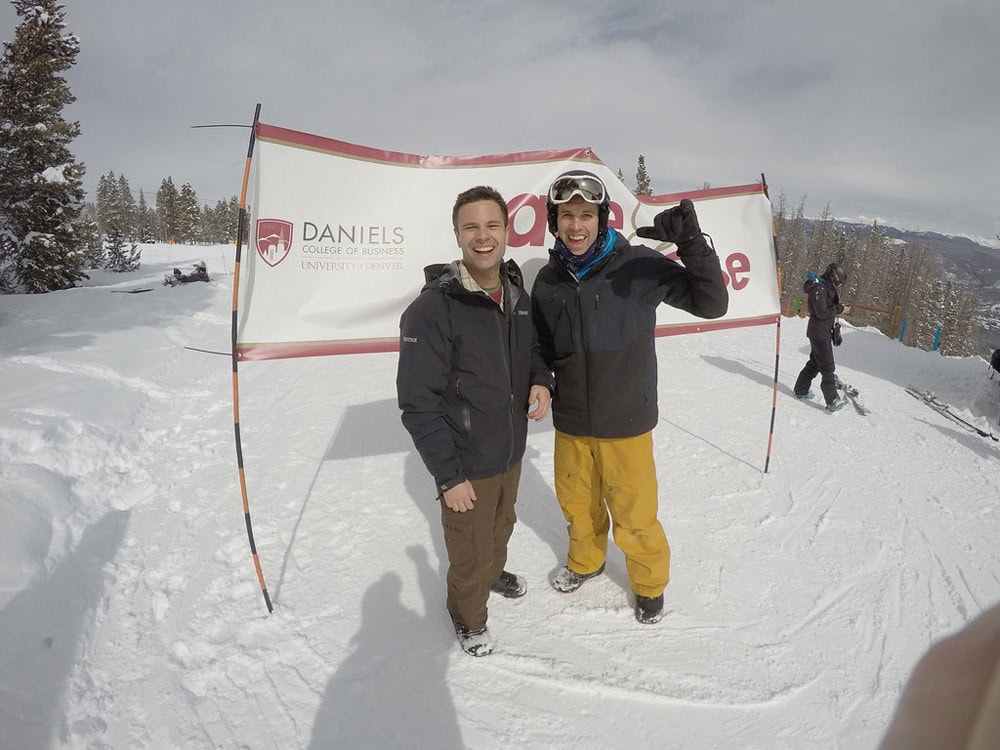
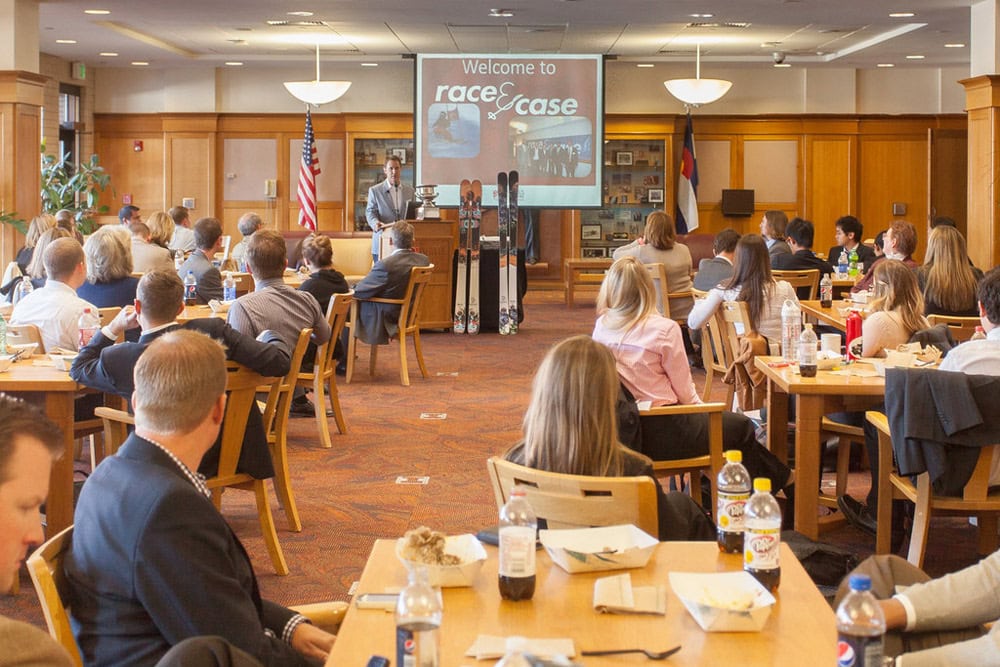
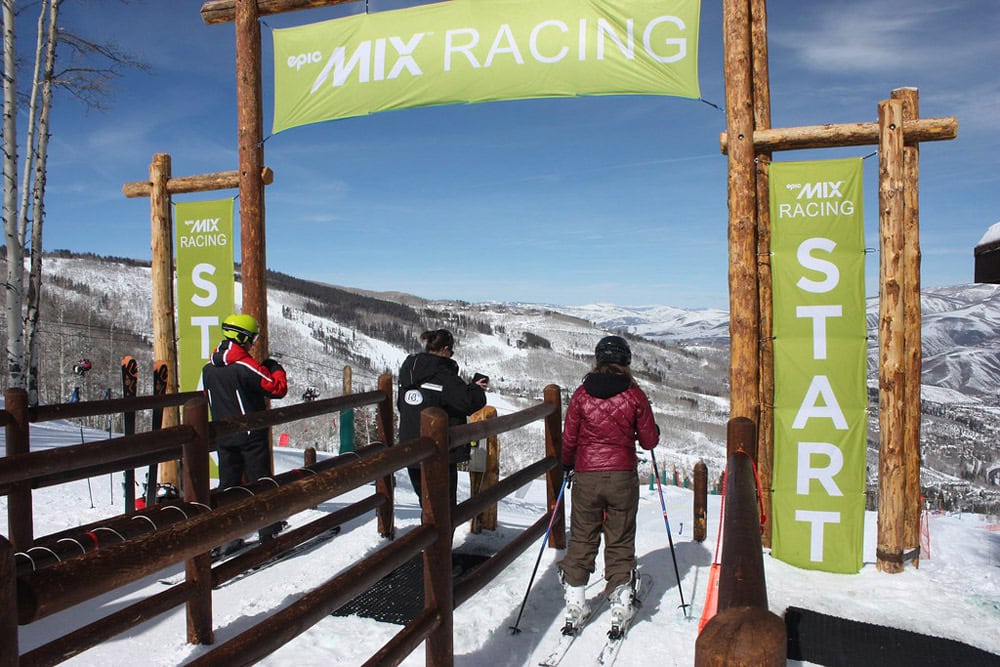
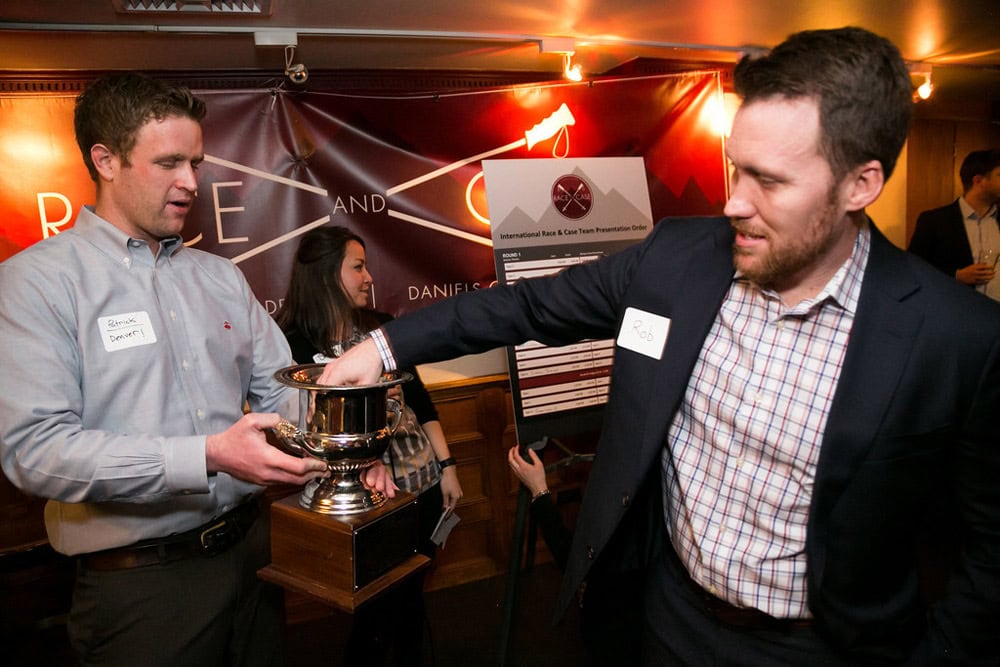
For more than two decades, Race and Case has mixed business case and ski race to create one of the most distinct graduate school case competitions in the entire country.


“When you think about a uniquely Colorado business school experience, it’s hard to ignore the magic of Race and Case.”
It’s one of Daniels Dean Naomi Boyd’s favorite events of the year, as she has taken to the slopes herself and presents the champions with their trophies and medals.
“We combine our city connections with the proximity to the mountains to craft this event, and we’re so thrilled to be able to share it with other prestigious business schools across the country,” she said. “When you think about a uniquely Colorado business school experience, it’s hard to ignore the magic of Race and Case. This is The Daniels Effect in action.”
The 2026 edition of Race and Case drew teams of graduate business school students from Auburn University, University of West Virginia, University of Florida, University of Alabama, University of Kansas and University of Denver competed on the stage and the slopes.
What exactly is a case competition?
Business case competitions are learning opportunities that challenge students to get outside the classroom, think through real-world scenarios and deliver researched solutions to clients. Often, these competitions solve problems for corporate partners, such as previous Race and Case corporate sponsors CenturyLink, Angi and Western Union. This is one of Daniels’ differentiators: a reputation for being the most market-connected business school in the country. The team at Daniels leans on business relationships to bring on case sponsors, creating a mutually beneficial competition that boosts the College, its students and the corporate sponsor.
This year’s case focused on Breakthru Beverage, which asked students how the company could better reach Gen Z, a demographic with declining drinking habits. It challenged students to rethink Breakthru’s product offerings, branding and long-term growth strategies.

Unlike a traditional case competition, Race and Case tests students’ analytical skills, ethical reasoning and athletic performance, all in one event.

Paula Holt, a teaching professor in the Department of Business Ethics and Legal Studies wrote the case for the fifth consecutive year. She sees immense value in case competitions for students because they turn classroom knowledge into real-world skills.
“These are tangible skills they need beyond mere theory from the classroom. This is critical in assuring we help our students with career readiness by simulating the kinds of challenges they will face in professional roles,” she added.
Unlike a traditional case competition, Holt said, Race and Case tests students’ analytical skills, ethical reasoning and athletic performance, all in one event.
“It stands out for its experiential, high-energy format—bringing together strategy, competition and the Colorado mountain environment in a way that goes far beyond a typical case competition,” she said.
Lasting memories, lifelong lessons
This year’s Race and Case was a full circle moment for case judge Caroline Etheridge, VP of strategy for the Americas zone at Danone. During her own MBA experience at the University of South Carolina, Etheridge competed in Race and Case and skied at Beaver Creek. She remembers the lifelong relationships, fun in the mountains and intense preparation that gave her skills to serve her throughout her career.
“I remember soon after [my program] I had to present to probably 50-60 people and felt very comfortable because of the preparation for this,” she said.
It stuck with her and she jumped at the opportunity to serve as a judge. Almost a decade later she saw the experience from a different angle.
“I took my judging seriously because I knew what was going into it on the other side,” she said. “I was very impressed with so many of the teams in terms of the level of understanding, and their professionalism too. It was very clear that the teams took it seriously and put in a lot of effort for preparation.”
“I remember soon after [my program] I had to present to probably 50-60 people and felt very comfortable because of the preparation for this.”

Jake Watters, director of sales performance strategy at Breakthru Beverage Group, also judged the event.
“It’s always good to get a different perspective, especially from people that aren’t deep in the industry. Our industry has a lot of people that are kind of born and raised in it,” he said.
“So, in a period right now where truly it’s in more flux than it’s been since prohibition, we need fresh ideas. Especially when a lot of that change is being driven by younger generations that we would hope would be consumers, but are not consumers.”
Watters gave the highest marks to teams that demonstrated a thorough understanding of the industry, the company and the problem facing the market. The presentations weren’t just an exercise. The solutions students proposed could very well be part of the company’s next steps forward.
“To get them brainstorming and giving us ideas is incredibly valuable,” he said. “And I’m hoping that we can take some of these back to our team and see if any of them have legs.”
A memorable experience
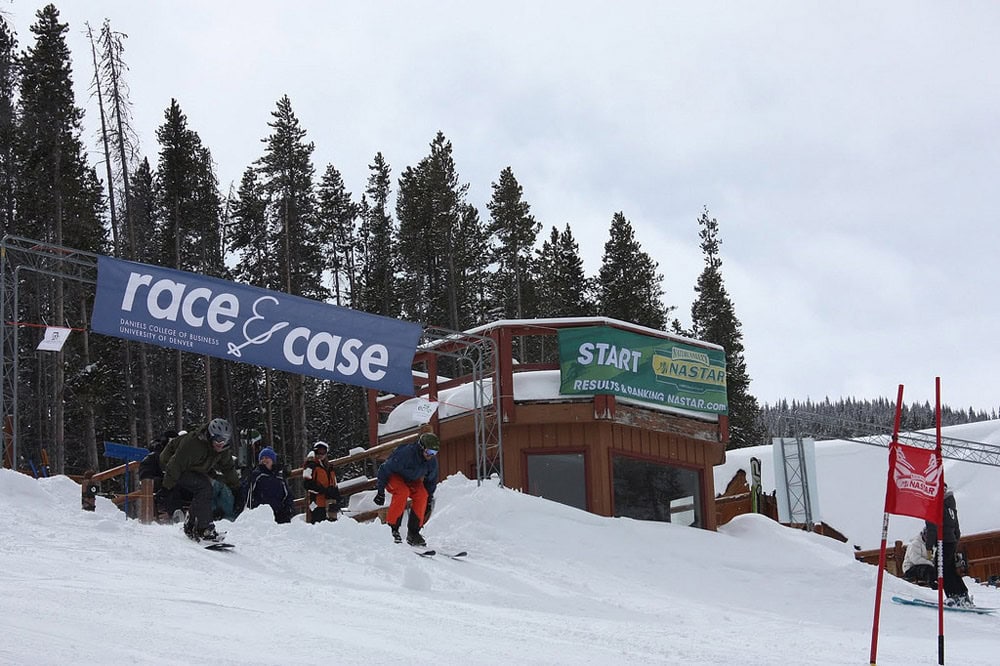
Standing at the top of Breckenridge Ski Resort, West Virginia University student Sarah Rizer scanned the racecourse ahead. She needed speed and grace to weave inside then outside of the gates.
Before she set off down the slope, Rizer reflected on the case competition the day before.
“It was a great opportunity to get some feedback on my consulting skills and practice my public speaking,” she said.
Then, Rizer took off. She blazed down the course, clocking a time that would place her as one of the three fastest skiers of the day.
After a day of idyllic skiing in one of Colorado’s most recognizable ski resorts, competitors and volunteers returned to the hotel for the award presentation. The case competition would account for 90% of their score, while the skiing could provide a boost with a 10% stake.
“Why do we keep coming back? Because it’s the best competition out there.”
West Virginia University student Sarah Rizer shares her Race and Case experience


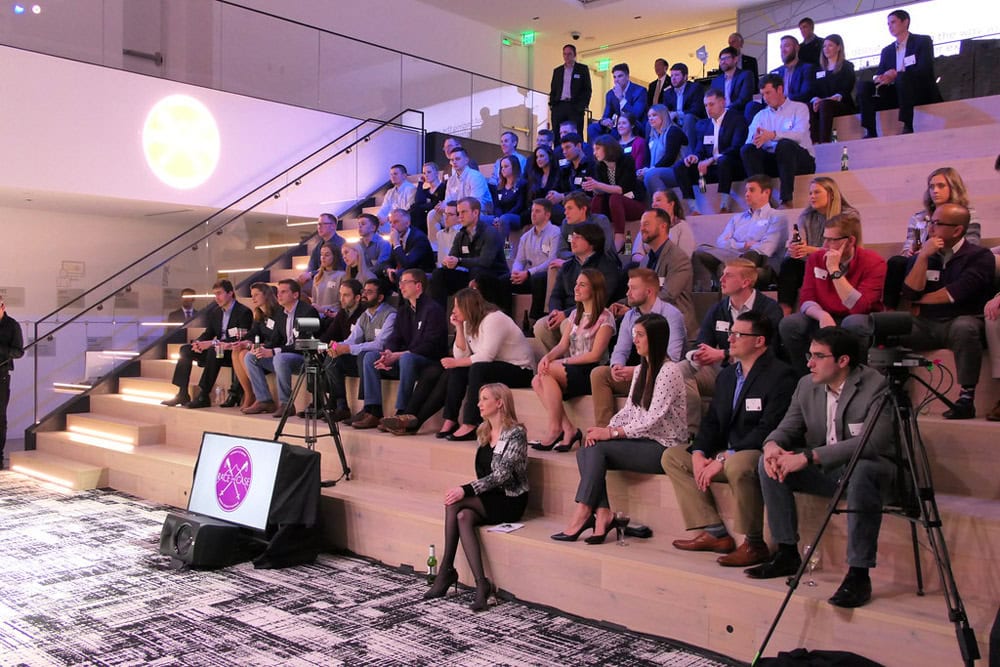
The room buzzed and teams nervously chatted, waiting to see when the Daniels staff would announce the three podium positions.
Quoc Hoang, director of experiential learning and case team advisor at the University of Alabama’s Culverhouse College of Business, is no stranger to Race and Case. He’s been an advisor to multiple winning teams, returning each year to the special competition.
“Why do we keep coming back? Because it’s the best competition out there,” he said, touting the fun and competitive environment. “We do 15 competitions a year across our undergrad and grad school, and this is my favorite.”
A champion is crowned


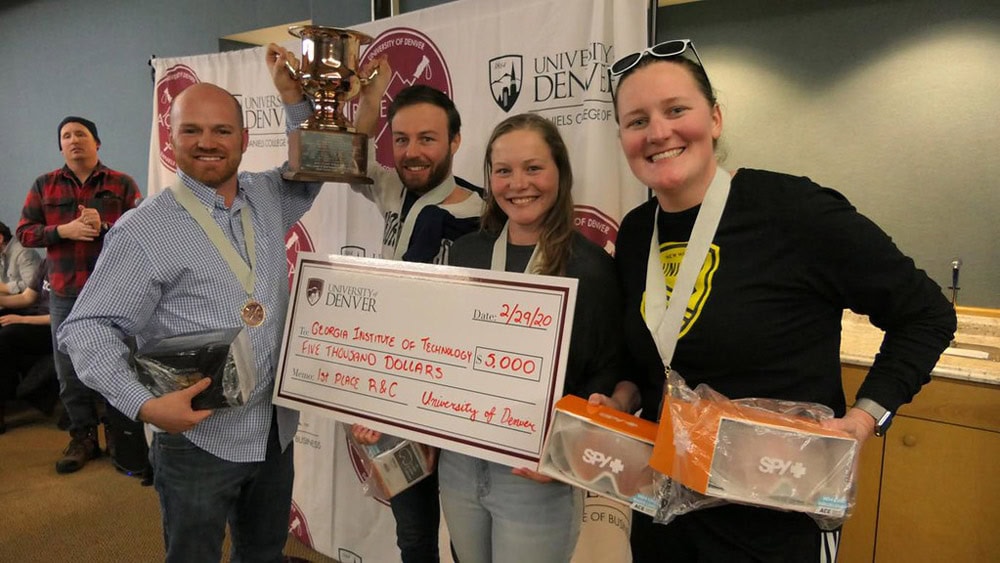
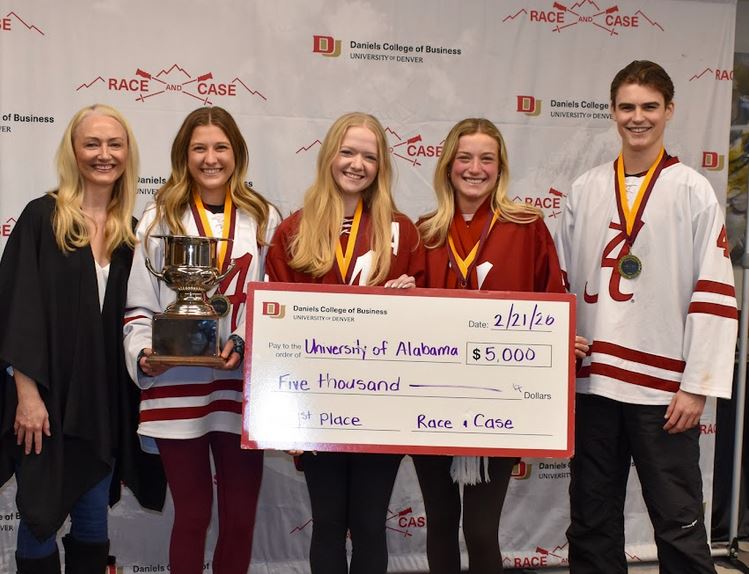
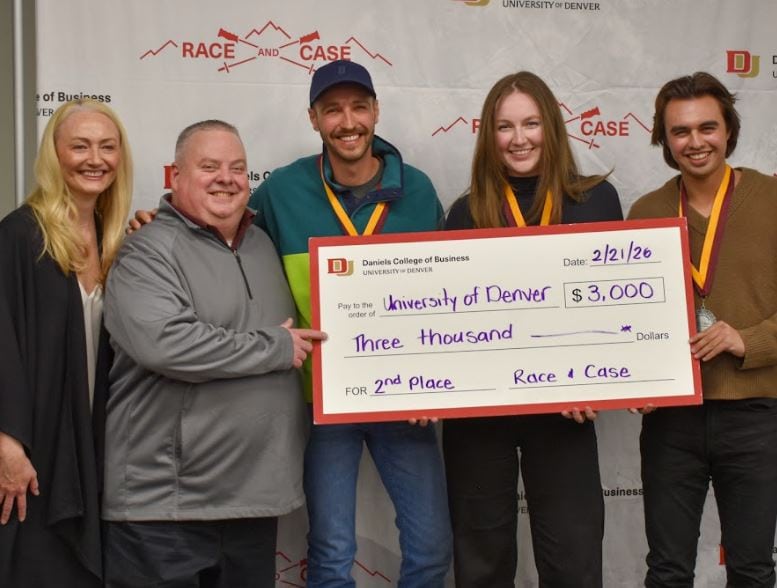
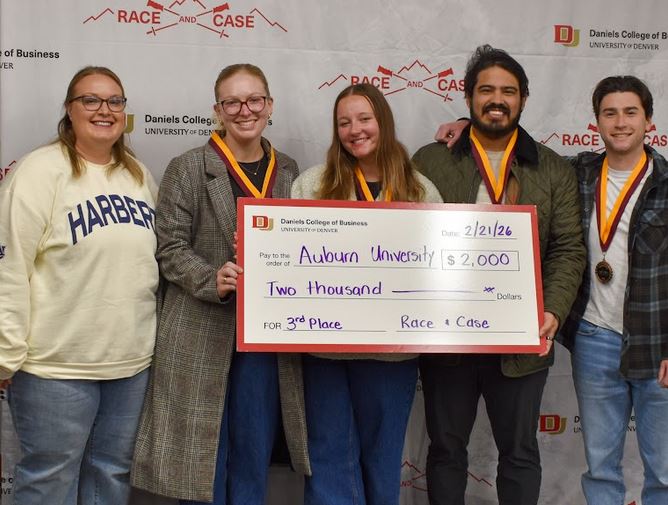
While Race and Case is a friendly challenge that brings bright business minds together, the cash prize at the end does inspire competitive spirit. The teams split a $10,000 purse, with $2,000 going to third place, $3,000 to second place and $5,000 to the winners.
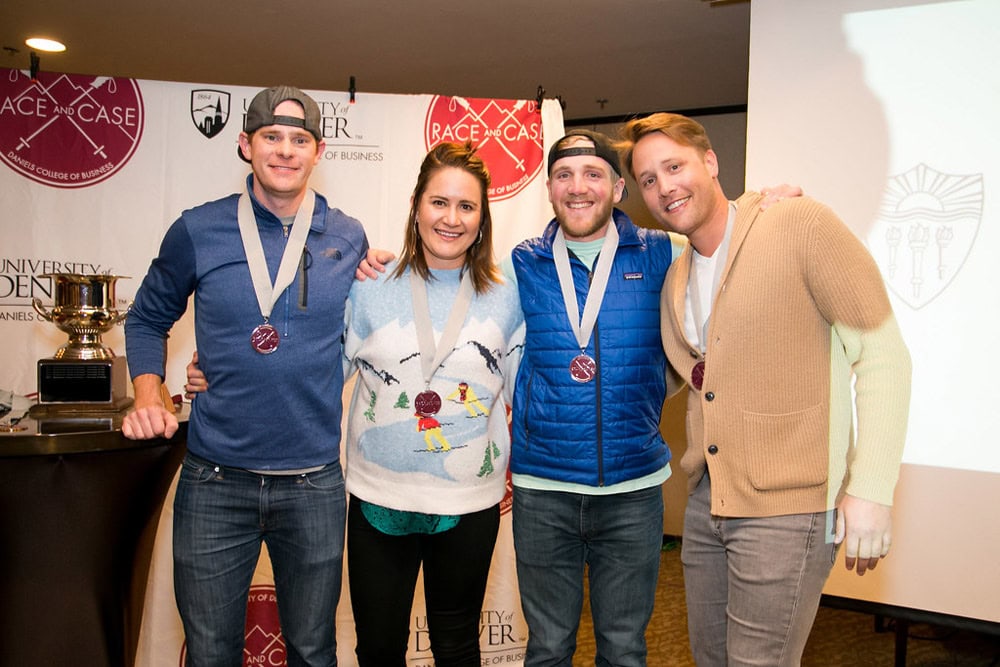
In the 2026 edition, Auburn University took home bronze, the University of Denver silver and Alabama the gold.
Adorned in their custom Alabama hockey jerseys, the team was elated to win big. They had pushed themselves to the limit to reach this point, both in the boardroom and on the slopes.

“We worked our butts off, and it paid off. We spent a lot of time, a lot of late nights and a lot of early mornings researching,” said Gretchen Minor, one of the students. “One of the things we got feedback on was that we understood the industry really well.”
She added that the time together built camaraderie and team chemistry. For Alabama’s Cale Brown, their win was only possible because of the effort of the faculty and staff that helped them craft their pitch.
“We had people that showed up at inconvenient times to come and listen to us as we were working through, pitching multiple things and iterating on our idea. That really meant a lot to us and helped us get to where we are today,” he said.
Tom Fredrick, a University of Kansas professor and case team advisor, talks about his key takeaways from the 2026 Race and Case competition.
The teams would spend the rest of the evening in Breckenridge, reflecting on a most memorable experience in the mountains. This was the culmination of weeks of hard work, both mentally and physically, and the last night offered them an opportunity to exhale.
The next day they’d return to Denver, driving or flying home, wherever that may be. Race and Case may be done for this year, but it will stick with the competitors. They may return in the future as judges or advisors, shepherding the next generation of aspiring business leaders.
But for now, consider it case closed.
A look back
Since it’s inception in 2004 Race and Case has brought many exciting moments to its participants