


Podcast: Play in new window
Subscribe: Apple Podcasts | Spotify | Amazon Music | iHeartRadio | RSS
Randy Greenberg can remember his first movie experience like it was yesterday. He watched James Bond’s Goldfinger at a drive-in movie theater from the back of his family’s car, imagining that he too was floating down a canal in Venice. It opened his eyes to the power of film and set him on his own winding journey. But the executive producer is concerned that this in-person experience will disappear with the availability of at-home streaming. Greenberg is a Daniels alumnus and accomplished Hollywood executive, working on films like the Meg and Cowboys and Aliens, among many others. He now runs the Greenberg Group and teaches college courses on the business of film. On this episode, Greenberg shares how he picks the projects he works on, the impact of AI on the film industry and why it’s crucial you get off the couch and go to the movie theater.
Show Notes
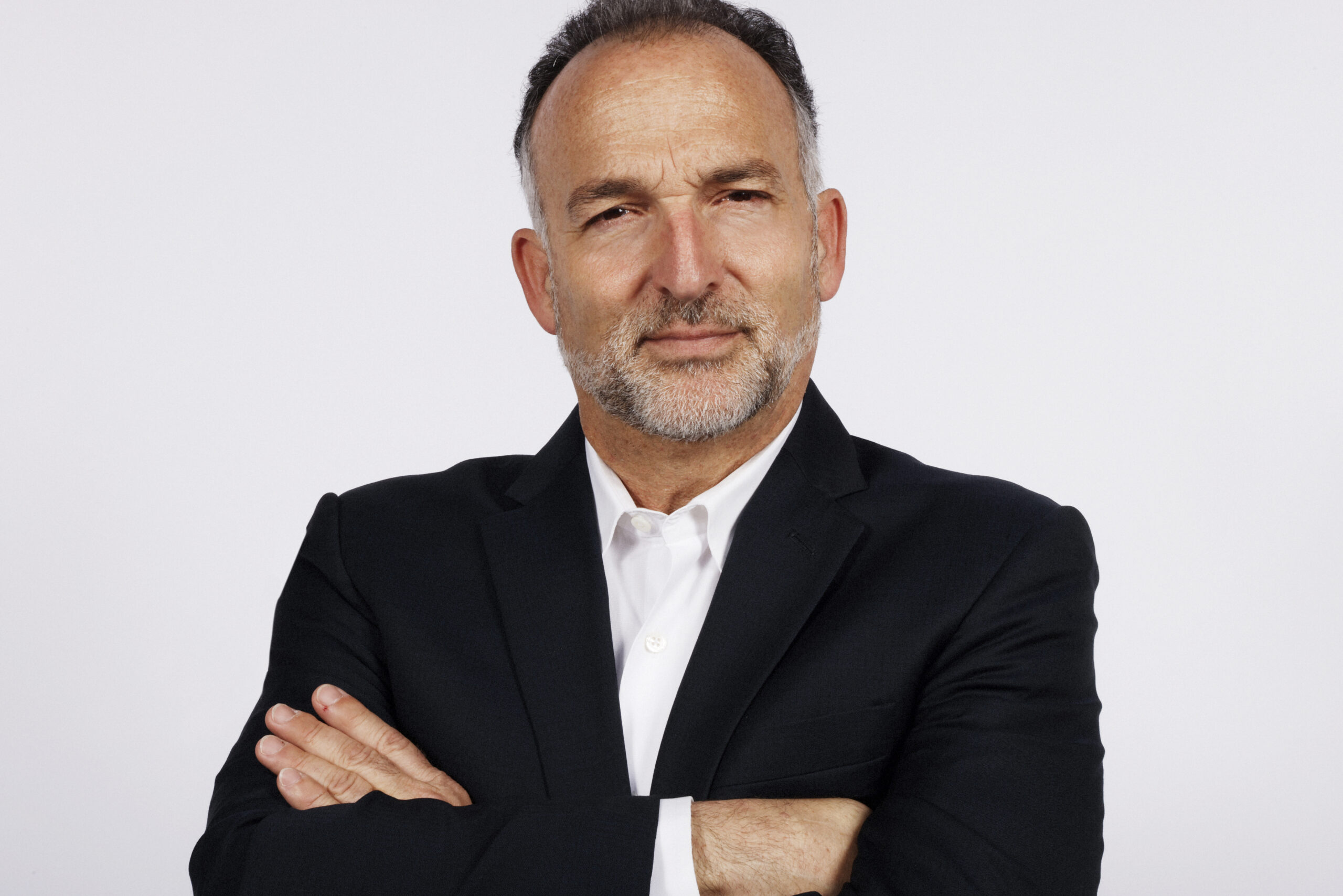
Randy Greenberg is an entertainment entrepreneur, executive producer and senior entertainment and media industry executive.
Table of Contents
0:15 Falling in love with film
1:45 Producer vs. Executive Producer vs. Director
4:10 Why business school led to a film career
11:55 Why the first 10 pages of a script are everything
14:30 Managing creative egos on set
17:20 AI as both a threat and opportunity in Hollywood production
22:00 The business importance of going to the theater
26:30 Try it, fail fast, and pivot
In this episode:
- 82% of Americans can discern AI content – UKCXA
- The Brutalist’s AI Controversy, Explained – Vanity Fair
- What does ‘Barbenheimer’ really mean for Hollywood? – BBC
- Movie theaters are getting creative to appeal to audiences – CNN
- Randy Greenberg Bio – The Greenberg Group
Related articles and information:
- AMC Cuts Wednesday Cinema Ticket Prices by 50% From July to Get More People Going to the Movies Mid-Week – IGN
- Mississippi town where ‘Sinners’ is set lacks a movie theater, but it may still get a screening – CNN
- Hollywood Groups Call for Tax Changes After Trump’s Tariff Threat – NY Times
Bonus Audio
Transcript
Nick Greenhalgh
Randy Greenberg can remember his first movie experience like it was yesterday. He watched James Bond’s Goldfinger at a drive-in movie theater from the back of his family’s car, imagining that he too was floating down a canal in Venice. It opened his eyes to the power of film and set him on his own winding journey. But the executive producer is concerned that this in-person experience will disappear with the availability of at-home streaming.
Randy Greenberg
If a younger generation doesn’t embrace that, it will go away. No ifs, ands, or buts about it.
Nick Greenhalgh
Greenberg is a Daniels alumnus and accomplished Hollywood executive, working on films like The Meg and Cowboys and Aliens, among many others. He now runs the Greenberg Group and teaches college courses on the business of film. On this episode, Greenberg shares how he picks the projects he works on, the impact of AI on the film industry, and why it’s crucial you get off the couch and go to the movie theater. Randy, welcome to the show. Thank you. Thanks for having me. So you have three decades of experience in Hollywood.
Randy Greenberg
You started off with, you’re old, dude.
Nick Greenhalgh
Well, you’ve held a variety of titles across numerous projects in that time. And this question might just be for me, and I think it probably is, but can you share what the difference is between a producer versus an executive producer versus a director? What are all of these people doing?
Randy Greenberg
That’s funny. My wife asked this question, too. And you’re not alone. So the producer is the president of the company. And every project is a company. All they do is spend money. The project actually doesn’t make any money. They just spend money. The chairman of the company is the executive producer, if you will. And then the director is both a combination of the chief creative officer and the chief operations officer because they straddle that line of creative, but they have to operationally make that product.
Nick Greenhalgh
Let’s step back a little bit. Where did your interests in film begin? How did this all start for you?
Randy Greenberg
So I grew up in Omaha, Nebraska, and I’ve moved west, right? I came to school at DU in 84 where the university was basically teetering on the edge of bankruptcy. All these beautiful buildings and this lovely campus you have is not what I went to school. It was not like that when I was here. And I came here for hotel and restaurant management, finished as a marketing major with finance and mass communications as a minor. But I’d always been—the entertainment business was—movies and TV shows were my escape. And I thought, I want to do that. You know, the first movie I ever saw was Goldfinger in Drive-In. The thing about the James Bond movies is you saw the world. You know, it’s not something you saw. I mean, now you can go on the Internet. You can take a ride through the Grand Canal in Venice in real time, you know, and you couldn’t do that, right? It didn’t exist. So I kind of thought I could travel the world in this business, and I’ve been fortunate to be able to do that.
Nick Greenhalgh
So you have this interest in film. Why then business school versus perhaps a more creative path?
Randy Greenberg
Like film school and things like that? Well, film school in the early 80s, mid-80s, I mean, aside from USC and UCLA, I don’t even think NYU had a film school at the time. And I didn’t want to be a director. And I still don’t. I didn’t want to be a writer, and I still don’t. And I didn’t want to be an actor, and I still don’t. I wanted to be a film producer, which is very business-y. And I didn’t know how fascinated I would be from the finance and the legal side of the business like I am.
Nick Greenhalgh
Yeah.
Randy Greenberg
When I grew up, my parents were like, stay away from lawyers. Like, you know, you don’t want to be in a lawsuit, right? You don’t want any of that. And over time, the last 20 years, I’ve been negotiating, 25 years or so, I’ve been negotiating deals. It’s one of my favorite parts. And I’m not a lawyer. I’m not a trained lawyer. But I’ve been doing what they call business affairs for so long that it’s just fun. And the idea that words on a page can make a change in an agreement, and by making a change in an agreement, you can create a revenue stream that is significant. And it’s just changes in an agreement. It’s like words, literally words. And I find that fascinating. But I always thought the business side was more interesting to me. And I never – I look at a blank page. The idea of like a blank screen and typing a screen, you know, and coming up with a screenplay. And again, when I started, it was – we were still typewriters. And the idea of like I look at a blank page and I freak out. But I can look at a screenplay that somebody else has done, and I can tear it apart and put it into the business structure that it needs to be. And I guess that kind of makes me – it’s fortunate because it’s worked for me, but I also find it a lot of fun.
Nick Greenhalgh
Looking at your work now, how do you select the projects that you want to work on and which ones do you typically pass on? That’s a really good question.
Randy Greenberg
The average – it takes about seven years on average for a movie to get made if it gets made. And there isn’t – and it’s not like seven years from now the movie that I read that I read on the plane – the script that I read on the plane today will get made. It doesn’t work like that. It usually go – it’ll go faster, three or four years, or it takes 20. The Meg movie, which came out in 18, was a book in 97. Wow. So 20 – it took 21 years for that book to make it to the screen. And it went through three studios or went through two studios before it landed at Warner’s and multiple scripts and iterations. Twenty-one years, right? I mean there are scripts that Martin Scorsese wrote and even James Cameron wrote that have never been made, right? So things take a long time. So when I’m reading something, you have to fall in love with it. And the producer is the last person to get paid. Directors get paid. Writers get paid. Actors get paid. The producer doesn’t get paid until eight weeks before the start of principal photography. And so if it takes seven years, you’ve got to love something to know that you’re at least seven years from getting paid, which also means you have to have a lot going on so that you’re getting paid now and you’re working on stuff that will pay you later. So you have to fall in love with it. And it has to have something to say. And the people that you work with, again, life is way too short. And all of you that are listening that are students now or just young alumni, I look out of the same eyes that I came here with when I was 18. I don’t see the old man that you graciously talked about at the very beginning. I don’t see that, but you see that, right? But I still look out with the same eyes, with the same kind of awe and wonder and dream. And so I have to fall in love with it. And I have to like the people that I’m going to work with.
Nick Greenhalgh
When a project comes on your desk, is there a red flag or two that you’ll see and maybe it’ll register this one isn’t for me?
Randy Greenberg
I only read the first 10 to 20 pages of a script to start. If I’m intrigued, if I start to fall in love, I continue to read. If I’m not intrigued and I’m not in love, I stop. Because just like you all, you’re going to be done with school, done with class, done with the job. You come home, you turn on Netflix or you’re watching it on your phone, right? And if it doesn’t grab you, whether it’s a movie or TV show, if it doesn’t grab you in the first two minutes, right? You’re like, no, I don’t want that. You go find something else.
Nick Greenhalgh
How do you balance your creative interests with what is often, I assume, a really cutthroat bottom line in this industry?
Randy Greenberg
You can make any project at any budget level, right? We’re sitting in a podcast studio right now, right? And we could be making a television show about doing a podcast. We could have cameras mounted on the wall. We could have our script that we’ve all written and we could easily come up with a 22-minute episode for $300, right? Or we could have built a podcast studio in a soundstage, right? With more bells and whistles and more monitors and better mics and whatever, right? And we could put three other people in the room who are massive stars and now it’s a $25 million movie, right? You can make anything at any budget level. The question is what’s it going to look like and feel like? But then every time you chip away at a scene and the way it looks or feels, you’re chipping away at the overall feel of the entire product. So you have to be careful that you don’t cut too much, that then the entire product feels a little flimsy, right? So you have to be careful.
Nick Greenhalgh
And I assume there’s a lot of competing interests there, people who want to keep things, people who want to take things out.
Randy Greenberg
Your director and your writer and your actors don’t want to cut anything. This is the movie of the project I signed on to. This is what I agreed to. Well, that’s my favorite scene. How could you cut that, right? And it’s like, do you want to lower your salary, right? Do you like that last payment? Can we not make it, right? You come to those points and it’s like, I understand. This is your favorite scene. I totally get it. Why is your favorite scene? So now you have to manage it not from a standpoint of, ooh. Now you have to manage it. Okay, why do you like it so much? What is it about this scene, right? Because what you have to do is extract from third parties what’s their need for the scenes. And then you have to take those needs and can you apply them to a different scene that you can take the same information and put it to, right? And then you’ve solved everybody’s problem. Producers are problem solvers. They put out fires every moment of every day, right? And problem solvers.
Nick Greenhalgh
You hit on it a little bit there, but how do you manage big personalities when you’re working on a movie?
Randy Greenberg
Okay, the reason they’re big personalities, there’s two reasons, right? They get paid a lot of money. Sure. And they have some sort of celebrity cache, right? That’s it. But when you’re making that product, movie, TV show, whatever it might be, right? Whether it’s a theatrical film, a streaming film or, you know, whatever, right? Everybody’s there for the same purpose. And as a producer, your job is to set the tone along with the director of the entire production from the moment you say yes to the moment it’s a wrap, right? And even beyond to moments it’s released. You have to set the tone. So everybody has to be in lockstep. And as a producer and as a director, like this is your job to have that conversation with everybody. So everybody’s in the same thing. So you have to treat people with respect and you just have to turn around and say, like, I totally, you know, and you have to look at them like, I know who you are and I respect you, right? This is what we’re trying to do. This is the problem I have. I need your help in solving this problem. You want to make them part of the solution, not a continuation of the problem. Sometimes you can do that and sometimes you can’t because everybody has their own personalities, right? You see it in the world today, right? Everybody has their own egos. So the question is can you get through, the best producers can get through any ego to get to solving the problem.
Nick Greenhalgh
Switching gears a little bit here. There was drama this year at the Oscars around the usage of AI, specifically the Brutalist was brought up. And the Academy recently changed its rules allowing generative AI going forward. With this technology developing at such a rapid pace, is it a threat or an opportunity or somewhere in between where you land on that?
Randy Greenberg
It’s both. It’s a huge threat and a huge opportunity. The huge opportunity is that, you know, the biggest problem that entertainment has and that high-end entertainment has and that low-end entertainment has. Low-end entertainment wants to have higher production value. High-end entertainment wants to lower their costs. AI can do both for both, right? There was a study put out a month or two ago, something like that, where most people, I think it’s like 83%, 87% of people, consumers, don’t want to watch a fully AI something, right? Because if you look at AI for longer than just a few seconds, you know that it’s not real. Your eye can tell. The brain is interpreting what the eye is seeing. And it can tell, like, that’s not – that’s too smooth of a movement. It’s too – that person looks too perfect, right? Or, right, or you look at – like the best one is you look at some sort of logo or you look at some sort of name and it’s misspelled slightly, right? Ever so slightly. And you know it’s AI because that’s the distortion of AI. AI can lower a lot of, like, development costs for producers up front. When you’re trying to make a movie or a TV show and you’re in the development stage, you could spend upwards of a quarter of a million dollars getting the rights, paying a lawyer, paying option fees. But AI can do the coverage. AI can provide a trailer or what would be a look and feel or potential look and feel of something. You can get budgets now relatively. You could get location scouts without having to go, right, or having to pay somebody. Like, all that’s really great, right? But that’s not ever going to make it into the final product. That’s just – like, I don’t have to go find $250,000 on a single project to get it to development to then get to pitch it. I might spend 10 grand. Well, that’s a lot. That’s a better roll of the dice, right? So that’s the kind of stuff that I think the AI can really help with. And even in the entertainment business, we don’t want to replace actors and directors and writers. What we want to do is lower costs because everybody has a full physical film studio in the palm of their hands now. There is no technological barrier to making a movie or a TV show or a podcast or any piece of entertainment, right? Look at every single YouTube influencer, you know, person that’s out there making money off of it. It all started with they just shot it with their phone, right? So there is no technological barrier. So AI is really a tool to be able to enhance the creative, to either lower the costs or make it better, but not to create the entertainment completely with AI, my opinion.
Nick Greenhalgh
Continuing on that thread, looking at the state of the industry right now, we’ve got the Minecraft movie and Sinners crushing at the box office. We’re just a couple of years removed.
Randy Greenberg
If you haven’t seen Minecraft, you’ve got to go see it.
Nick Greenhalgh
We’re just a couple of years removed from Barbenheimer as well. Yeah, sure. When we look at that, how important is it for the industry as a whole that people get off the couch and go to the theater?
Randy Greenberg
We talk about this on a daily basis, you know. My generation and generation before from, you know, from 19—I mean, the Nickelodeons. I mean, you know, the Nickelodeon isn’t a kids and family label. It was the original Nickelodeon. You paid a nickel and you would put it in the machine and you would crank the machine and you would see a 30-second piece of film. That’s why it’s called Nickelodeon. And from the Nickelodeon to the original movie houses, which were palaces, people would dress up in ties and drag them and go. And you would see a movie and you’d see, you know, generations. Four or five generations grew up like that. Again, technology disrupted that. Steve Jobs did, you know, and then disrupted it more with the phone. Movies are meant to be seen in the movie theater, right? A movie that you see on streaming is really just a long, single television episode, right? It might cost more than what a TV show episode might cost. But movies, it’s cinema to be seen in a cinema, not just cinema as the product, but cinema as the place to go. And if you don’t, if a younger generation doesn’t embrace that, it will go away. Like, no ifs, ands, or buts about it. Yes, it’s more expensive than the $15, $16, $17 a month that you may be paying for Netflix. But it’s just a different form of it. You can sit at home and watch television. That’s great, right? It’s super cool. It’s been great since television started. Now you just have a plethora of choices, right? But if you want to see something that is supposed to be not a statement of society, but it’s supposed to be a piece of entertainment to entertain society, to be seen collectively, not individually, to be seen where the chemical makeup of multiple people in a room changes the information you get from when you’re in a theater. You have to go and leave your home and pay your money to go. If you want movies to stay being movies, you have to go to the movie theater. I think there is something collective about being with friends or going on a date or taking your wife or taking your kids at a family and going and collectively having an experience that, yes, you could wait six weeks or eight weeks or 12 or whatever the number is and see it at home. It’s not the same experience.
Nick Greenhalgh
Great. Our last question is one we ask all of our guests. As a voice of experience, what is one piece of advice that you’d like to share with our listeners?
Randy Greenberg
I’ll go back to what I said at the very beginning. I look out with the same eyes that I’ve had certainly since I was born, but looking back at the DU world since I was 18 when I came on campus for the first time, and I’m 59 now, so here it is 41 years later. And regrets are bad, right? Plan Bs are good, but if you don’t go after what you want, you’re going to get older. You’re going to turn 40. You’re going to get married. You’re going to meet up with somebody, and you may or may not have kids, but you’re going to get older. And you don’t want to look back and say, I could have, would have, should have. You just don’t. And since the .com world 20 years ago, 20-plus years ago, the adage of failing fast, which wasn’t in the vocabulary or the zeitgeist or the society when I grew up, failing fast has become a mantra. I would stick to that. Just try it. Go do it. Don’t try it. Give everything you can. Go do it. And if it doesn’t work, pivot, right? Find that thing that sings to you, that says something to you, because otherwise you’re going to trade the best hours or the majority hours of the week doing something for money. And if you love it and it doesn’t feel like a job, do it for yourself.
Nick Greenhalgh
Wise words. Thank you, Randy. We really appreciate you joining.
Randy Greenberg
I’m thrilled that you had me, and I appreciate it, and I hope that I said something to somebody out there that meant something.
Nick Greenhalgh
If you want more from Randy, including some bonus audio on his number one new movie recommendation and the project he regrets passing on most, check out our show notes. You can find those at daniels.du.edu slash voe-podcast. The VOE Podcast is an extension of Voices of Experience, the signature speaker series at the Daniels College of Business, sponsored by U.S. Bank. Iruka Nwosu and Patrick Orr are our sound engineers. Joshua Muetzel wrote our theme. I’m Nick Greenhalgh, and we’ll talk again soon.