


Podcast: Play in new window
Subscribe: Apple Podcasts | Spotify | Amazon Music | iHeartRadio | RSS
There’s what happens on Shark Tank—and what happens after an appearance on Shark Tank. In an episode that aired last March, Chennelle Diong (MBA 2022) pitched her frozen, gluten-free, ready-to-bake biscuits and cinnamon rolls to a group of steely investors. Her savvy netted an investment from Lori Greiner, and an avalanche of orders that felt impossible to dig out from under. On this episode of the Voices of Experience podcast, Chennelle explains the ups and downs that came with her national TV success and how she is rediscovering her identity in the startup space.
Show Notes
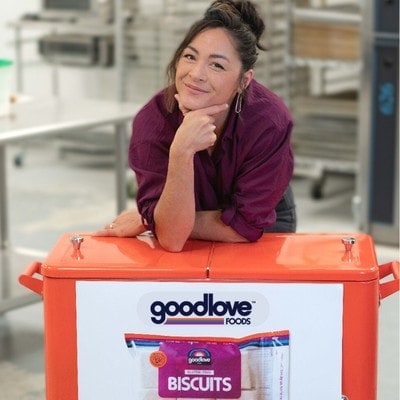
Chennelle Diong
Chennelle Diong is the founder and CEO of GoodLove Foods, which prepares frozen, gluten-free, artisan-crafted, ready-bake items like biscuits, pizza crust, cinnamon rolls and puff pastry. She grew her business through Entrepreneurship@DU‘s BASE Camp summer accelerator, after completing her Daniels College of Business MBA in 2022.
Table of Contents
1:44 How did you end up on Shark Tank?
3:17 Countering the “Queen of QVC”
5:26 The aftermath
A vulnerable social media post
10:32 Fundamentally changing identity
12:43 Getting back to her roots
16:31 “The entrepreneurial road is not for everyone”
17:36 The benefits of an MBA
20:53 “Nothing takes the place of experience”
21:59 Show notes and credits
In this episode:
- Daniels Newsroom: Alumna Secures Shark Tank Investment for Her Startup
- Entrepreneurship@DU Podcast: GoodLove Foods, Chennelle Diong
- GoodLove Foods on Shark Tank (YouTube video with commentary)
- GoodLove Foods LinkedIn post: “To be completely transparent, our recent uptick in demand and scramble to scale has taken a toll on our team.”
Related articles and information:
- GoodLove Foods website
- CanvasRebel Magazine: Meet Chennelle Diong
- Shark Tank Blog: GoodLove Foods | Season 16
- Watch Shark Tank on ABC and Hulu
- Chennelle Diong on LinkedIn
Transcript
Lorne Fultonberg:
There’s what happens on Shark Tank, and then there’s what happens after an appearance on Shark Tank.
Chennelle Diong:
A rollercoaster ride is probably the easiest way to put it. High highs, low lows.
Lorne Fultonberg:
Chennelle Diong wowed the infamous panel of investors on ABC’s hit entrepreneurship show. Business boomed—to an overwhelming degree.
Chennelle Diong:
It was more like, oh my gosh, OK, so this is real. What are we going to do?
Lorne Fultonberg:
Diong build GoodLove foods in 2021, while she was an MBA student at the Daniels College of Business. We met a little later, at Entrepreneurship@DU’s five-week BASE Camp summer accelerator, when things really took off. GoodLove delivers frozen, ready-to-bake gluten-free products to hungry folks all over the country: biscuits, cinnamon rolls, pizza crusts, puff pastry. They’re on the shelves at eight Colorado stores too.
On this episode of the Voices of Experience podcast, Chennelle tells us about the not-so-sunny moments that came with an avalanche of orders once her episode aired, and how she’s re-discovering her identity as the leader of a startup, that isn’t so small any more.
Lorne Fultonberg:
Chennelle, it’s good to see you again.
Chennelle Diong:
Thank you so much for having me. I’m so excited to be here.
Lorne Fultonberg:
You have lived the dream, so to speak. We have so many business students who say they are studying this because they’re inspired by Shark Tank, and about six or seven months ago we saw your episode on TV, right?
Chennelle Diong:
Yes. I’m still kind of starstruck by it, and I still can’t believe that happened, but also worked incredibly hard to get there. So it’s good to feel that other students are inspired by this journey.
Lorne Fultonberg:
Why was that the route? I know there are so many different ways that you can go. What compelled you to apply for this in the first place?
Chennelle Diong:
Maybe unhinged ambition. Since starting Goodlove, anything and everything that I can dip my feet into and just get our brand out there and grow, I’ve pretty much done. My partner and I, we really believe in what we’re building. But also it’s not a cheap venture. It takes a lot of capital to get going. It takes a lot of capital to continue building. And once you’ve built demand, I think budding entrepreneurs, you don’t really understand this until you’re in the thick of it, is that the money woes never go away. They actually increase. So we hit this crazy spurt of demand and we built such a great local following, and then we started shipping across the US and then built even more demand.
And so really the impetus other than to get capital to be able to build our own manufacturing space and to be able to have production output that these other bigger brands have was really also to showcase our products and find other people that truly believed in the brand we were building, the community we’ve been building, and to get behind a tiny little brand and see our vision. When you’re a small brand like us, I think getting others to buy into your vision and believe in it is really, really important.
Lorne Fultonberg:
And I was at the watch party that you did here on campus and it was fun to watch your partner and friends skating in on roller skates with these GoodLove vibes as they made their way in. So you made the sales pitch, for sure. We’ve got a lot of those details on our newsroom, and I’m going to make sure that that’s linked in the show notes with this episode.
But long story short, you walked away with a $150,000 investment from the Queen of QVC in exchange for 18% stake in the company, right?
Chennelle Diong:
That’s correct.
Lorne Fultonberg:
What’s your relationship been with her since?
Chennelle Diong:
Well, her and her team, I mean, they’ve been great from the beginning. I’ll say that that was the beginning, and it’s a long-term partnership and we get advice and counsel. And as we grow, it’s a really good feeling to know that we’ve got someone with such experience and belief in other products similar to ours in terms of just building this community and finding something that will really truly be a mainstay brand or a grocery store staple, as her and her team. So ultimately just having that has been fuel to help us continue going.
Lorne Fultonberg:
Yeah. Well, let’s talk about the Shark Tank effect that happened. What was the aftermath after your episode aired, and is it what you were prepared for, expecting?
Chennelle Diong:
Oh, that’s a loaded question. it’s been good and bad to be completely honest, because we are literally a small handmade product. The reason why we wanted to get a large amount of capital to purchase machinery was to be able to meet this demand. Our product reached audiences that we never thought we would be able to reach or even knew about us. Just to put it in perspective, the amount of orders we’ve typically received in one year, we received in two days.
Lorne Fultonberg:
Oh my gosh.
Chennelle Diong:
So I actually didn’t look at our website for two days because I knew orders were coming in. I mean, that’s just what’s going to happen. But also I wanted to sort of cushion myself from, oh, well, maybe it’s not as much as we thought. And it was the opposite of that. It was more like, oh my gosh, okay, so this is real. What are we going to do? And we did plan for itWe planned for what our expectations were.
Lorne Fultonberg:
Which were?
Chennelle Diong:
Which were maybe a fraction of that. Not saying that we didn’t think we were going to make that many sales, but in terms of being able to staff up or order enough materials. Again, we’re such a small company that being able to order that many supplies in advance it’s not something that we were capable of. So yes, great. We got all these sales. It was awesome. When you do D2C orders like we do, that’s money in the bank immediately, almost. And so that was good to a point, but at the same time, we were already backlogged because we’re like, all right, well, we don’t have any inventory for this, so let’s get cranking. And we had our systems in place.
But we did a lot of learning, a lot of pushing ourselves way past our threshold of what should be acceptable for any person, and really had some dark moments. But at the same time, knowing that there was all these customers that loved our products, saw our products, wanted our products, that it kept us going. So I will say it’s been a roller coaster ride is probably the easiest way to put it. High highs, low lows.
Lorne Fultonberg:
Yeah, I think there’s probably this perception that once you’ve made it on Shark Tank and received investment, you have made it. I saw something that you posted on social media actually from GoodLove Foods, and I’m going to read a quick snippet of it here, but it said that for months after the Shark Tank episode aired, it seemed like we were just rolling out the dough and shipping out box after box of orders. There was a huge disconnect between us and our customer base. It was hard to remember our beginnings and why we started GoodLove in the first place. What were you feeling that made you put that on paper?
Chennelle Diong:
That’s so true, and it still rings true now because I, we I should say as a company, as me and my partner, when we started this we truly wanted it to be community building. We’re both celiac, we know how alienating that can feel for those who can only eat gluten-free or that are so strict on the gluten-free diet that it’s hard for them to socialize essentially. So that part of the community, there is a disconnect between direct to consumer. Before the Shark Tank, I was literally handling every single customer service email, every single mention or comment on social media. I handled all that, and I couldn’t because it just blew up and our inbox was like 5 to 600 emails, and I’m like, I cannot answer these.
And so handing those off to other people to be able to do was necessary, but at the same time, the disconnect was there. It was like, all right, slapping a label on a box, shipping some products somewhere to Texas, to Florida, to New York, wherever. But there was just no connection. Also, part of that is we are such a small company, and we typically do a pre-order basis. So we say pre-orders are open for a month in advance, two months in advance, because that helps us to be able to plan and to get some funds in advance so that we can get those supplies. And so many folks, new folks with this onslaught, I’ll say, of orders that came in didn’t quite understand that.
So there was a learning curve, and a lot of negativity came from that in the form of negative reviews telling us we were a bad company, they were waiting months for their order. So that was the negative side, and that really was the part that I was like, okay, we’re not in it for these feelings. We’re not in it to feel negative about what we’re doing with this high quality product. And yes, it’s handmade, it takes time. But we needed to bring it back so that we could also focus on getting through and truly improving our processes.
And so many founders have faced this challenge and this moment where they’re like, oh, I forgot why I was doing what I was doing to begin with.
Lorne Fultonberg:
I mean, talk about a difference when you started, and there’s a great entrepreneurship at DU podcast that you recorded last year where you’re talking about how you would drive from your home to Colorado Springs every couple of weeks to make your products and then hand deliver them by driving them around the area with a handwritten purchase note on there. Did it feel like your identity fundamentally had changed from that point to where you were post Shark Tank?
Chennelle Diong:
It did. And I think what was really hard was how as a brand, do we still inject that level of customer service, that level of care, and that level of just trying to connect with our customers to let them know, hey, we feel you, we’re literally doing this because we understand your pains, but also at the same time, trying to lay the found work that we’re still growing and please have patience. And so I think that just for us as a company, it was so important for us to remember those roots. Remember that I was driving at around Denver at midnight dropping off frozen goods at people’s doorways, sending them pictures of their order that was on their front doorstep.
OK, we can’t do that. That’s not sustainable. But how do we take that same emotion and continue injecting that into GoodLove into all the other areas, all the other channels of communication with our customers as we grow? And that is really hard.
Lorne Fultonberg:
So what did you do?
Chennelle Diong:
Just constant communication, communicating in people in different ways, some people read text messages, some people read emails, some people don’t do any of that stuff and they will text you. I received an insane amount of texts and calls, direct calls, from customers after Shark Tank, and I was like, I have to turn off my phone. So, I’ll say understanding how folks communicate and trying to be there for them before they have those questions or when they have those questions, being able to give them those answers to it. But it’s still a learning curve. Every single week we’re like, oh, I never knew that question was going to be asked. Let’s add this into our protocol and figure out how we’re going to answer it next time.
Lorne Fultonberg:
One of the things that I saw in your social media post was some pop-ups or pop-in events and attempt to get back to your roots. Can you explain how you came up with those and what they are?
Chennelle Diong:
Yeah. We love our in-person events. Events. Denver, and Colorado specifically, there’s a really amazing community of celiacs, of gluten-free folks, and it’s all under the umbrella of the National Celiac Association. So the local chapter called the Denver Celiacs, they have been really amazing at building this community through a series of in-person markets. And a lot of these markets, which are pretty much year-round, is also our opportunity to reconnect with those customers. New and old customers are our OGs because again, for us, it’s important to see their faces, to be able to talk to them in person and let them know we’re still here, we’re still the same. People are actually surprised. They’re like, “Oh, we saw you on Shark Tank and you’re literally still manning the booth at this event?” “Yes, we are.”
So after the events ended this summer, I just realized there’s additional opportunity to be able to create that community and our facility’s based in Longmont. We’ve hosted previous events there and more when we launch a new product or something like that. But the idea came from, you know what, let’s invite people into our space, our customers that have been there from the beginning, but also open it up to all these new customers to truly see what we’re talking about when we mean we’re handmade, when we mean we’re high quality, when we add that emotional special touch.
So we’ll have different types of, quote-unquote, “pop-ins” that, have a little special, something different. So we had a dumpling edition two weeks ago, we recently just had a brunch edition, and we’ve got a pizza edition coming up. So we’re trying to tailor it and make it fun and different every time, but encourage the community to just be like, “Hey, come on in and say hi. You don’t even have to buy anything. We just want you to say hi. If you have questions, if you want to just check out the space, please. We need it probably as much as you need it.” You know what I mean?
Lorne Fultonberg:
Yeah. When you think about keeping your identity as you grow, what’s something that you would say to an entrepreneur who’s starting out small hasn’t been on Shark Tank quite yet? How do you keep your identity as you scale?
Chennelle Diong:
The moments that I’ve had that are more of a moment of reflection are those where someone else has said, just don’t forget to bring it back to the why. And in the moments when you are really, really deep in it, you’re in the trenches. It is hard. It is really hard to remember, oh, this is the why. Because all you’re trying to do is solve problems and get to the next thing so you can get out of it. But truly take a moment, remember why you founded the company to begin with.
And there’s a couple different why’s. There’s the why of what problem are you solving, but also you as a founder, why did you start this company? And so multiple times, I’ve had to bring it back to both. Why did we start this company? I didn’t start it to feel negative about myself or to feel like I failed in any way, but at the same time, the reality of a lot of startups is there was always a chance of failure. So coming to terms with that and feeling positive in what we’ve already built. And then on the business side of keeping that identity and getting through those harsh reviews or some of those negative moments to realize that, you know what? That’s actually just a blip in the time we’ve been around of all the positive comments and the positive customers that have continuously come back to us.
And so I would just tell those young entrepreneurs that in those moments you’ll realize, and I can’t pinpoint those moments for you, but they’ll happen and you’ll be like, “Oh, you know what? The why. I’ll go back to that.”
Lorne Fultonberg:
I’ve heard you say before that the entrepreneurial road is not for everyone. Did it ever feel like, okay, maybe this isn’t for me anymore during all of this?
Chennelle Diong:
Strangely enough, no. And I think actually Lori posted about this recently, and I’ve heard it multiple times, is that I quit my normal weekly 40 hour a week job to work 80 hours for my own company. That is the life of the entrepreneur. And in and of itself, that is not for everyone. But if you’re passionate, if you’re creative and you crave growth, you crave change, you crave being able to build something, I think that’s for you. If you don’t feel like you have a strong financial background or what have you, it’s okay because you have the passion and you have an idea, and sometimes that’s all you really need to continue going.
This has been the longest, hardest marathon that has not quit since I started, and I still wake up every day wanting to do it.
Lorne Fultonberg:
A lot of entrepreneurs don’t have any sort of formal education in entrepreneurship or even business. You do, we’re proud to say, you got your MBA here. I know that the name for GoodLove Foods popped into your head while you were working on an MBA project late at night. But beyond that moment, what other benefits of getting your formal MBA education have helped you with your entrepreneurial journey?
Chennelle Diong:
Getting the MBA here at DU was important for me initially, just on a personal level, it was in 2020, everyone was going through a state of transition or a state of reflection, and at that moment, it was the time that I wanted to finally reinvest in myself and go back to school. And until I actually applied, I didn’t know if an MBA was right for me. And after starting the courses, I was like, all right, no, this makes so much sense. I’ve held all of these other positions and all these other companies, I’ve worked for other startups. Now I can connect the dots and fill in the blanks that I didn’t know about at the time to build my own foundation as an entrepreneur. And ultimately, that has helped me in the long run with GoodLove.
But really it’s been the networking and the connections here on campus, getting to be back in the studio with you in this really amazing school, the Daniels College of Business, and feeling just that sense of accomplishment is really great. But this community has been amazing, I’ve met some really amazing professors that are always here to help me, if I have questions, if I’m running into any issues and I need to tell them and just kind of offload what’s been happening, they’re there to hear me. And so I think that has honestly been the most rewarding for me and the best thing that could have come out of this MBA.
Lorne Fultonberg:
Is there anything else you wanted to talk about?
Chennelle Diong:
Oh my gosh. Well, first of all, thanks for getting me out of the kitchen because we’re literally there six, sometimes seven days a week. It used to be seven days a week and we’re like, okay, this is not sustainable for us physically or mentally. And being able, this is a way I feel like I can also give back, but also, I guess the other thing I wanted to share is just we’re real people. Some people think that we’re a big company, and part of that is we launched originally from the beginning a brand that had, I like to call it BBE, big brand energy. Because that’s one of the things that hooks people from the beginning when it comes to CPG products. And little did I know that that would truly take our brand to the stratosphere in terms of demand, including the fact that they love our products, of course.
And so I’ll just say we’re real people. We’re still making our products by hand. We still maintain high quality standards. And with this high demand, it’s hard to show people that we’re still upholding all of those core values because most people just see a wait list and they see that their order hasn’t shipped. I get it. I totally get it, but trust me, once you get your order, you’re going to love it.
Lorne Fultonberg:
The last thing that we ask all of our guests is as a voice of experience on the Voices of Experience podcast, what is one thing that you’d want to share with our listeners out there?
Chennelle Diong:
Unfortunately, nothing takes the place of experience. And there’s so many things I’ve learned and so many hurdles that I didn’t think I would come across at least this early, that there’s only experience to really guide you through.
So there was some really hard times that I would have to remind myself, I couldn’t plan for this and to try not to bring myself down for not knowing exactly how to get through this situation when it came up It’s okay, you’re going to come up to so many hurdles or so many intersections that you don’t know which if you’re going to go left or you’re going to go right, or is it the right decision you made? Just make the decision. Maybe it was the right one. Maybe it was the wrong one. But you’re going to continue to make those decisions, and the only way you’re going to keep on improving is through experience.
Lorne Fultonberg:
That is Chennelle Diong, CEO and founder of GoodLove Foods and a MBA alumna. Chennelle, thank you so much for joining us.
Chennelle Diong:
Thanks, Lorne. I really appreciate it.
Lorne Fultonberg:
If you’re looking for Chennelle’s Shark Tank pitch—and you will want to see the groovy surprise she has for the sharks—it’s on Season 16, Episode 12. We have a video linked on our show notes. You’ll find it at daniels.du.edu/voe-podcast. You can also read about her experience at DU’s entrepreneurial accelerator and listen to her interview with the E@DU podcast, where she tells GoodLove’s origin story and details the hard work she put in to build the brand.
The VOE podcast is an extension of Voices of Experience, the signature speaker series at the Daniels College of Business. Harrison Tarr and Patrick Orr are our sound engineers. Joshua Muetzel wrote our theme. I’m Lorne Fultonberg. We’ll see you next time.