


Podcast: Play in new window
Subscribe: Apple Podcasts | Spotify | Amazon Music | iHeartRadio | RSS
Has there ever been a more chaotic time to be in business? Subjectivity aside, Matthew Pohl says today’s companies need a specific mindset and skill set to push past roadblocks and thrive. He founded ReWild Group to help businesses find the roadmap to resilience. On this episode of the Voices of Experience podcast, Pohl recounts his personal transformation and explains how to prosper through chaos and competition.
Show Notes
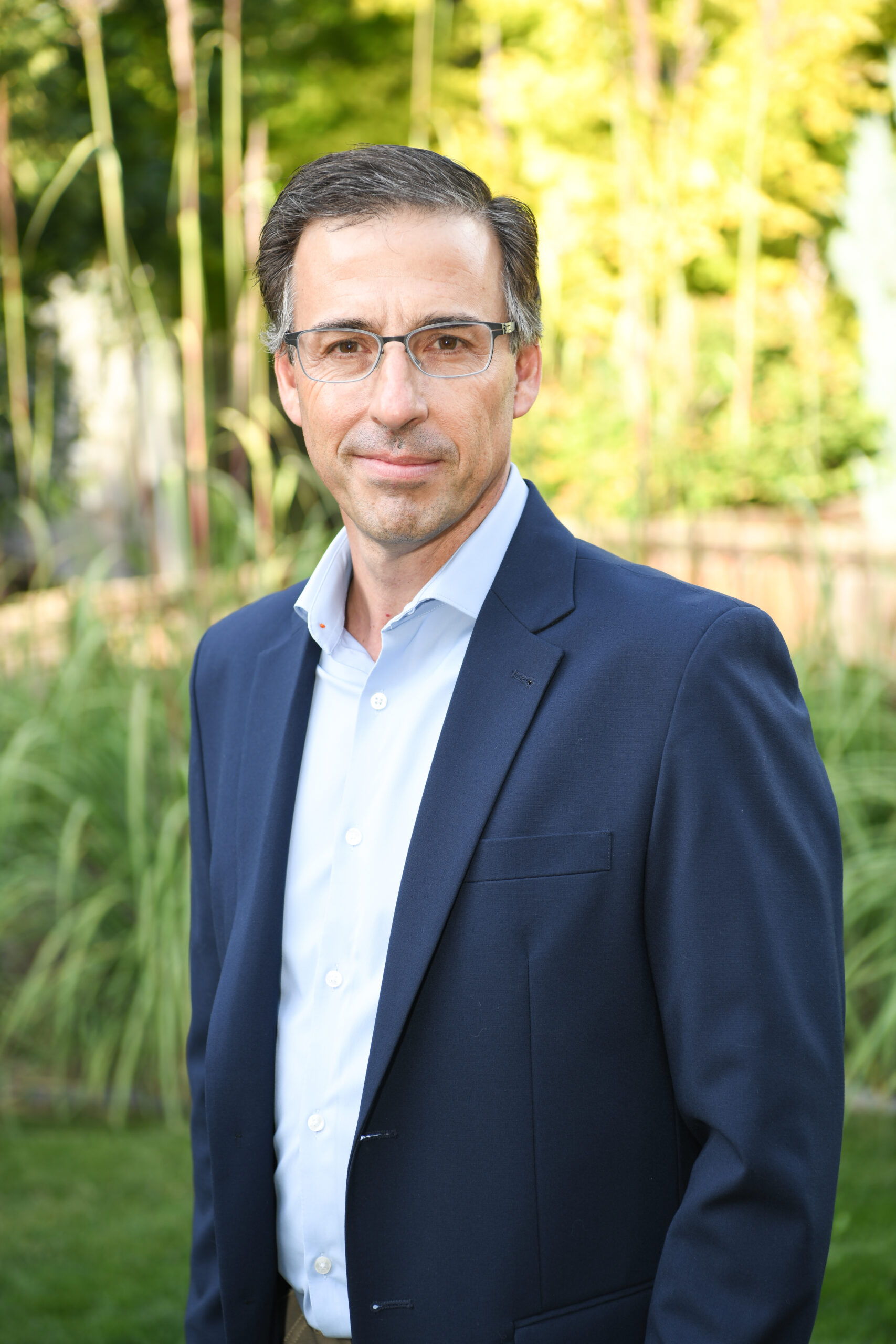
Matthew Pohl is the founder and CEO of the ReWild Group, which helps companies navigate challenging economic times and overcome roadblocks. He graduated from the University of Denver in 1988 with a degree in business administration and decision sciences.
Table of Contents
1:03 Prospering through chaos and competition
2:13 Roadblocks businesses face
4:25 Can a business be recession-proof?
The meaning of ReWilding
8:57 Looking back to look forward?
10:10 Pushing past plateaus
14:12 Discovering the stages of growth
17:06 The last business frontier
18:04 Show notes and credits
In this episode:
- About the ReWild Group
- ReWild Group: Seven Stages of Growth
- NPR: What is the legacy of the Yellowstone wolves, 30 years after their reintroduction?
Related articles and information:
- Talking Leadership TV podcast: Episode 32, Matthew Pohl
- Forbes: Supreme Court Will Decide Fate of Trump’s Tariff’s—Here’s What Happens if They’re Overturned
- Matthew Pohl on LinkedIn
Transcript
Lorne Fultonberg:
Matt Pohl was stuck Burnt out. Tired. No matter how hard he tried, his class action claims administrator business could not break through a revenue ceiling.
Matt Pohl:
But once we found the roadmap and we started seeing our growth increase dramatically, the organization transformed as well, and I was transformed.
Lorne Fultonberg:
That road map is folded up in a book called “Navigating the Growth Curve,” written by James Fischer. The research and framework inside turned Pohl’s business around—so much so that, when he sold it, he started the ReWild Group, a company that uses these seven stages of growth to make more and more businesses exceptional.
Matt Pohl:
A business can only fail if it refuses. And many organizations get stuck because they put artificial limitations on what they can become.
Lorne Fultonberg:
Now, Pohl is an expert in helping companies weather the stormy economic seas and push past plateaus. I started by asking him about something I read on his LinkedIn, about the way he “enables businesses to prosper through chaos and competition.
Lorne Fultonberg:
I know that we can all be victims of recency bias here, but with all of the constantly changing policies, lawsuits, injunctions, reversals, tariffs, has there ever been a more chaotic time to be in business?
Matt Pohl:
Well, I do think that the speed of business has been accelerating. I compare today’s world to my father who had his business in the ’60s, and it was a simple business. He was an interior designer, but I look at the competition and the landscape for his business back in the ’70s And ’80s. It’s definitely a lot more competitive. The speed of change is much more rapid. And yeah, I think the political environment, economic environment just reflects the dynamic nature of global economies today.
Matt Pohl:
I think there’s two kinds of roadblocks that you face as a business owner. There are external roadblocks, the macroeconomics, how much money costs, interest rates, those kinds of things, the changing marketplace. You don’t really control those things. And so I think every business owner is faced with these realities, these dynamics that they are unable to influence. Those things are forced upon you as a business owner. But there’s many hurdles that are within your control. And so that’s really what I learned is that despite what was going on outside the four walls of the business, there are a number of things that I can control and focus on. And when I do those things, when I focus on those principles and areas that I can actually build a business that’s more resilient so that these things that are coming at me externally, I can at least adjust to, I can make it through, I can survive and I can even thrive if I am open to understanding and creating a business in a way that is more resilient, using time-tested principles that it took me many years to understand.
Lorne Fultonberg:
Yeah. What does it mean to be a resilient business?
Matt Pohl:
It’s this almost a paradox. It’s a business that has structure but doesn’t have rigidity. sometimes people think structure creates rigidity, creates boundaries and things like that. But when I think of structure, it really is about creating these foundational elements that allow your business to take a punch or have a change in the market. And you’re able to adjust to that. You’re seeing those changes and you have multiple options. So it’s maybe a little bit of the idea of not having all your eggs in one basket and intentionally design your business so that it has this flexibility in it
Lorne Fultonberg:
Does that mean with resilience you can ever make a business truly recession-proof or immune to the economic factors that are going on around the world?
Matt Pohl:
Well, I’d say every business, these external forces like those recession-proof or external technology disruptors in the marketplace, you can’t control those. So that’s the whole idea is that you have to focus on what you can control. And a simple example is we talk about having multiple revenue groups. These are different kinds of products or services that meet different kinds of demands and are actually fairly different. You have things that are within the core of your business that are adjacent to that core. So not quite core, but similar. And then edge. Edge revenue is where you’re playing with innovation. And by having those three revenue groups, you’re not dependent just on your core. So if the market changes and core is not being in demand, you have adjacent and edge revenue groups that you can pivot to.
Lorne Fultonberg:
How can a company make those changes while it’s already functioning?
Matt Pohl:
Well, I think it’s very common for a business as it’s being founded to have this core service or product that you’re focused on. And that’s just natural. And that’s okay to be initially focused on a handful of offerings that generate high margins. That’s in fact what you should be doing. But as you start to grow in your business and go through what we call the different stages of growth, you have to be looking for these other opportunities. And just a simple example is with Target. Target was a retailer primarily focused on dry goods, clothing and toys and things like that. But Target expanded into the grocery business a few years ago, and that was really an adjacent revenue group. And then they further added online service services. Target.com. And because they had those three revenue groups when COVID hit, they weren’t shut down a lot of other department stores because grocery was considered a industry to keep running. And they had already built out the technology. So when people needed to not go in the store, they had the bulk of that technology already in place to allow for curbside pickup and things like that. Had they just stayed with their core, they would not have been able to negotiate the pandemic, which was clearly an outside unforeseeable factor. They couldn’t have anticipated that it was coming, but because they were resilient, they were able to negotiate that more successfully.
Lorne Fultonberg:
Your company, ReWild is named for a scientific ecological word. in the field as I understand it, rewilding is about restoring an area to its natural state. why did that word speak to you?
Matt Pohl:
Well, I like this concept of rewilding because I think it really addresses what happens in the real world. Businesses and all human organizations are really an ecosystem. It’s this highly dynamic interactive system, especially when you have people involved. Because human beings have a lot of variability in them. So the more people you add, the more complexity there is because there’s more and more relationships.
We like the idea of organizational rewilding. And it fit really how our system works, which is we identify what’s missing, like an element that’s missing in an ecosystem, in nature. Like the wolves were gone in Yellowstone for 50 years before they reintroduced. And that caused this powerful ripple effect that restored the wildness and the health of Yellowstone National Park. Our system looks at businesses and it identifies the elements that are missing, and it infuses those and sets off this similar type of ripple effect. So it’s really those parallels, at least in part why we latched onto this concept of rewilding.
Lorne Fultonberg:
I think that’s interesting because I think we hear all the time about pushing new frontiers and forward, forward, forward when it comes to businesses. And this concept of restoring and almost returning to roots just seems different than what we typically hear.
Matt Pohl:
Well, I think there’s a tendency, it’s human nature that new is always better. People who study philosophy will say that there really isn’t anything new under the sun. That it really is these long-lasting, time-tested principles that we often move away from and then we realize, well, the new stuff wasn’t working as well as the old stuff. Let’s go back and do the old stuff that seemed to be working. And yeah. I do think there’s this sense that nature is this visual and physical representation of truth. And when we look at nature, we see truth and we can learn from what we observe in nature. I think we all resonate when we’re out in the wild, when we’re up in the mountains here in Colorado, there is this powerful connection that we feel. And so I think that’s partly why the story of what happens in nature when we apply it to these human organizations just feels right. It makes sense. And we feel that it’s a powerful analogy.
Lorne Fultonberg:
I know a lot of your work also has to do with stagnation, plateaus, moving beyond that. Can you tell me a little bit about how we reach this place of stagnation and whether that’s inevitable for all of us?
Matt Pohl:
there’s one saying that I really like that a business can only fail if it refuses to change. And many organizations get stuck because they put artificial limitations on what they can become. But really, our study of over 1,500 small and mid-sized businesses was really focused on this. Why do businesses get stuck? Why do they fail? And what we found is that the key to keeping your business growing in a sustainable way is to recognize that businesses go through seven stages of growth. And these stages are ranges or plateaus or levels of complexity. So as a business gets more complex, it can’t follow the same playbook.
What got them there is not going to get to the next level. It may not even sustain where they currently are, and they often will move back. And so by having a roadmap that says, “Okay. If you’re in stage one, here’s the rules. Here’s when you move to stage two and here are the new rule set.”, you can navigate growth more gracefully. Because without a roadmap, you’re left to trial and error. And trial and error is a very expensive proposition. You spend years, and in my case, over a decade, basically stuck as a business owner. And it wasn’t until I stumbled on this research from the inventor and researcher of this framework that it really helped guide me to grow my business. To triple it in the last three years of ownership. I don’t think stagnation is inevitable, but the reason we hit these stall points in the business is because we continue to do the things the same way, and those things become stale. If we can change our principles that we’re applying and how we look at these different structures and elements and use a roadmap to do that, we don’t have to get stuck.
Lorne Fultonberg:
I want to make sure I understand here, the difference between something old getting stale and returning to these older concepts like we were talking about with rewilding restoration. Can you explain the difference between those two?
Matt Pohl:
Well, I think when we use the term old, it’s referring to something that worked at some point in time and has been replaced by something actually probably builds off of that, but that creates new capabilities for it. And something that you’re returning to restoring is really a fundamental principle that you can try to move away from. But as you move away from it, you see the results aren’t as positive.
Let me give you an example. When you’re in a stage one business, one to 10 employees, you may have a very clear picture of what values you want the organization to live by. And those values are reflected in your own personality, how you approach work, how you communicate within the team. And that may be sufficient in stage one. But by stage three, if the organization is still looking at you as the founder, as the source of these values and they’re just trying to emulate you, it’s not as effective because the group is larger. There’s more complexity. So by stage three, you need to have put in place clear core and brand values that are documented, that are communicated on a regular basis, that are reinforced, that are supported within the organization. So that’s an example how you have the values, and they worked in that form at an earlier stage of less complexity, but you might not realize that they need to be strengthened and made more clear and public as you grow.
Lorne Fultonberg:
Can you tell me a little bit about the discovery of that research that you were talking about?
Matt Pohl:
Yeah. So my wife and I are business partners, and we were 12 years into the first business we had ever owned, and the business had been at a plateau for about a decade, just had this revenue ceiling we couldn’t get through despite my best efforts.
And so I started to look for anything to help me understand how to make the business more valuable. I stumbled on this book and research by the inventor, the researcher who had come up with this idea that businesses go through these different stages of growth, and his research had shown these different guidelines to follow. And turns out that he lived here in the North Denver area. So I was able to connect with him. And spent about a year with him learning his framework and his guidance.
Applying that road map to my business, I was able to quickly see some key things that I was misaligned with. I just wasn’t doing right at all. And they weren’t sophisticated or complicated things. When I applied these principles, the business began to grow.
That was my first introduction to the methodology. And I ended up, after exiting the business I ended up going back and acquiring all the research and IP from the inventor And so I was able to take his research and turn it into a system that is now being used across the globe to help small and mid-sized businesses.
Lorne Fultonberg:
Did I understand right that you were maybe ready to retire or take a significant step back until you found this research and this system?
Matt Pohl:
Well, in year 12, I was getting burnt out. I was tired. But once we found the roadmap and we started seeing our growth increase dramatically, the organization transformed as well, and I was transformed. My day was transformed. So I was leading more and growing more and coaching more. The business I had at year 12 versus year 15 was totally different. By year 15, I had fallen back in love with my business. And so when we got the offer to sell, it was very difficult to accept it because it was like, well, but we have this great business now. I’m enjoying it again. Why would I walk away from this? We went ahead and did that, and I think it was the right decision.
Yeah. And then coming out of that we had the chance just to retire at that point. So that’s when it was like, okay, this system helped me. I’d like to be able to really expand its reach and help others with it. So that’s when The ReWild Group was founded.
Lorne Fultonberg:
The last question that we ask all of our guests is as a voice of experience on our podcast here, what else would you like to share with our audience, whether it’s advice or additional perspective?
Matt Pohl:
Well, I think my perspective comes from that of an entrepreneur. entrepreneurship is not easy. It’s very difficult, and it takes a certain level of character.
We live in a very civilized world these days. Where are there new frontiers? And I would say entrepreneurship is one of the last remaining frontiers where you can really challenge yourself to take risk, but it will challenge you in ways that no other thing you do in life will. and there’s reward when you do it well.
Lorne Fultonberg::
That’s Matt Pohl, the CEO and founder of The ReWild Group, and a University of Denver alum. Matt, thank you so much for joining us.
The starting point for any growth roadmap is the ReWild Group website, which has a special calculator that will help you figure out which stage your business is in. We’ve linked it in our show notes at daniels.du.edu/voe-podcast. The VOE Podcast is an extension of Voices of Experience, the signature speaker series at the Daniels College of Business. Patrick Orr is our sound engineer. Joshua Muetzel wrote our theme. I’m Lorne Fultonberg. We’ll see you next time.