


Podcast: Play in new window
Subscribe: Apple Podcasts | Spotify | Amazon Music | iHeartRadio | RSS
In celebration of Women's History Month, the Voices of Experience podcast team took a look through its history, and picked four of its favorite interviews with female leaders. On this episode, hear insights on leadership, mentorship, work-life balance, gathered from the first four seasons of the VOE podcast.
Show Notes
This month's episode features:
Jodie Antypas is a consumer marketing expert currently on leave from her role as VP of consumer marketing at Electronic Arts. She's a recently published children's book author with her debut story "Just Like an Astronaut." Prior to her time at EA, Antypas was an assistant manager of research at Nintendo and graduated from Daniels in 2005 with an MBA.

Andrea Wescott Passman, Chief Operating Officer of Caerus Oil and Gas. Caerus is a privately held natural gas producer, the largest in the Western U.S. Andrea leads operations, engineering and environmental, health and safety for the organization. She’s been with Caerus for three years and in the oil and gas industry for more than 20 years. She received her bachelor’s degree in petroleum engineering from the Colorado School of Mines and is a graduate of the Daniels College of Business, receiving her MBA in 2008.

Leigh Hitz is a strategic advisor in the hospitality industry who retired as CEO of Stout Street Hospitality in 2016. Hitz worked at Stout Street for nearly three decades, learning to manage all aspects of the hotel space, from the front of the house to the penthouse. In 2008, Hitz and her husband, James, established a scholarship fund for female students pursuing a hospitality degree at the Fritz Knoebel School of Hospitality Management at the Daniels College of Business.
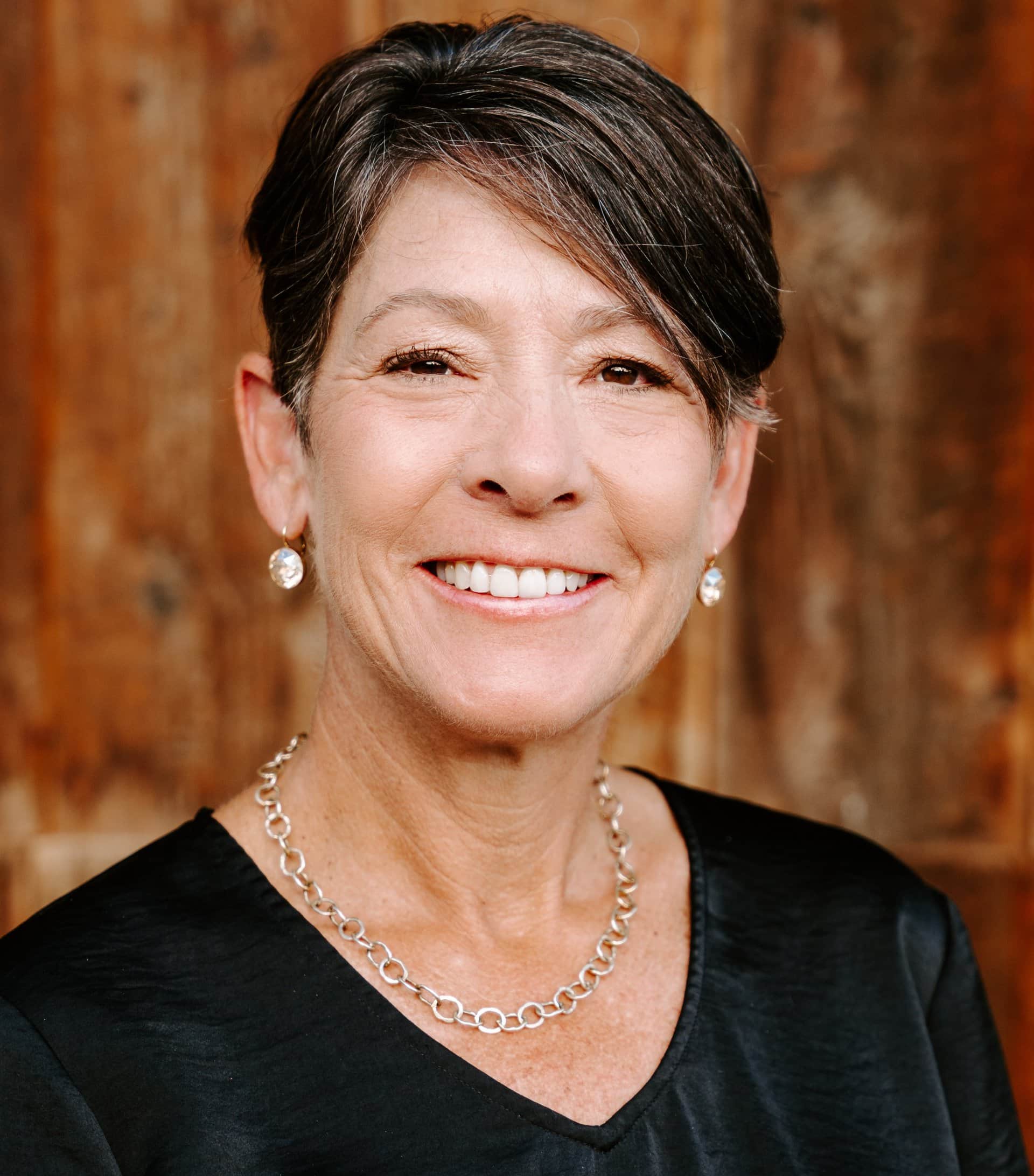
Kirsten Benefiel is a seasoned C-suite executive and former CEO of HSS, a company that specializes in providing security in high-risk environments, such as aviation, health care and government. She is a founding member of Colorado Inclusive Economy, an adjunct faculty member in the Daniels College of Business' Executive MBA program and a member of the Daniels Executive Advisory Board. Benefiel earned a bachelor's degree in public relations and communications from the University of Denver in 1996 and an MBA from the Daniels College of Business in 2014

Table of Contents
0:00 Intro
0:21 Jodie Antypas's management advice
7:09 Andrea Wescott Passman on the "glass cliff"
12:56 Leigh Hitz on the qualities of a strong mentor and mentee
17:55 Lesson's from Kirsten Benefiel's notebook
22:14 Show notes and credits
Extra links:
- Daniels Newsroom: Women in Business Club Creates Camaraderie, Community
Previous episodes with female leaders:
- Megan Smith: COVID-19's Impact on Labor and Employment
- Amy Blair: Investing in Human Capital
- Kathleen Pitre: Sustainability on Earth Day 2022
- Helen Drexler: Why Community Commitment Isn't Optional
- Taylor Iascone: Making ESG Sustainable
- Lauren Guthrie: Scaling Everest—And DEI Work
- Naomi Boyd: Dancing With Disruption
- Jandel Allen-Davis: Bedside to Boardroom: Lessons From a Doctor Turned CEO
- Debbie Brown: Colorado's 2025 Business Game Plan
Transcript
Lorne Fultonberg:
Today, on the Voices of Experience podcast, a special episode, celebrating our most successful businesswomen. March is Women's History Month, so we went back through our history—all the way back to 2022—and picked clips from a few of our favorite interviews with women in the C-suite.
We'll start with Jodie Antypas, then the VP of consumer marketing at Electronic Arts, who rose through the video game industry, despite her parents keeping her away from games when she was a kid.
Nick Greenhalgh talked with Jodie in 2023 and asked for her best management advice
Nick Greenhalgh:
At the height of your time at EA, you managed a team of over 110. What are the most important leadership qualities to have when you oversee a team that large?
Jodie Antypas:
I think one of the reasons I stayed at EA for 12 years, which is a really long time in today’s day and age, particularly in marketing and analytics and insights, you don’t see people stay at one job for that long. But I’ve really appreciated being at EA where there’s a lot of leadership opportunities, the art and investment in leadership is something that is appreciated, and EA is a company where leadership is appreciated and it’s something that is invested in, and that’s something that I have really enjoyed over the course of my career when you have a large team, you really can’t do it all on your own. And so you have to rely on great talent and build a set of leaders around you to support you and to really lead the work. So, I spent a lot of my time investing in finding the right talents, recruiting and putting the right talent in the right role. And in many cases, removing the wrong talent from the wrong role and helping find the right career paths for people to be successful and for teams to be successful. I think another thing that great leaders do is acknowledge that when you start leading larger teams, and with that leading multiple functions in different functions, that you’re far outside of your own area of expertise. So, in my case, my expertise is in consumer insights and research and analytics and have expanded my career over time to include marketing technology and lifecycle marketing and media strategy and media planning. And at that point, your job is not being the expert in those functions. It’s really leading and listening and supporting and figuring out how you use the right resources that you have at your disposal, and how can you help those experts in those roles make the right decisions and support them to solve problems that need to be solved. And so it’s much less about the functional area and more about what leadership skills are you flexing to be able to help your team succeed, and using objectivity to make some really difficult decisions at times.
Nick Greenhalgh:
And has that experience led you to additional coaching and career development opportunities?
Jodie Antypas:
So, at one point in my career, I was leading user experience research, which might not sound like a stretch for someone who led consumer insights and analytics. But a big part of the role was overseeing the teams that were giving feedback to the development teams on gameplay quality and game design. And that was a huge stretch for me personally and a really vulnerable space for me, as I talked about earlier in the podcast, not having a huge gaming background. And so giving feedback to some renowned developers within EA about what players were telling us about their game really had to leverage my objective mindset. It didn’t really matter what I thought of the game, but this is what players were telling us. This is what we were seeing in our labs. And so I think that was an opportunity for me to see how I was really relying on my leadership skills, not my game design skills or my user research or game developer skills. It was really what leadership and how could I take that feedback and share that in the most effective manner with some of our teams internally.
Nick Greenhalgh:
Great. You recently went on leave from EA in a move that you described as an opportunity to recharge and focus on some other projects, What motivated that decision and was it challenging to ultimately take the plunge into leave?
Jodie Antypas:
I would say it was a big challenge for me to come to terms with the fact that I think I needed to take some time off. It’s probably not a wholly unique answer for someone like me who’s had a pretty intense job and two kids and lived through the last couple of pandemic years and spent some time thinking about what I really want and starting to get a little bit burned out. So, I took a lot of time and was thinking about what do I want from my next chapter? And what I ultimately decided is I wanted to give myself some time, and it took me a little while to wrap my head around that. It might have been an obvious decision to a lot of people, but it’s something that I really had to wrestle with. I’m in my forties, and I finally gave myself permission that I could take a break and I didn’t have to be 65 when I did that. So, I am spending some time recharging and reading, which is something that I love to do, and doing yoga and exercising and cooking and making jam, and just things that I didn’t have the time or mental energy to do when I was working more than full-time and had two kids and spending a lot more time with my family. So, it’s only been a couple of weeks, so I would say I’m still in the decompression phase of taking a leave of absence, but it’s been really refreshing to have some kind of time and mind space back.
Nick Greenhalgh:
Great. I think there’s a really important lesson there for our listeners. It doesn’t matter how old you are or how long you’ve been in your career, if you need time for yourself, I think you just shared that you need to take it.
Jodie Antypas:
I totally agree, and I think it’s a lot more common now, particularly after the pandemic. I think as a woman, I was really hesitant to… I even said to my boss at the time, “I just don’t want to be mommy tracked.” And he said to me, he’s like, “I don’t know what that means.” And I said, “Well, of course you don’t know what that means because you’re a man.” But I didn’t want to feel like I’d put 20 years into my career and that I was just throwing it all away. And that was something that I really had to wrestle with. How was I going to emotionally handle taking this time off?
(Transition back to host)
Lorne Fultonberg:
That was Jodie Antypas, talking with Nick Greenhalgh during our second season. The VOE podcast last officially celebrated International Women's Day in 2022, when Andrea Wescott Passman talked with our old friend Kristal Griffith. At the time, Passman had risen to the C-suite with Caerus Oil and Gas, a company that was near bankruptcy and in need of modernization.
Kristal Griffith:
I know you’ve heard of the glass ceiling where women hit a certain level and they just can’t keep moving up. But now we’re learning about this thing called the glass cliff, and it’s where women get promoted during times of crisis. Maybe you’ve heard of it since it happened to you. But anyway, when failure is more likely and then it’s more risky. So, talk about this. Have you seen this? Have you seen it happen to other women?
Andrea Wescott Passman:
Yeah, you can call me the queen of the cliff. I just haven’t fallen off the other end yet. Like I said, when I joined Caerus, it was a turnaround. The previous company before that, CNX Resources, was a turnaround that was on the verge of bankruptcy. And a lot of times you see the glass cliff because people come to women almost as a last resort.
Like let me try something so different that I haven’t seen before, because nothing else worked before this, that I’ll try out a woman. Right? Which is a great opportunity. But at the same time comes with a great amount of risk. And if you’re not sure what your brand is, what your methodology is, what your leadership style is going into one of those opportunities, and somebody hasn’t mentored and trained you along the way, that’s when we set up people for failure.
And in my case, it really comes down to making sure that I had a process, that I had a methodology, that I understood my style to be able to do turnarounds. I don’t build things from scratch. That’s not my brand. I make things better. I’m an optimizer. Truly an engineer from that perspective.
And when I think about that, I got some great advice one time from Steve White from Comcast. It was some of the best words ever. He said, “You have to think of yourself like a business. Andrea Incorporated. And what defines Andrea incorporated? Not the company you’re going to work for, do those align, and what do you want to get out of this, and how do you want to be when you show up?”
And it was some of the best advice I had ever gotten. And I tell those people all the time, I’m like, “Well, you need to be Kristal Incorporated. Clearly you take care of yourself and do what’s best for you.”
But being able to define that and figuring out who really you are and reincorporated, Kristal Incorporated, those are the things that let us be successful so that the glass cliff doesn’t get us. Because too often you see women fail in those environments, and they don’t ever get a chance to recover. It is different. Men often get more chances than women do in that case, so we have to do a better job.
Kristal Griffith:
Wow. Okay, that’s intense. So, talk to me a little bit about how you got that experience you needed before you put yourself in that high risk situation, or did you feel like that, or did you just go for it?
Andrea Wescott Passman:
I think sometimes it happens by chance. Right? So, when I look back at my time at CNX Resources, that company was on the verge of bankruptcy when I joined. And we took a risk there to start developing a new play. You want to talk about convincing a board to go spend $30 million on something that’s never been done before is sticking your neck out on the line.
And I’ll say, I didn’t know at the time that I was sticking my neck out on the line. I was just doing me, intense me, which I’m very good at. And it paid off. We got lucky. Right? And it turned around and it ended up being a hugely successful play that made the company a lot of money, and it also turned the company around so that we were successful to go on and continue being a public company.
And so, when you look back on those opportunities, yeah, I lucked into it. But since then, I’ve taken the opportunity to be a mentor and help other women and other diverse people really make sure that they have the path in place, that they have their plan, they have their methodology if they’re going into something like that. And in hindsight, I didn’t have my personal board of advisors quite built out yet, but you bet, I use them all the time, extensive use of my personal board of advisors as I’ve gone through the Caerus journey as well.
Kristal Griffith:
Very cool. I want to talk through that, because I’ve heard you talk before. You have a board of advisors. You have very clear definitions of mentorship is versus sponsorship. So, talk us through what that means. If you’re giving advice to whether it’s fellow alumni, or Daniel students, or just the general audience, what does this mean and what do you think they should do?
Andrea Wescott Passman:
Well, so, one, I think it is the key to my success, this personal board of advisors. Thank you to DU for giving me so many more. I really appreciate that. And also to be an active player for other people in their personal board of advisors.
We talk about the difference between an ally, a mentor, and a sponsor or an advocate. An ally is educating yourself and being engaged on the issues in the workplaces so you can help other people out.
Being a mentor is about providing guidance. In my world, I think it’s a bit of coaching as well. I think one of my biggest questions is what else, it’s my favorite, and really discussing their experiences, and role playing in a safe environment. Right? It’s safe. And you really have as a mentor, you’re not expecting anything in return except for feeling altruistic.
And the then as a sponsor or an advocate, essentially you’re using your influence and credibility to help out an individual that maybe doesn’t normally get the opportunities It’s sticking your social capital out there for another person. And you need them all and you need to be all of them, especially as you advance in your career.
(Transition back to host)
Lorne Fultonberg:
Just like Andrea, there weren't a lot of women around the hospitality industry for Leigh Hitz to look up to either. She told Nick Greenhalgh last March that she set up a scholarship program to support students like her.
Nick Greenhalgh:
In 2008, you and your husband James established a scholarship fund for female students pursuing a hospitality degree at Daniels. What motivated you to create that fund?
Leigh Hitz:
Well, first of all, I’m so glad we did it. So at the time of our lives, our kids are actually just starting at University of Denver. And Jim’s father had created a math scholarship at the University of Nebraska for women.
And I thought, “Oh gosh, I should do this at the hotel school.” So we developed a scholarship, and I like to say since I was one of those students, I was not an A student at Daniels, I was in the middle of the road there because I like to work, I like to do other things. And I was a balanced student, I believe. So I wanted to create a scholarship that was for B students. They had a 3.0, but that wasn’t what was driving it. Where did they come from? What were their lives like? What did they strive to be? Hardworking, well-rounded, and get more women into this industry. So at the time, we still didn’t have a ton of women in executive positions. And today it’s getting better.
Nick Greenhalgh:
You hit on something there that I was going to follow up with you. It sounds like you had an experience that drove that scholarship. What was it like being a woman in a leadership position in the hospitality industry at the time you were doing it? Was that rare?
Leigh Hitz:
Very. So I was one of the first general managers in the industry. And then to get beyond that, to get into an executive position was extremely rare. I could probably name the other two ladies at the time, but most women at the time were in sales or HR, and they really didn’t go above that at the time. And I think a lot of women, and even a lot of students I mentored today, they still struggle with, “How do you have a life, be a wife, have children, and be in this industry?” So how do you create a well oiled machine with your husband and your family to have a good life balance and still do what you’re passionate about? And I think that still exists a little bit today for students to understand that just because our industry is 24/7.
Leigh Hitz:
So how do we adapt to that to ensure that ladies who want to be in this industry love it like I did and several of my colleagues, but want to stay, and do what I’m doing and mentor and coach some of the other ladies to get into this industry.
Nick Greenhalgh:
For you, what are the most important qualities of a strong mentor?
Leigh Hitz:
Well, it probably goes back to my mentor. Right? I think the ability to really, one, listen. Listen to what the student is telling you, asking you, seeking advice on, and then what are their passions? What do they want to do? Because it’s not always what we think they want to do. And the other side that I really enjoy, and I have a wonderful gal right now and really networking her. How do we network you into the industry, into other folks that can mentor you? It just doesn’t have to be me, but let’s get you with some other mentors here, even in Denver, or even on the phone. We’re blessed in Denver from the hotel side. We have probably 15, 20 different management companies in Denver. And so we are able to really tap into them for expertise and other coaching and mentoring for these students.
Nick Greenhalgh:
Great. And on the flip side of the equation, what tips would you give to students who are looking for their own professional mentor?
Leigh Hitz:
Look for somebody who is aligned with you. What are your passions to their passions? And can they give you good advice, solid advice, not just top of the ice cream cone. Let’s get down into the cone of it and be really like, “How can I really help you, steer you? What do you need that I can be assistance for?” And it’s always been in the hotel business. I’ve had students I’ve mentored that have been out of the hotel business or employees on some of our jobs or other hotels. They’re like, “I need to get out of the industry.” Okay, well let’s figure that out. What are our next steps? And then set them up with somebody that can help them.
(Transition back to host)
Lorne Fultonberg:
Leigh Hitz there, speaking with Nick Greenhalgh.
The best advice that Kirsten Benefiel receives, she keeps in a black notebook, for reference when she needs it. When we spoke last year, she cracked the cover for me and laid out her take on what young business people need to succeed.
Lorne Fultonberg:
That’s it on the table right here?
Kirsten Benefiel:
It’s on the table.
Lorne Fultonberg:
What is one of the pages that you read and reread most often in there?
Kirsten Benefiel:
Oh, that’s a good one. I have it open to one, but that was just because of what I was jotting down this morning.
Lorne Fultonberg:
And for those people who are listening and can’t see, this is a thick sketchbook with stickers on the back and lots of drawings and diagrams on the pages.
Kirsten Benefiel:
I have things in here around just mood and friendship and just ways to think about how to live in the moment more. I read a ton. I love it. For me, it’s incredibly relaxing. And I’m a very curious person, and so I really like how people think about things. And I love when somebody thinks differently than I do, or they put it to words so much more eloquently than I could ever say. And so, I like to jot down the way people think about things.
One of the pages I’ve been reading a lot lately is I read a book, and so I have three kids at home, I have older parents, and I’m in the middle of having some of those difficult conversations with my parents and my family around, “Well, what are we going to do as we all get older and how can I best support my mom through this time?” And so I read this book that I’ve been referring to all of my friends, it’s called “Being Mortal” by Atul Gawande.
It gives you this framework. And if you can’t tell, I’m a process dork. I worked at Accenture forever, so who doesn’t love a good framework? But it’s not a four box model. But it gives you a really cool framework to think about how to have hard conversations. And then when I really started thinking about it, these actually are conversations you could have with anyone. He just happened to frame it in terms of an aging parent. And so, I find myself referring to these page of questions like, “What is your understanding of the situation and its potential outcomes? What are your fears and what are your hopes? What are the trade-offs you’re willing to make and not willing to make? And what’s that course of action that best serves this understanding?” And so talking to my mom about getting older, “What are the trade-offs? What’s most important to you?”
And living alone was incredibly important to my mother. And so, “Okay, well then how do we make that happen? And what other trade-offs are you willing to give up on? Can you have groceries delivered? Can someone come to the house and clean? Yes, I know it won’t be to your standard, but you’re going to have to get over that.” And so, you can ask those questions in almost any conversation. And so sometimes when I feel myself getting really frustrated with somebody not really understanding like, “Why won’t they just do it this way?” I think this book helps center me around, how to remember that all of us as humans just want to write our own story, just want to be in charge of our narrative. And when you feel like you’re losing control of that narrative, there is a way to look at that situation.
Lorne Fultonberg:
As a voice of experience, Kirsten, what’s something you’d want to pass along to our listeners?
Kirsten Benefiel:
Maybe, I think the advice I’d like to leave everybody with is that, really just for people to show up, listen, really think about who they want to be and go after it. I spent way too many years of the first years of my career trying to do what was expected of me on a corporate ladder I wasn’t sure I needed to be on.
And when I was able to take a step back from that, and really think about what is it I wanted to do, I had so many great learning experiences and so many great mentors, and just so many interesting life experiences, that when I finally became a CEO, which is something I chose to be, I felt like I had such a great network of people to fall back on, to get help with and to bounce ideas off of. And so, I would just encourage people to remember that, you are enough and you can choose your own career and your own path, and it can go a number of different ways, and just continue to build that support group along the way.
Lorne Fultonberg:
Our thanks once again to Jody, Andrea, Leigh, and Kirsten for their time. And, of course, they are just a handful of the women we have featured on this podcast over the past few years. You can listen to all of our episodes at daniels.du.edu/voe-podcast.
Click on this episode and you'll also find a link to an article about the Daniels Graduate Women in Business Club, which, for nearly 20 years, has helped female students develop leadership skills, volunteer together, and build strong professional networks.
The VOE podcast is an extension of Voices of Experience, the signature speaker series at the Daniels College of Business. Joshua Muetzel wrote our theme. I'm Lorne Fultonberg. And, before we go, a special thank you to our uber-talented sound engineer, Sophia Holt, who is graduating this month. We know she is on her way to amazing things.
We'll see you next time.