


Podcast: Play in new window
Subscribe: Apple Podcasts | Spotify | Amazon Music | iHeartRadio | RSS
When it comes to running a sports franchise, wins and losses only tell part of the story. The business side has its own scoreboard, and that is where Jen Millet thrives. She’s a seasoned sports executive and now the president of the newest National Women’s Soccer League team, Denver Summit FC. Jen arrives in Denver fresh off helping launch another NWSL franchise, Bay FC, and after leading marketing for the NBA’s Golden State Warriors. Her next challenge? Bringing professional women’s sports back to the Mile High City for the first time in nearly three decades. On this episode of Voices of Experience podcast, Jen shares her goals for Summit FC both on and off the pitch, her vision for the club’s inaugural match at Mile High Stadium and what she sees on the horizon for women’s professional sports in Denver.
Show Notes
Jen Millet is the President of Denver Summit FC. She previously served as the COO of Bay FC and the CMO of the Golden State Warriors. She also spent time at Pandora, StubHub and Live Nation.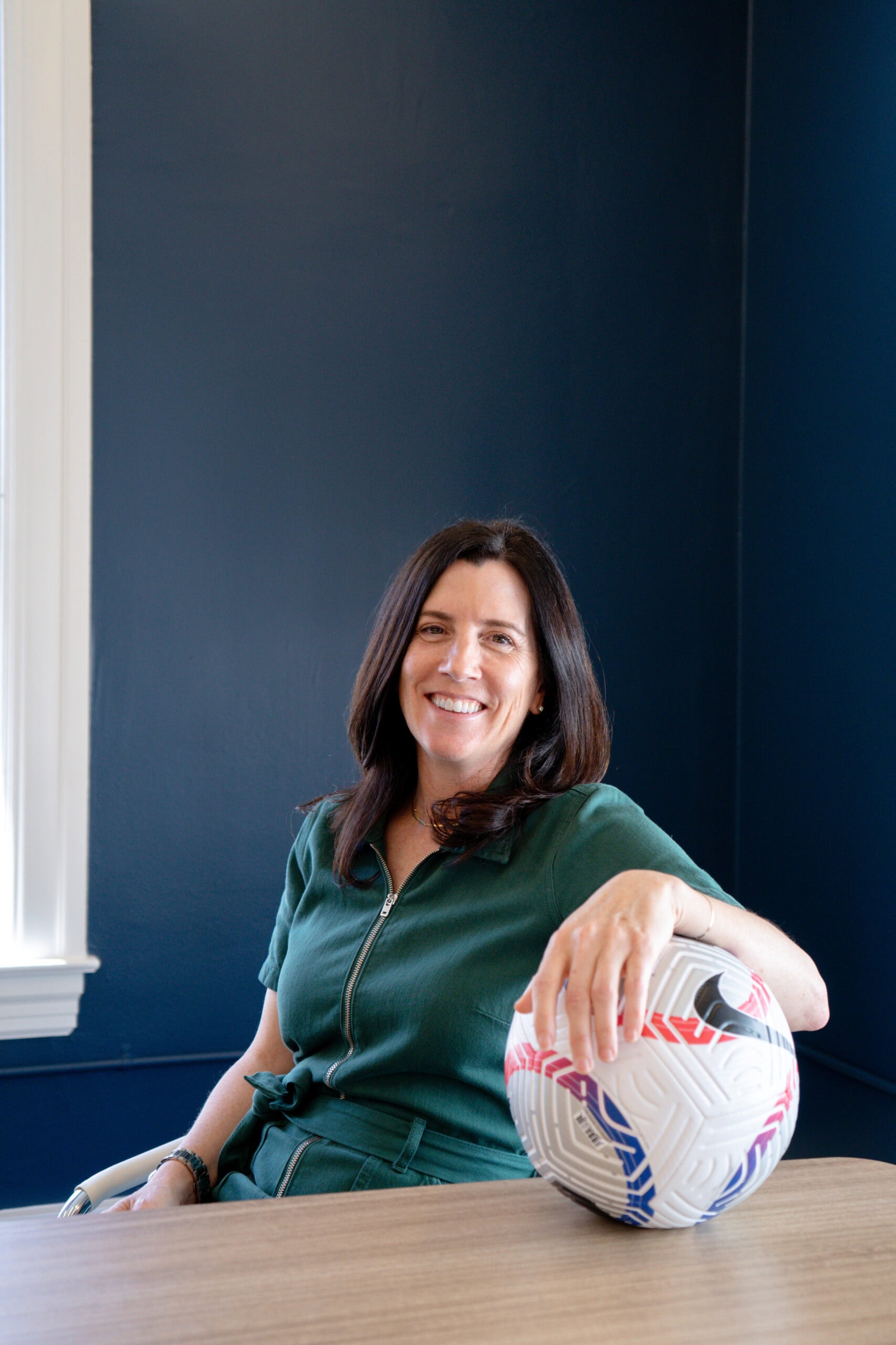
Table of Contents
1:11 Building a franchise from scratch
3:54 Community as the “best evangelists”
5:31 Why Mile High Stadium matters
6:37 The future of women’s sports in Denver
8:53 “Don’t underestimate your audience”
10:50 Defining success off the pitch
14:25 Turning season tickets into membership
18:29 Leading through wins, losses and chaos
24:10 Creating space for working parents
27:05 Show notes and credits
In this episode:
- About Denver Summit FC
- ESPN: NWSL’s 16th expansion team Denver Summit FC reveals name, logo
- CBS News: Denver Summit FC inaugural home game tickets on sale now
- Business Insider – A Golden State Warriors executive went from keeping her child secret from colleagues to championing working parents
Related articles and information:
- Denverite: Here’s what the Denver Summit FC has promised its new neighbors
- Denver7: ‘Huge as a new franchise’: Denver Summit FC owner Rob Cohen on Denver7 partnership, other teams’ support
- NBC News: NWSL players’ union rejects proposed loophole to its salary cap as league fights to keep Trinity Rodman
Transcript
Nick Greenhalgh
When it comes to running a sports franchise, success is usually measured by what happens on the field. But how do the people steering the business side of the house put points on the scoreboard?
Jen Millet
We can’t control those things you just mentioned, right, those wins and losses and those goals, but we can control everything else that one of our fans is going to experience in or around a match.
Nick Greenhalgh
That’s Jen Millet, a seasoned sports executive and now the president of the newest National Women’s Soccer League team, Denver Summit FC. Jen arrives in Denver fresh off helping launch another NWSL franchise, Bay FC, and after leading marketing for the NBA’s Golden State Warriors. Her next challenge?
Bringing professional women’s sports back to the Mile High City for the first time in nearly three decades. On this episode of the Voices of Experience podcast, Jen shares her goals for Summit FC both on and off the pitch, her vision for the club’s inaugural match at Mile High Stadium, and what she sees on the horizon for women’s professional sports in Denver. Jen, welcome to the show.
Jen Millet
Thanks for having me.
Nick Greenhalgh
Let me quickly set the stage. Your appointment was announced in April of this year and the team’s first match won’t be until March of 2026. Can you walk us through everything that has to be done in that 11-month period?
Jen Millet
Yeah, well we can go back and say what we’ve already got.
Nick Greenhalgh
Sure.
Jen Millet
So what we’ve accomplished to date, so everything in a startup, everything associated with building a sports team, ordering uniforms, designing uniforms, but obviously just building a business. So we’ve hired staff, we’re at about 50 folks so far. We’ve, you know, gone on sale with season tickets and actually sold out of season tickets for our first season.
That doesn’t mean tickets won’t be available, just the number of seats that we set aside for seasons are now gone, but groups and single games will still exist. You know, we’re out selling sponsorships, so the partnerships team is out having those conversations, engaging with brands. We announced earlier this summer that Common Spirit has come on board as our naming rights partner for our Performance Center.
We’re doing all the work building a brand, so making sure that, you know, we’ve got sort of this visual identity, but how are we creating a brand voice around that and building websites and merchandise that are in line, you know, with those guidelines. We’re partnering with the community on a lot of projects, so as we build out this temporary stadium in Centennial that is in partnership with Troy Cook Schools, we want to make sure we’re a good steward in that community and our Performance Center is out there as well. And as we plan for a build in Santa Fe Yards, we are working with, you know, the six neighborhoods that are adjacent to that site to understand what they care about and what they value and what they want to see in the facility, and partnering with them on a community benefits agreement.
So lots. What do we have left to get done before that first kick? So we announced early last month our first match at Empower Field, so we need to sell out the rest of those tickets.
We’re doing really well so far, but lots more tickets to go. We’ve got to round out our roster, so get the, you know, most NWSL clubs have about 22 to 26 players, and we’re pretty solid in our build and we’ve announced some players recently, but getting that roster fully completed, getting them a place to spring train and get ready because it’s too cold in Colorado in January to go out and find pitch space, so just a lot. We got, we’re doing a lot in a short amount of time, but it’s been fun.
Nick Greenhalgh
Sure, and related to that, how do you maintain the buzz and excitement across the fan base, especially as you mentioned, without a permanent home until 2028?
Jen Millet
I think a big part for us has just been continuing to lean in and engage with the community. We feel that the club really landed in Denver because of movement the community started, and every step in the process since then has been taken alongside them and making sure they feel represented in the work, and that they’re connected to campaigns that we’re doing and really engaging kind of with that work, and so they’re the best evangelists for the team and the brand better than we are, right, because they’re sort of out in the market, have a sphere of influence within their, you know, communities and fan bases and kind of spreading that word, and so making sure that they’re connected to the work and that they’re armed with information, so I think that has been a big part of, you know, our early success in terms of, you know, getting to certain milestones, and then I think we also are really benefiting from the explosion that, you know, we’ve seen in women’s sports and the overall landscape, so to bring a women’s team to market in 2026 is a very different experience even than I had bringing a team to market in 2023, just because it requires less explanation for fans and for sports fans in particular, and so I think we’re benefiting a lot from those massive tailwinds of momentum we’ve seen as well.
Nick Greenhalgh
I want to circle back to something you had mentioned that first match that will be held at Mile High Stadium, which promises to be quite the spectacle and could, I read, break the league’s attendance record. What went into the decision to play there?
Jen Millet
So we really felt strongly that at this first match, it’s just a special moment to be the first professional women’s team here in Colorado, and we know it’s just a time for celebration, and we really wanted to host it in a venue that could accommodate this groundswell of support that we’ve seen, and there’s no more iconic venue, I would say, in Denver, in Colorado, than Mile High, so that was always kind of at the top of our wish list, and the Broncos have been great partners to us, just entering the market, and we’re able to kind of work with them and say, hey, you know, is this date available?
What would it look like? How would we do it? And everything fortunately worked out, and so we’re set up, hopefully, to break that record.
Nick Greenhalgh
You talked about sort of the groundswell of support for women’s sports. Denver Summit FC will be the first major women’s sports franchise to call the Mile High City home in nearly 30 years, and for further context, just this summer, Denver was passed over for a WNBA expansion team. What do you think the future holds for women’s sports in Denver?
Jen Millet
I mean, if our early success and support is any indication, I think it’s huge. Denver is such a passionate market for sports, and the fact that they have not had a women’s team here yet is surprising, and again, I think there were so many fans in this market that identified that gap, not for business reasons, but just for like their own fandom, and said, look, we want to cheer for a women’s soccer team. Why don’t we have one here?
We want to prove that Denver is a viable market for women’s sports, and they weren’t wrong. I mean, there were so many of them, even at the beginning, and they have shown up, and they have multiplied, and so it’s just an amazing indication of the passion people have here for sports. I think women’s soccer in particular, when you look at the caliber of talent that Colorado has produced in terms of female soccer players, and you know, I think per capita, like U.S. women’s national team players, Colorado has produced more than any other state, so clearly there’s that connection, but I think beyond that, Denver and Colorado are some of the most passionate sports fans in the world, and to not have a women’s team here until now was just kind of a miss, and everyone wanted to fix it, so you know, here we are, so I think we’re set up for tremendous success. I think a W team would be as well, you know, in this market. I think it’s funny when a lot of times in markets that have both, when one is, you know, an NWSL team is entering, or a W team is entering, there’s this sort of natural inclination in particular the media has around like, oh well, now there’s another women’s team, like, are you gonna lose market share?
And it’s such a bizarre question, because in a city like Denver, obviously, you have people who are Broncos fans, who are also Rockies fans, who are also Nuggets fans, who are also As fans, and they don’t see themselves competing. I think it would truly be the same here. I think in some sense it, you know, it’s a rising tide lifts all boats, bringing more women’s sports into the market.
Nick Greenhalgh
Great. We talked earlier about all the things that you’ve done and still have to do before that first match, but this isn’t your first rodeo when it comes to launching an NWSL team. You served as the COO of Bay FC from 2023 up until taking a role with Denver Summit FC.
What lessons are you taking with you from that experience as you prepare to launch another franchise?
Jen Millet
The biggest one that was a takeaway for me coming from Bay was really not underestimating who your addressable audience is for the sport. So I left the Golden State Warriors to go work for Bay FC and Expansion Club in 2023, and I think I entered into the role assuming I needed to learn a whole new demographic of sports fans. But this was gonna be completely different than anything I’d seen in the NBA, and I was wrong.
When I showed up to the first couple matches at Bay and I looked around at who this fan was, it looked exactly like who I would see at an NBA game. So it’s young people, it’s families, it’s single people, it’s both genders. You know, it might slightly skew more female than than a men’s professional sports team, but it was not just women, just little girls.
It’s a truly diverse fan base and audience, and so when you think about how to market your product, you know, you need to make sure that you’re addressing how inclusive the sport truly is to all types of fans. And I think it’s just so interesting in women’s sports because it’s so new. The WNBA has been around, I think this will be the 26th or 27th season coming up.
We’re entering into, I think, the 14th season, and we just don’t have the historical data on who that audience is. Because at one point, maybe it was mostly women and girls that would attend these events, but it’s massively changing. I think the WNBA released a report at the end of their season that showed the largest audience growth they saw that season was in men and boys, and it grew over 150% year over year.
So we don’t want to put limits on our product and who is going to enjoy it. And so just making sure that we don’t do that to ourselves was the biggest takeaway for me.
Nick Greenhalgh
So we know that success on the pitch is measured in goals and assists, wins and losses. But what does success look like for you on the business end?
Jen Millet
I think there are a few key things. So fan experience is massively important, and it should be, you know, to every kind of sports team and club. And we talk a lot about we can’t control those things you just mentioned, right, those wins and losses and those goals, but we can control everything else that one of our fans is going to experience in or around a match from how easy was it to pay and find parking to getting into the building to the concession lines to the cleanliness of the bathrooms to all the fun things you can do with a match presentation.
We really judge ourselves on those aspects of that match. And then in addition, right, just all the interactions that fans can have with us, whether that’s looking for something on our website or having a conversation with one of our season ticket reps to a merchandise purchase, right. So I think the other piece, you know, and especially in a year one, year two build is, you know, these facilities that we’re building are incredibly important to fans, but also to these athletes.
And in women’s sports, they’re just far too few of them that have been purpose built for female athletes. And so delivering on this promise that we’ve made to the league and that we’re making to these athletes that we’re signing around these facilities that they should feel proud of that they should feel at home in that they should feel supported in will be really important. So player experience for us on the business side, even though we’re not in sporting, we still control a lot of that and making sure that’s done well.
And then I think we’re really out in market having a lot of great conversations with potential sponsors of our club. And we’re very intentional around how we bring those sponsorships to life one, you know, to make sure that we’re true to these brands that have chosen to invest in us and work with us and that we’re able to authentically storytell with them and fulfill on, you know, marketing dollars are like tough. I’m a former CMO, I’m a recovering CMO, and I know what it’s like to make these investments and really need them to work hard for you.
And so I think we want to do right by these brands that have been early adopters and supporting us.
Nick Greenhalgh
You mentioned that match to match change that that you sort of have and sounds like a priority or a necessity, especially as you’re building something. Is it hard to change that quickly change on a dime?
Jen Millet
So if it involves construction, yes. If it involves certain things like there, there are not enough ticket extensions at this gate, we thought more people were going to come through this gate versus the other, and they’re not. So how do we move those over?
Or hey, the food at this particular station was super cold, or the lines were queuing really long. Like why? What can we do?
Do we need to put pretzels on the west side of the building as well as the east side to like alleviate that? Same with kind of like, what’s your traffic plan? Right?
Every match and how did it work? And were people, you know, in their cars longer than they wanted to be? And was it frustrating?
So certain things like that on opposite, you could change if it’s like, hey, the shower heads are too high in the coaches locker room, that might be like a, maybe you got a mid season break or off season construction sort of feedback. But yeah, you do what you can to accommodate.
Nick Greenhalgh
Great, I want to switch gears slightly a little bit. Prior to your time in the NWSL, you mentioned that you worked for the Golden State Warriors for six and a half years serving as the chief marketing officer from 2021 to 2023. As a Celtics fan, we don’t have to talk about the 2022 championship.
But how did you keep your teams hungry as the organization was experiencing such success on the court?
Jen Millet
It was interesting because we had obviously a lot of good years in there, but we had some pretty bad ones. You know, I think we lost a championship in 2020 in Toronto where Kevin Durant went down, Klay Thompson went down in the series. Pretty devastating for them beyond what it meant for the clubs.
And then coming out of that season, I think the COVID, so we had just opened a brand new stadium and we closed it a month later. I think that my biggest takeaway as a leader in the organization at that time was this idea of the business controlling the controllables was never more present than in that time, right? So we were not hosting live events anymore.
So the players for a while couldn’t help us grow the business or do anything. And so it really was the business’s time to kind of show what you were made of. And so that really meant going through and saying, how are we going to engage with fans during this time?
Like we’re a beacon of light for most people in a really dark time as this brand. And so how are we going to make this community still feel connected to each other and to us? And so, you know, worked through a bunch of plans around like a content strategy and development.
And eventually we were the first team to come in and do the sort of virtual venue experience, you know, to have fans’ faces kind of sitting alongside the court and being able to watch in these kind of Zoom rooms, right? I think we also did a ton of work at that time, sort of preserving and delivering for corporate partners in this window. So they had spent a lot of money with us.
They needed value, but they also wanted to contribute, right? To efforts around like food banks and clothing and making sure people were getting resources they needed. And so we pivoted all of that work into these community outreach programs.
I think these were things that helped us stay connected to the fan base, but also helped us sort of give back in a more philanthropic way. And they were brand new. I mean, our brains never worked this way, right?
You just kind of went through this linear trajectory of a season and didn’t really have to think about that much. And so I think as horrible as the pandemic was, I do think it forced a lot of innovation, not just the Warriors, but a lot of teams benefited on a go forward basis. But again, I think that what I tell the team here all the time is you can’t get too high and you can’t get too low on the business side.
The sporting side, I don’t pretend to understand. It’s a whole other different set of emotions, and I let them navigate it. On the business side, you have to, of course, celebrate the big wins on the pitch and be excited about it.
But your brain should also be working through, okay, what do I need to do next? Now that that happened, how am I going to move the business forward as a result of that? And same when you lose.
It’s like you’re going to have some devastating losses that can be demoralizing. But I think getting yourself up the next day going, okay, that happened, how are we going to move forward? How are we going to do the things we need to do on the business side to get us set up for that next match?
And really kind of instill that in your staff and not let them get too wobbly on either side of that equation.
Nick Greenhalgh
That arena project you mentioned earlier, that was the Chase Center, which is the Warriors state of the art facility, which opened in 2019. From the marketing side of the house, what were your primary focuses for such a giant real estate project?
Jen Millet
One was just moving the team itself. So the team had been in Oakland for decades, really entrenched in the community there. And it was really important to everybody that Oakland didn’t feel left behind on that project and that that fan base felt connected to the team and that we as a team continued to have a footprint and a presence in Oakland.
So that from a marketing perspective was key. And we really leaned in with things like the town jerseys, in particular, were, you know, this love letter to Oakland. We launched a foundation that was headquartered in partnership with Kaiser in Oakland.
So really kind of trying to cement that footprint. And then as we got to San Francisco itself, again, I think it was really important for our fans and our players, similar to what we’re building here in Denver, to have their own home court. It’s just a different psychological mindset when you’re a tenant in a building versus, hey, this is my locker room.
This is where my stuff is. I’m not clearing it out at the end of the day to go put it in my car and bring it back tomorrow. So that piece was key and also for our fans as well to sort of feel like this was a place that was truly theirs.
Beyond that, you know, there’s just a lot to do in the building. So just setting up every experience on the marketing side from the mobile application to the website to doing an entire kind of artwork curation for the building to really give it like a sense of place. And then similar also to what we’re doing here in Denver is be true to the community in the neighborhood where you’re putting it.
And so, you know, Chase Center is in Mission Bay. It was a newer neighborhood, but it still had a really strong community presence. And sitting down with folks who live in the neighborhood, understanding what their concerns are, understanding what their excitement about the building was, was really important.
And that’s work, you know, we’re doing right now as we talk to the folks in the neighborhoods around Santa Fe Yards.
Nick Greenhalgh
One last question here before we get to our final question. So I guess that’s two last questions. I read an article from 2021 and I’ll be sure to link this in our show notes, where you shared how important it is for working professionals to be able to acknowledge their lives outside of work, specifically as it relates to parenthood. You became a champion for working moms and dads on your team to take an active role in parenthood, even amid times of work chaos. Why is this so important for you?
Jen Millet
I think that you get your best out of employees when they can authentically show up at work. And I think a lot of parents struggle with the balance. Unfortunately, more women struggle with the balance than men.
And so I think the world changed post COVID. And I do think more flexibility has come into the workplace. But I think what I’m really passionate about is parents, moms and dads or two moms or two dads, both feeling like they can play an active role in that and truly supporting each other by both participating in all the tasks associated with child rearing and households.
And I think for me, in different roles over the course of my career, I’ve just witnessed the burden it had placed on parents that were kind of doing more than their fair share of the of the lift and not pursuing opportunities in their career because they were worried about, hey, I can’t take that on because I know my daughter wants to play basketball in the fall. And if I take on that project, I don’t know how she’s going to get to practice. I don’t know how I’m going to figure that out.
I think, you know, it’s just critically important. I think studies have shown that businesses that have diversity in their leadership are more successful. And a lot of times I think women in particular, it’s not that they don’t get chosen for things, but they don’t also advocate for themselves for things because they worry about managing that balance.
And so for me, giving people the space to say, hey, I’m a parent, and I want to be on that project. But I’m just going to tell you that Thursdays at four are going to be hard for me because I really want to be able to get my daughter to basketball. So is there a way I can do both?
And so I think that, you know, is something that I hope in every workplace where I am a leader, I can help kind of push into the culture.
Nick Greenhalgh
Great. Our last question is one that we ask all of our guests. As a voice of experience, what is one piece of advice you’d like to share with our listeners?
Jen Millet
The one piece of advice and it kind of builds on what I was just saying is don’t wait to be picked. Don’t wait to be noticed for something. If you have a genuine curiosity or interest, raise your hand, ask to be included, ask to sit in the meeting, ask to have a follow up conversation to get more information.
I think early in my career, I probably spent way too much time trying to do all the right things in the hopes that someone would notice that I was smart or notice that I was working hard instead of just saying, hey, I would like to take on more or I would like to learn about that. I just felt like it meant more if I was noticed as opposed to volunteering. And it’s not the case.
Nick Greenhalgh
Great. Well, thank you, Jen. We really appreciate it.
Jen Millet
Yeah, thanks so much.
Nick Greenhalgh
If you want to learn more about Jen and her club, including a bonus question on Summit FC’s strategy around ticket sales, check out our show notes. You can find that and more at daniels.du.edu slash voe-podcast. The VOE podcast is an extension of Voices of Experience, the signature speaker series at the Daniels College of Business, sponsored by U.S. Bank. Patrick Orr and Harrison Tarr are our sound engineers. Joshua Muetzel wrote our theme. I’m Nick Greenhalgh, and we’ll talk again soon.