

Podcast: Play in new window
Subscribe: Apple Podcasts | Spotify | Amazon Music | iHeartRadio | RSS
Running a brewery used to be simple: make great beer, open the doors and let the taps do the talking. But Anne Abrahamson says that model is outdated. As the director of operations at Cerebral Brewing, Abrahamson helps oversee the business behind the beer. Since joining Cerebral in 2019, she’s helped the company grow from one crowded taproom off Colfax to three locations across the Denver area, with a fourth on the way. On this episode of the Voices of Experience podcast, Abrahamson shares what it takes to run a modern craft brewery, why hospitality has become central to the beer business and why Cerebral is focused on evolution over expansion.
Show Notes
Anne Abrahamson is the director of operations at Cerebral Brewing in Denver.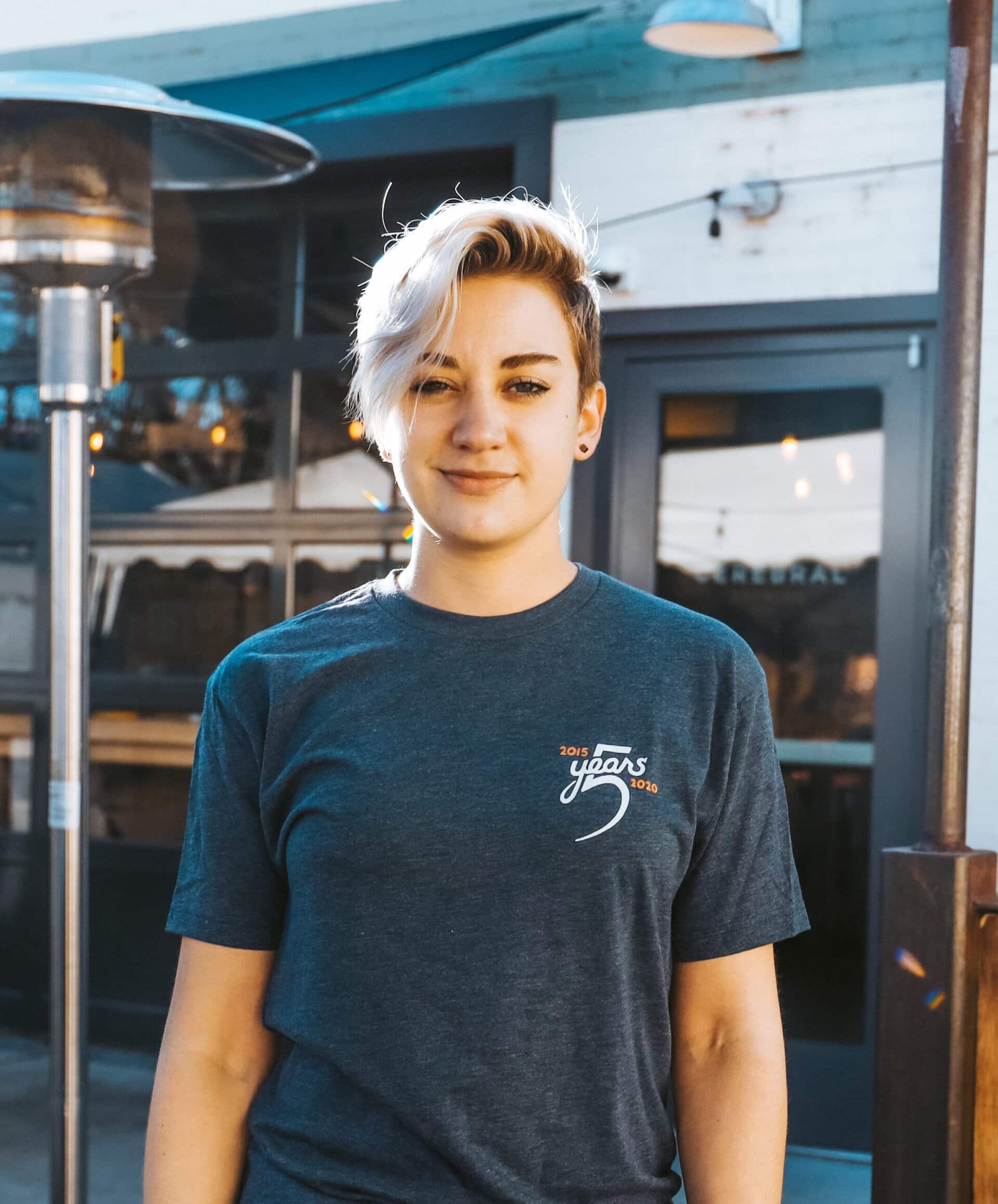
Table of Contents
1:21 Growing from one taproom to three
3:18 Why Colorado craft beer is bucking the trend
5:44 Balancing art, science and spreadsheets
7:55 Leaning into non-alcoholic beer
9:42 Making sustainability work for the business
11:27 Falling into craft beer in Japan
13:52 Solving problems behind the scenes
14:49 Building culture across multiple locations
19:11 Why breweries have to innovate
19:48 Choosing evolution over expansion
22:42 Show notes and credits
In this episode:
- Anne Abrahamson on LinkedIn
- Cerebral Brewing - Sustainability
- Westword - Denver brewery to open fourth taproom in Parker
- Hop Culture - All Hops, No Hate: How Cerebral Brewing Drives Inclusivity in Craft Beer
Related articles and information:
- CPR News - Colorado craft brewers buck national trend, selling more beer in 2025
- Brewers Association - A Year of Correction for Craft Beer, With Early Signals of Recovery
- Brewers Association - The State of Non-Alc
- Brewers Association - Five Actionable Strategies to Increase Taproom Sales
Transcript
Nick Greenhalgh
Running a brewery used to be a simple proposition. You make great beer, open the doors and let the taps do the talking. But Anne Abrahamson says that model is outdated.
Anne Abrahamson
“I think the old model of like beer in an industrial warehouse with uncomfortable seating doesn't really work anymore.”
Nick Greenhalgh
Anne is the director of operations at Cerebral Brewing, one of Denver's most recognizable breweries. Since joining Cerebral in 2019, she's helped the company grow from one crowded taproom off Colfax to three locations across the Denver area, with a fourth on the way.
On this episode of the Voices of Experience podcast, Anne shares what it takes to run a modern craft brewery, why hospitality has become central to the beer business, and why Cerebral is focused on evolution over expansion. Anne, welcome to the show.
Anne Abrahamson
Thanks so much for having me. Happy to be here.
Nick Greenhalgh
So for years, Cerebral was a single location located snugly off Colfax. Now you have three locations across the Denver area. How do you maintain quality and consistency as the brand grows?
Anne Abrahamson
Just kicking it off with the easy questions, huh? Yeah, I mean, this is kind of at the core of how we've thought about growing over the past few years. When I joined the company in 2019, we just had that one spot off of Colfax in the Congress Park neighborhood, but we were kind of bursting at the seams.
We couldn't brew enough beer. We were constantly storing things in an off-site cold storage warehouse, off-site warm storage, which made everything logistically very complicated. So we started to look at expanding and thinking about like what made the most sense as kind of a more long-term home.
And then we've had some other cool opportunities crop up along the way, like the Highlands location was not something that we really were seeking out, kind of fell in our laps. We actually had some people reach out on Instagram and say like, you guys should check out this location. And it turned out to be an awesome spot.
So it's been a big adjustment to go from just one location, everybody under one roof, to having everybody kind of bouncing around between different spots. Luckily for us, quality is something that's been really embedded in our identity since day one. Everybody always says they care about quality, and a lot of people do, but we've had an in-house lab since the day we opened.
So we do a lot of our own testing. We have a really rigorous QC program.
Nick Greenhalgh
Very cool. I want to bring some stats into this story as well. A recent CPR story notes that Colorado craft brewers produced about 75,000-ish more barrels in 2025 than they did in 2024, about a 10% increase, even as national craft production fell about 5%. So sort of bucking the trend.
From an operations standpoint, what do you think Colorado breweries, and you can speak specifically from Cerebral's point of view, are doing differently right now?
Anne Abrahamson
It's interesting because all the headlines point to the fact that craft beer is dying, nobody drinks anymore. That's kind of like the popular narrative. But we have seen overall declines in production, but in that number, 60% are down, about 40% are up.
I think the neat thing about Colorado is that it is kind of a beer scene, as opposed to a lot of other places that culture is already embedded in kind of the lifestyle here, for lack of a better word. And I think the breweries that are really succeeding right now are the breweries that are thinking about not only beer from a manufacturing and production standpoint, but also from a hospitality standpoint.
Our whole leadership team read Will Guidara's Unreasonable Hospitality a couple of years ago, and this is something we've been really focused on as a brewery.
I think the old model of beer in an industrial warehouse with uncomfortable seating doesn't really work anymore. So I think we have a lot of great breweries that are really focused on how to better reach customers with where they're at now versus 10 years ago.
Nick Greenhalgh
I have to imagine for Cerebral, some of that is events. You always have events going on. How did those come about? Is someone pitching them? Is the team getting together in a big brainstorming session?
Anne Abrahamson
It's honestly a little bit of both. So the fun thing about Cerebral, at least from my perspective, is that we're really good at like good ideas can come from anywhere, and that's beer, events, merch, you name it.
So some of our stuff has definitely been like us brainstorming what do we think makes sense right now for the market. Some of it is just internal. Like one of our hospitality leads is super into Magic: The Gathering, so he started an event around that, and it's been killing it. It's been awesome.
It's really well received. We also have a lot of like runners on staff, so we started working with a local run club, and that's been really pulling off. In terms of like bigger events around Anniversary and GABF, a lot of that is us thinking about like what do we want to showcase and how do we kind of tell the story of who we are as a brewery.
Nick Greenhalgh
The tap list at Cerebral is always full. So many varieties to choose from. What goes into building a production schedule that has a little bit for everyone?
Anne Abrahamson
Oh my god, it's a challenge. That's a big part of where I come in. I think the benefit of operations is having that bird's-eye view into like what does sales need, what does the taproom need, what's already on the schedule, how do we balance kind of some stable offerings that are on tap all the time versus new and interesting things that we want to do, because there's a customer for both.
Some people like coming in and having the same beer and knowing it's going to be on tap and it's consistent. Some people are always like, what's the new thing? What's new this week? What are you excited about?
So it's a lot of demand planning. It's a lot of spreadsheets. And then I think it's funny like we got to a point recently where, you know, we were one of the first breweries in Colorado who were making hazy IPAs and tastes have shifted, including our team.
So we got to a point like about a year ago where we were realizing like actually all of us are now drinking West Coast IPAs. So maybe we should be brewing more West Coast IPAs if that's what we want to drink. We're probably not the only ones who are feeling that.
So it's kind of like anything else. It's the mix of a little bit of art, a little bit of science. We try to leave room for like some fun experimental projects that might not sell that well out of the gate, but are something cool and fun in the taproom versus sort of the stable offerings that we want to have around.
Nick Greenhalgh
Yeah, you mentioned fun and exciting things. How do you know when you've found something that's going to be popular?
Anne Abrahamson
I'm so grounded in like the quantitative data and you also have to balance that with like customer sentiment. Like we try to talk to the taprooms and get feedback from them. And there are some times where they say like, this IPA is clearly super popular.
And I'm like, well, it's selling the same as the other IPA. But I think that stuff matters and is important to kind of layer in because sometimes that like perception has a little bit more weight than just the numbers on the screen.
Nick Greenhalgh
How much has the NA movement impacted your production?
Anne Abrahamson
Yeah, we have actually really started leaning into non-beer and non-alcohol offerings really within the last year or so. I think maybe like two years ago, we started doing our first hop water, which is literally just sparkling water with hops. And then we do a lot of different flavor variations on those.
And that was something that our staff really liked to drink and it's been pretty popular in the taproom. And then for Dry January this year, we really wanted to release our first NA beer, which the only reason we were able to do that is because there's been a lot of innovation in yeast. And so we don't have to buy a dealcoholizer that costs $120,000.
Nick Greenhalgh
Interesting.
Anne Abrahamson
So it's been cool to start to experiment in that category. And both of those have been really successful experiments for us.
Nick Greenhalgh
Yeah. Did that look completely different, that experimentation on the staff side?
Anne Abrahamson
Yeah. Brewing a non-alcohol beer is completely different than a regular beer. The process is different. The grain bill is different. It ferments in like two days. It's a very different process.
So we actually planned to do a couple of different experimental batches knowing that we might have to dump some, but then they actually all turned out really well. So we had like 200 cases of non-alcohol in January, but luckily it sold really fast and we got through it.
Nick Greenhalgh
If you hop on Cerebral's Instagram, you'll often be featured talking about sustainability measures the brewery has implemented, from an electric van, reusable plastic pallet wraps and a giant grain silo. How has sustainability become ingrained into Cerebral's mission?
Anne Abrahamson
It's honestly something that we're still working on. I think a lot of this started as kind of like some passion projects here or there. Really when you're a smaller brewery and you're more resource constrained, a lot of our sustainability efforts are focused on operational efficiency.
So why would we pay to throw away disposable plastic wrap when we could just get a reusable one? But in terms of embedding it into the culture, it's really just like, how do we — it's more about like lean manufacturing than like big capital investments or like how do we tighten up processes and make things a little bit more efficient?
This past April, we did our first internal sustainability cup where I organized a little competition amongst all the different departments and locations about how do we reduce resources and what does proper waste stream storage look like? And it's just something that we're talking about more and more and more often, to be honest.
Nick Greenhalgh
You hit on it there, but brewing beer is resource heavy, right? Water, hops, grains, et cetera. So I have to imagine there's a business benefit to being sustainable, right?
Anne Abrahamson
We're in a place where it has to make business sense for us because we just don't have the resources to invest in things for their intrinsic value. So everything has to contribute to the bottom line.
Nick Greenhalgh
I want to shift gears and talk about your journey a little bit. You've been at Cerebral now, you mentioned seven years. And your previous stops took you from Japan to San Francisco and then to Denver. But each of those stops has been in craft beer. Did you know pretty early that this was the track that you wanted to follow?
Anne Abrahamson
Actually, no, I never knew what I wanted to do and I'm a hopelessly practical person. So I went to UC Berkeley and majored in business because I figured that's pretty applicable to a lot of different things. Whatever I might want to do in life, I could probably lean on this.
And then I sort of fell into beer when I was 19 and living in Japan and just totally caught the bug. I fell in love with the whole community of it. The idea that beer has always been kind of this key tie to social connectivity and built around community.
From then on out, every project that I did in business school was focused around craft beer. I was constantly talking about craft beer. I was reading books and watching documentaries and just trying to figure out how I could work for a brewery for real.
Nick Greenhalgh
And here you are. Can you share a little bit more about your time in Japan and maybe what the craft beer scene is like there?
Anne Abrahamson
Yeah. So I went to high school there. And then when I came back the first summer after university, I was really looking for just a random part-time job. And I stumbled upon this startup and they were working on building an e-commerce platform for craft beer in Japan.
And more or less, the Japanese craft beer scene at that time was about 10 years behind where the American craft beer scene was. So it was a totally different environment. But a lot of the craft beer had either come from this old German brewing equipment or it was a lot of young American brewers who were brewing over there.
So I very unofficially got involved because I was technically not legal drinking age yet. And then, yeah, I came back to the States and was living in Berkeley at the time. And there was obviously a long history of craft beer there as well. So I really just got embedded into it.
Nick Greenhalgh
In your current role on the operations side, when operations run smoothly, nobody notices anything, right? Things work, nothing bad arises. But when things break and people are scrambling, then you start to notice. How do you stay grounded? What strategies do you employ to pull everything back together?
Anne Abrahamson
This sounds bad, but the last brewery I worked for was going through a really rapid expansion and was really behind in production and just could not make enough beer to keep up with demand. And it was my job to figure out how to package to fulfill demand. And it was kind of just an impossible task.
So I got really used to disappointing people and not letting it affect me. So I think that's kind of part of the reason why I love operations is it's just like complicated problem solving and figuring out how to make it work when nobody else can see the patterns to pull it all together.
So I think it's a combination of those two things. I like the challenge of logistical problem solving. And also over the years, I've stopped letting it stress me out as much.
Nick Greenhalgh
What was the biggest challenge going from one location to three locations?
Anne Abrahamson
Honestly, I think the biggest challenge was cultural. In terms of thinking about how one of our values is communication. And it's kind of a cop-out to just say, well, check Slack, we put everything there.
It can be challenging if people feel like they don't get enough face time or there were periods where we have a lot of needs and things that needed to be solved at one location or the other. And then people at the other location would start to feel left out. And so it was honestly a big challenge for us to try to figure out how do we build a cohesive culture when we're spread across locations?
Even taking into account the digital tools and resources that we have. So we started a culture committee that's really about how do we bring staff together and what does that look like? We started doing quarterly all-staffs that are required, that are in person.
We upped a lot of our meetings. We have a lot more meetings than we used to. And we're all just sitting at the same corner of the bar. But I really think having those layers has been helpful and just kind of making everybody feel like they're more on the same page.
Nick Greenhalgh
How often are you bouncing between locations?
Anne Abrahamson
In my role at this time, I'm doing a little bit less than I used to, which is great. But our director of hospitality and the owner, they're at all three pretty much every week. Luckily, our two spots on Colfax are about four miles from each other.
So it's pretty easy to bounce around. But it's really more about like planning the week’s schedule so you can kind of be at all the different spots at once.
Nick Greenhalgh
Is there something you're most proud of helping build at Cerebral in your seven years?
Anne Abrahamson
I gotta think on that one. I mean, honestly, I think a lot of the culture and people development things are really close to my heart. And we've done a lot in terms of like equitable hiring practices and interviewing and things like that.
I started a compensation benchmarking program about four years ago, because in Colorado, you legally have to list the salary on any position. So we just started benchmarking a bunch of key positions, and our goal is that we're always going to be at least at or above market rate so that we're being fair and equitable.
I think that kind of stuff is really important to me personally, and it's something I'm really proud of. And then, you know, beyond that, I think also in recent years, we've really started to think about how we invest in our managers.
So we have kind of this core group of people that aren't part of the leadership team, but are like key roles in the company. And we've started proactively doing more like trainings and meetings and things to help move people along in their career. And that's something I'm really passionate about.
Nick Greenhalgh
And the success is clear. Cerebral is routinely recognized in competitions for its beers, was named Axios’ best brewery in Denver in 2025. How do you stay hungry to innovate and become better when you're getting your flowers?
Anne Abrahamson
It's easy to become complacent. But I think in some ways, the good thing about where we're at as an industry is that it's forcing us to stay on our toes. You know, craft beer is not in hyper growth anymore.
So you can't just pursue volume and call it a day. And I think as we shift to thinking more and more about hospitality, there's always going to be things that we can improve and do better. And same with the beer, like Rare Trait is not the same beer it was 10 years ago. We're constantly looking at new techniques, new hop products, how can we be better?
It's really, honestly, like evolution is one of our values. It's part of like who we are, the idea that we're always iterating and trying to improve. And I think that's really embedded in the culture of the company.
Nick Greenhalgh
What would you say to the curmudgeon people that said, you know, that would say, I like Rare Trait how it used to be? How do you deal with that?
Anne Abrahamson
I mean, most of the time when we tell people that they're pretty surprised because it's changed so slowly that nobody's noticed. I mean, I think there's room for nostalgia. But I also think the reality is it's kind of like innovate or die.
Like, you know, change is business and the world. And if you're staying the same, like you're going to get left behind at some point. So I think it's more about how do we look to the future and think about what kind of brewery we want to be five, 10 years from now, versus who we used to be.
Nick Greenhalgh
Yeah, what are the trends of the future? What are you working towards?
Anne Abrahamson
I think we're going to continue to lean into non-alcs. Obviously, thinking about building a better hospitality model, food is becoming increasingly more of the conversation. So that was a big part of why we partnered with the folks at Outside Pizza for the new location.
That's now something we're thinking about for our existing spots as well. And, you know, the nice thing is that we're not looking to grow a ton more than we are today. So it's really more about like, how do we — another kind of phrase we use is like evolution over expansion. How do we continue to evolve without just getting bigger and bigger and bigger? So that's something we're working on.
Nick Greenhalgh
Cool. Shout out the pickle pizza from Outside Pizza. This might be like picking your favorite child, but what is your favorite beer at Cerebral right now?
Anne Abrahamson
Yeah, it really changes based on the time of day, the weather, my mood. But I would say our hoppy lagers are probably consistently my favorite. Pretty much anytime we do a West Coast Pilsner, I think we just knock it out of the park.
It's got that nice, crisp, clean body of a lager, but all the hoppiness that you want from an IPA, and it's usually a little bit lower ABV. So you can just have a couple more of those. Some of my favorite ones recently are Bright Spot, which was our lager that we did with all local ingredients. It's very delicious.
Nick Greenhalgh
When you're not drinking at work, which sounds like a weird thing to say, but where do you like to go in town? What are your favorite breweries in Denver or Colorado?
Anne Abrahamson
I mean, breweries specifically, I love Cohesion. They do traditional Czech lagers. They're fantastic.
Honestly, when I'm not drinking at work, I am really into cocktails. So speakeasies are kind of my thing. I love Retrograde in Uptown is probably one of my favorites. And then Traveling Mercies is a little kind of rum and oyster bar up in the third floor of the Stanley Marketplace. And that's kind of one of my usual spots as well.
Nick Greenhalgh
There you go. Put it on your list. Our last question is one we ask all of our guests. And that question is, as a voice of experience, what is one piece of advice you'd like to share with our listeners?
Anne Abrahamson
If I had to give one piece of advice, I think it would be just stay open to new opportunities. I don't think, you know, if you'd asked me when I was in school, if I thought I would be working in craft beer for over a decade, I don't think I could have predicted that, but it's been such a cool journey and it completely happened by chance.
So I think being open to different possibilities or things that you're not thinking about has served me really well personally. And I think it's a good thing to keep in mind.
Nick Greenhalgh
Awesome. Well, thanks, Anne. Thanks for coming on the show.
Anne Abrahamson
Thank you.
Nick Greenhalgh
For more on Anne and Cerebral, including details on the brewery's newly announced location in Parker, check out our show notes. You can find that and more at daniels.du.edu/voe-podcast.
The VOE podcast is an extension of Voices of Experience, the signature speaker series at the Daniels College of Business, sponsored by U.S. Bank. Iruka Owosu is our sound engineer. Joshua Metzl wrote our theme. I'm Nick Greenhalgh, and we'll talk again soon.