


Podcast: Play in new window
Subscribe: Apple Podcasts | Spotify | Amazon Music | iHeartRadio | RSS
Dioramas just don’t cut it anymore for museums that want to keep new generations of kids interested in their collections. Instead, George Sparks has steered the Denver Museum of Nature and Science in a direction that has kept the 125-year-old institution relevant, in an age when almost anything in the world can be seen on a computer screen.On this episode of the Voices of Experience podcast, Sparks explains how his industry has changed—and how he’s developed the mindset to make it happen.
Show Notes
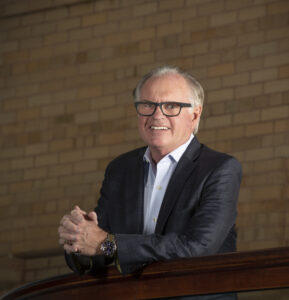
George Sparks
George Sparks is the CEO of the Denver Museum of Nature and Science. In November 2025, he announced that he would retire from his position at the end of 2026.
Table of Contents
1:14 Life-changing executive coaching
2:32 Creating the “10-year plan”
3:14 “It’s not just about making money”
Developing a strong moral compass
5:25 What people don’t realize about museums
7:07 Surviving COVID-19
9:56 Today’s challenges for museums
15:42 The career “identity crisis”
18:10 Developing an innovative workforce
19:41 What if you were an executive coach?
21:35 Rebuilding community
13:08 Show notes and credits
In this episode:
- George Sparks’s retirement announcement
- CSU Spur of the Moment Podcast: Loving Nature, Science and Each Other
- A Seat at the Table Podcast: The Importance of Good Science and Good Policy
- Tradeswork Podcast: The Many Wonders of the Museum of Nature and Science
- CBS Denver: COVID in Colorado: Denver Museum of Nature and Science Adjusts Cleaning Protocols to Stay Open at 25% Capacity
- Westword: Denver Museum of Nature and Science Explores Online Options in Age of COVID-19
- Museums Association: Almost 530 museums have closed since 2000, study finds
Related articles and information:
- 9News: DMNS Gets New Direction With New Chief
- The Institute for Science and Policy
- Facebook: Announcing the Retirement of George Sparks
- CPR: For Coloradans Returning to Museums During COVID, Unexpected Perks
- George Sparks on LinkedIn
Transcript
Lorne Fultonberg:
George Sparks was probably destined to be a coal miner. It’s what people did in his West Virginia hometown. But after his grandfather died in a mining accident, his dad changed course and George grew up dreaming about outer space instead. He joined the Air Force, studied and taught aeronautics, earned a master’s at MIT and, eventually, started a career in marketing, sales and management. Years later, he would bring his innovative spirit to Denver’s Museum of Nature and Science, which first opened its doors in December 1900.
On this episode of the Voices of Experience Podcast, George told me about the business of museums, evolving from the classic diorama to interactive, and even at-home programming. Plus, we talked about the COVID-19 pandemic, its lasting impact and the greatest challenges facing museums today. And he weighed in on the future of work: the mindset professionals need to succeed, regardless of age or stage.
George, thanks for being here.
George Sparks:
Yeah, thanks for hosting me.
Lorne Fultonberg:
You have a fascinating career journey from a coal mining town in West Virginia, to the US Air Force, to an executive role at Hewlett-Packard. But I actually want to jump ahead for starters here to when you were 45 years old and you had started working with an executive coach and looking even further into the future. Why did you hire a coach and what did you talk about that led you to your next position?
George Sparks:
So working for HP was such a joy because it was an incredible American company led by Bill Hewlett and Dave Packard. And as part of being an executive, they hired coaches for us. And even though I lived in Colorado, I went to California and my coach was there. Her name was Lili Pratt King. and we hit it off really quickly and had three or four sessions. And I was just trying to figure out what did I want to do with the rest of my life. So at that point, I decided that when I turned 55, which was 10 years later, I would retire from the business world and go find a nonprofit to run.
Lorne Fultonberg:
Why was that your goal in 10 years?
George Sparks:
I don’t know. Coming from West Virginia and then going to the Air Force Academy and serving in the military, I always had this itch for public service or trying to make the world a better place. It sounds kind of corny, but that’s what drove me. And I figured that I wanted to try something different. I’d been in the military, been in for-profit, and I wanted to try the nonprofit world.
Lorne Fultonberg:
How do you start to prepare for something that is 10 years away? So much can change.
George Sparks:
Yeah. I joined boards, nonprofit boards, to learn what’s the difference in a nonprofit and a for-profit. Turns out there’s not much. They’re more mission oriented. Like I tell them, the number at the bottom right-hand corner of the spreadsheet still has to be greater than zero in both organizations. They don’t have stock options, which is one of the things I do miss. But you still have a board, you have customers, donors are major customers. It’s probably a little more satisfying emotionally if you really believe in the mission of the organization. But I spent a lot of time on nonprofit boards and thinking about what did I want to do.
Lorne Fultonberg:
Public good is critically important to us here at Daniels. It’s part of our mission and our vision. Is a public good focus something that every business needs to have?
George Sparks:
I think they will be a better business if they realize that, that it’s not just about making money. It’s really about creating jobs and making this place, especially Colorado, a better place to live. And that’s what was so special about Hewlett-Packard is that was really the goal of the company, was to create value for society and create jobs for people. Dave Packard was from Pueblo. That’s why he put so many of his factories in Colorado. Very benevolent guy. To him, it was never about becoming a billionaire. I think that’s maybe changed a little bit today. I think the pursuit of wealth, purely for the pursuit of wealth, not in the first time in our history, if you go back and look at other times back in the ’20s, it was similar, but I do believe you’ll be a better business. You’ll have a happier staff. You’ll produce a better product if you take a broader perspective.
Lorne Fultonberg:
What’s the key to developing a strong moral compass that you’re able to stick to amid this pressure to profit?
George Sparks:
I think it really starts with the leadership all the way at the board, especially at the board, because the board chooses the CEOs. So if the board goes after somebody with the wrong values and lets that get out of hand, then that’s not good. Within the day-to-day operations, it’s the CEO and the senior management have to have values. And values aren’t things written on walls, values are what you actually do. And the things that you do set example for people and the little things that you do become part of the lore of the organization and people will pick up on that. And when they’re sitting around the hub or the cafeteria, they go, “Oh, did you notice that he did this? I guess that’s the way we’re supposed to act.” And if you do bad things, they’ll also sit around and talk about that and go, “I guess it’s okay to do it that way as well.” So you have to be careful.
Lorne Fultonberg:
Museums are certainly institutions that add value to our civilization here. And I feel like we kind of take them for granted. They have always been here in many cases, including the Denver Museum of Nature and Science, it’s such an institution in this community, but what is the maybe behind the scenes of running a museum that people don’t realize?
George Sparks:
Well, museums started as cabinets of curiosities. When people would go on vacation or on a safari or something, they’d pick stuff up and bring it home just like you do when you go to the beach. You’ll bring back a shell and put it on your shelf, and that was the start of museums. And the thing that I think that people don’t realize about a place like the Denver Museum of Nature and Science or an art museum is that in our case, only 2/10ths of 1% of what we have, what we’re in charge of, what our collections are, is on display.
Lorne Fultonberg:
Wow.
George Sparks:
The vast, vast majority is being cared for in a climate controlled environment, is being studied by scientists, is there to preserve the history of nature and science forever. And we take that very seriously. There are rules. It’s almost a spiritual calling that when you put something into the collection, it has to be there a thousand years from now. And you think about it differently when you have that sort of thing. That’s probably the thing that most people don’t know is that that scientific and collections aspect of it. They think of us as a great place to come for a temporary exhibit or take a look at bones, et cetera. And that’s really an important part, but the science and the collections part is really fundamentally why we’re there.
Lorne Fultonberg:
Let’s talk about COVID-19. When the pandemic shut down museums, you all focused on online offerings before opening at 25% capacity, I think, and gradually working your way back. Looking back on it almost six years later now, how do you think you did?
George Sparks:
Well, even though pandemics are part of history, we think, “Well, it’ll never happen to us.” So it’s not one of those things you think about or prepare for. I think we did pretty well. We were closed 100 days. We had to have a few people in the building, again, to watch over the collections and keep the building safe. Luckily, the government was able to support us with some money, pandemic money. We were able to keep almost all of our employees employed. We moved to virtual programming and the scientists went wild on virtual programming. It was very, very popular because people were stuck at home. We did open at 25% capacity. That was harder than we thought because I think people are fundamentally scarred from COVID and people were cranky within the building with each other, especially when wearing masks and things like that.
So I think the learning from that is just be prepared, have the right values in place, and you’re just going to have to manage it all the way to the ground every single day. You’re not prepared for it. You’re going to learn things every day. And I think we did a pretty good job. I’m proud of what we did, especially the fact that we were able to keep most of the people employed and ramp back up pretty quickly.
Lorne Fultonberg:
What lesson might you take from that, even if it’s not a pandemic that’s shutting something down?
George Sparks:
Yeah. I used to do scenario planning when I was at HP. So we would envision scenarios such as what if Microsoft Windows no longer is the dominant operating system? What if it’s Unix? How do we turn our business to where we can provide the same service for those? So you kind of think about wild and crazy things that might happen. What if China does not give us the rare earths that we need to do clean energy or to do the electronics? What if we really can’t produce enough electricity for all these data centers? What if there’s a breakthrough in AI that makes these computers 50% more effective and we don’t need all these data centers once we put them in?
There are so many things that you need to constantly be thinking about, what ifs, whether it’s business or nonprofits. In our case, what if customers decide they don’t want to go out and they sit at home and do streaming, which there’s more of that now than there was before COVID. So I think you should always be thinking about what are the downsides of this. That’s part of what a CEO does is to think about risk.
Lorne Fultonberg:
The pandemic’s behind us in many respects, but what are the challenges that are facing the museum and museums at large today?
George Sparks:
I think two things have changed. One is the world of work has changed. We will never have everybody go into the office five days a week again. No matter how much we declare it or wish it, I think the world of hybrid work is here to stay. And I’m okay with that. I think we have people there three or four days a week and people have learned to work from home, and frankly, I think that’s good. I think people are thinking a little more about work-life balance, so that’s good. I think the way people view their external activities has changed, and that’s really been driven by a little reticence about being around crowds. Streaming is such an amazing thing. You can sit at home on your couch right now and see literally anything, or on your screen, on your computer. So museums all over the world and theaters and any sort of entertainment or engagement has declined.
I heard yesterday about another example, alcohol use is declining. And we just need to be aware of that and respond because we’re there to serve those people. And if they don’t want to come to us, we’ll go to them in other ways.
Lorne Fultonberg:
What are the ways that you see the museum industry shifting and changing to keep generations and generations coming back? I saw some research from the University of London that showed that 530 museums have closed since the year 2000.
George Sparks:
Yeah. Yeah. Again, when you think of a museum, it probably depends on, is it an art museum, is it a small museum, a big museum? I think the very largest, like the Smithsonian or the Natural History Museum in London, those will always be there. Those are iconic institutions. If you’re a small museum, one of the things, a lot of people come to me and go, “We want to start a museum. Can you help us?” And I go, “It’s pretty easy to start a museum. It’s really hard to keep on going for 10 years or 50 years, or in our case, 125 years.” So really think about this thing for the long term.
I think museums have to be responsive to the audiences they serve. Our museum has 12 buildings built over 125 years. The core of that were the dioramas. And the dioramas were fabulous at the time, they are fabulous today, but today’s youth will not come to the museum four times a year to see the dioramas. They have to have something new and different. And so we added the theater, we’ve added another hall so we can have multiple changing exhibits. We have on floor actors, we have school groups that come in and spend the night. We recently opened a program between Thanksgiving and Christmas called Magical Winter Nights where we converted the dioramas into a winter wonderland with a skating rink and a dance floor. And people are just looking for something unique right now. They want something that’s different in their lives. And I think that’s probably because of the pandemic. They realize that life might be short and they want to experience something new and different.
Lorne Fultonberg:
You can correct me if I’m wrong on this, but I think I read that when you started at the museum in 2004, there had been some struggle with getting people in the door. I think visitation had been down. What were the challenges like then compared to the challenges now, if there is any comparison?
George Sparks:
That’s a really good question. I think it’s easy for a museum to kind of get stuck. And I think the Denver Museum of Nature and Science has been good at reinventing itself over time. But just as I’d gotten there, they’d opened up Space Odyssey, they’d built the west side of the building that looks out over the park, but then they had no plan on what to do next. So when I got there, the first strategic plan was basically we went around to each department and said, “Okay, what do you need?” And we stapled it all together and that was a strategic plan.
Lorne Fultonberg:
Yeah.
George Sparks:
The one that followed about five years later was much more thoughtful and it was oriented around listening to the visitors, because for the first 100 years, the way we would build an exhibit was we would decide, “Okay, we’re going to build an exhibit around X.” And we would go design it, build it, we’d go to the public and go, “Hey, we got this great exhibit called X. Come on in, enjoy yourselves. Don’t touch anything. We’re smart, you’re not.” And we’d build whatever the heck we wanted. And now we spend a lot of time before we build an exhibit or do a program figuring out what does the audience want. And it sounds so fundamental, but it really has changed the way we do things. And we do a lot of evaluation later and then modification. So it’s just the same thing as in business. You can either build what meets the customer’s needs or you can build what you want to build. And sometimes you’re right and sometimes you’re not.
That’s probably the biggest change. The other one is that we expected people to come to us, and in many cases, some of the underserved communities said, “Why don’t you come to our place?” So we now have exhibits in malls, we go to fairs and festivals, we go to schools. We spend a lot of time outside the building. And we’ll do about 1.3, 1.4 million people inside the building and about another 700,000 to a million outside the building every year now.
Lorne Fultonberg:
Wow.
George Sparks:
So that’s another fundamental change.
Lorne Fultonberg:
A couple of years ago, you were on an episode of the Tradeswork podcast, which we’re also going to link in our show notes, and you said that we’re in an identity crisis about careers at a time when people are questioning college, cost of living’s higher, starting to go more and more down this AI rabbit hole. How has your diverse background in aeronautics, Hewlett-Packard, shaped your view of careers and work?
George Sparks:
Yeah. It’s interesting to think that I said that how long, it was a couple years ago, and that’s probably 10X today.
Lorne Fultonberg:
Yeah.
George Sparks:
People feel that. I’ve got two children that are about to graduate from college, and I know they and their fellow students are very anxious about the future, especially with AI coming along, taking some of the entry level jobs that traditional people start in. The thing that it’s hard to believe when you’re in college is that what you’re studying at college, maybe your first job, but it’s probably not going to be the majority of your career, unless you’re going to be a doctor or a lawyer or something like that. And that those jobs are going to change, I think.
I started working when I was 12. I’ve had 15 different jobs in my lifetime. 10 of those no longer exist anywhere in the world. They’re gone. I couldn’t go back and do that if I wanted to. They simply don’t exist. And so you have to be prepared to be flexible, to pivot. You may have to take one step back sometime in your career to go two steps forward. And to me, that’s terribly exciting. I would hate to think that whatever I studied in college was what I was going to be doing 50 years later when I retired, but it’s hard to get that idea across when you’re just starting out with your career.
Lorne Fultonberg:
Yeah.
George Sparks:
And it is a real thing. There is a lot of pressure on students just coming into the workforce. I think the cost of college, college loans, I’ve been really fortunate that I’ve never paid a nickel for any of my education. The citizens of the United States have paid for every bit of my education. And every morning when I walk in the museum, I thank them and I say, “I’m going to give you today more than you gave me. I’m going to give back more than you provided me.” And I really do believe that. That’s not the world we live in today though.
Lorne Fultonberg:
How do you develop an innovative mindset to help you navigate that workforce?
George Sparks:
I think part of it is innate. I got my curiosity from my father, I got my gratitude from my mother, and those two things together have served me well because I always want to learn new things. To do the same thing over and over again would drive me absolutely crazy. So if I had any job that was repetitive, I would get bored so quickly. So to me, that sort of screams we have to change, which works out well because the world is constantly changing. So a little bit of it is a mindset.
If you want to do something over and over again, I think you’re going to struggle in life, in relationships, in your career, but I don’t know how you teach that. Part of what we do in the museum is to allow people to see that there’s a great big world out there. It’s constantly changing and you too can be a part of this if you want to. If you get an education or you apply yourself, you don’t even have to get a college degree. You can just be a lifelong learner. Some of the most intelligent people I’ve ever met didn’t have college degrees, but they loved to learn and they kept learning throughout their whole life. My dad didn’t have a college degree. He was learning to play the guitar when he was 95 years old. So he’s been a great example to me of constantly evolving and changing.
Lorne Fultonberg:
Yeah. Yeah. An executive coach helped you get here. If you were an executive coach, what would you be preaching, whether it’s to somebody in school now, in their 30s, in their 40s?
George Sparks:
Well, I think a role of an executive coach is to listen and to ask questions and to ferret out what does this person want to do with their life? That’s the most fundamental thing. And I do a lot of mentoring. And the first thing I ask is, “So tell me about yourself, what you’ve done. Who are your heroes? Who are your mentors?” I ask people to write their retirement press release at the end of their lifetime, not their obituary, but their retirement press release. So they go away and think about, where could I go or where should I go? What kind of things do they enjoy doing it? I don’t really try to preach. I try to listen and ask questions more. But the thing that I preach is it’s your life, you’re in charge, you have agency, go try things. If you don’t try things, you’re just like on a pinball machine, you’re just being affected by everybody else. And that, by golly, you can do it. It involves risk, but it is your life and you do have more control than you realize.
Lorne Fultonberg:
Did you write your retirement press release for the museum?
George Sparks:
Yeah. Yeah. Well, marketing and me. At this point in my life, it kind of writes itself.
Lorne Fultonberg:
Yeah. The last thing that we ask all of our guests here is as a voice of experience on our podcast, what is one last thing that you would like to leave our listeners with?
George Sparks:
I would encourage people to, especially in today’s world, to think about how we rebuild community, in the sense that we’re all in this together. The thing that really worries me today in the United States is we’ve become so fractious. We put each other into these buckets. And in reality, we’re all human beings.
And one of the exercises when I give a speech, I ask the audience to put their feet on the floor, flat on the floor. So put your feet flat on the floor right now, kind of shuffle them back and forth. That’s the feeling you get when you get out of bed in the morning, when your feet hit the floor. So every day from now on, when your feet hit the floor, I would like the first thing that comes to your mind is to think that, “Today I’m going to be kind to everybody I meet.” Whether they deserve it or think they should be, I should be kind to them because no matter what, we’re each unique miracles of God and we’re all dealing with something. And when you’re kind to somebody else, your day gets better and their day gets better. So if we were to do that, just be kind to each other, I think we’d be a better society and the world would be a better place.
Lorne Fultonberg:
George Sparks is the retiring CEO of the Denver Museum of Nature and Science. George, it was a pleasure. Thank you.
George Sparks:
Yeah. Thank you so much for having me. I really appreciate it.
Lorne Fultonberg:
It turns out George is a big podcast fan, and not just of ours. Over the years, he’s made a number of appearances on other shows. Like when he joined the Colorado Business Roundtable’s podcast to talk about his passion for public policy. Or when he talked to the Rocky Mountain Mechanical Contractors Association about the importance of skilled trades. Or his take on relationships and curiosity, which he discussed with CSU Spur.
We have links to all of those episodes on our show notes at daniels.du.edu/voe-podcast. Oh, and the retirement press release he wrote is on there too.
The VOE podcast is an extension of Voices of Experience, the signature speaker series at the Daniels College of Business. Patrick Orr and Harrison Tarr are our sound engineers. Joshua Muetzel wrote our theme. I’m Lorne Fultonberg. We’ll see you next time.