

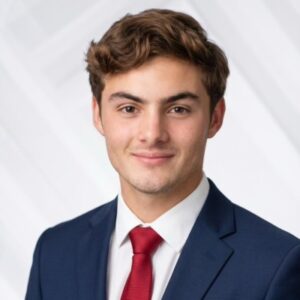
Max Sanchez
Growing up in Miami gave Max Sanchez a connection to the South Florida market, where he now works as a broker and investments sales associate for Marcus & Millichap.
His Spanish fluency allows him to connect with business owners who might otherwise face a language barrier.
Another thing that sets him apart: franchise expertise he acquired as a Daniels College of Business student. Before Kevin Betts, senior executive director at the Liniger Center on Franchising, visited his entrepreneurship class, Sanchez says his awareness of franchising was limited to general familiarity with the concept of chain restaurants like McDonald’s.
Betts had come to speak about a new program coming to DU: a franchising specialization, the result of a collaboration between the Liniger Center and the Entrepreneurship@DU program. Sanchez was hooked, fascinated by the business model and the potential it offered for growth and scalability. And that fascination has paid off.
“During job interviews, my franchising specialization has consistently caught employers’ attention,” said Sanchez, who graduated from Daniels in 2026 with a major in psychology and a minor in entrepreneurship.
“When someone looks at my resume, one of the first questions I usually get is, ‘What’s this?’” Sanchez said. “That question has given me an opportunity to talk about my education, what I learned and how I’ve applied that knowledge.”
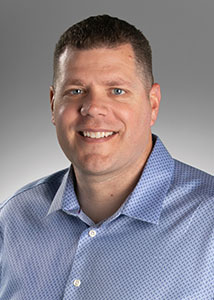
Kevin Betts
Franchise in the marketplace
Franchising represents almost 3% of U.S. GDP and supports nearly 9 million jobs, according to IFA’s 2026 Franchise Economic Outlook report, Betts notes. Industries range from childcare, senior care, home services, car care, fitness and wellness, pet services, beauty services, and more. It’s one of the major ways entrepreneurs scale businesses and a path to becoming a business owner in local communities.
“Franchising spans hundreds of industries, thousands of brands, and hundreds of thousands of business units throughout the country and the world,” Betts said. “You can’t drive down the street without interacting with a franchise business in some way.”
The franchise specialization allowed Sanchez to build on his entrepreneurship minor without requiring a significant number of extra credits. He learned the fundamentals of franchising, including how the business model works, how franchise systems scale and how to evaluate a franchise using its Franchise Disclosure Document (FDD).
Through it all, he used the resources Daniels placed around him.
“College gives you access to professors, alumni, career resources, organizations and people who have already done what you’re trying to do,” Sanchez reflected. “Opportunities don’t mean much if you’re not prepared to take advantage of them. At some point, you have to stop preparing and put yourself out there. Don’t wait until graduation to start using them.”
Franchise expertise in multi-family commercial real estate
Marcus & Millichap, Sanchez’s current employer, is the largest multi-family team in South Florida in terms of transaction volume. It is also a major participant in the 1031 exchange market, facilitating billions of dollars in transactions across state lines annually, Sanchez said. When investors sell a property and complete a 1031 exchange, they may consider moving into the retail sector or investing in a business associated with a franchise.
He’s had numerous conversations with clients exploring these opportunities, helping them understand and navigate FDDs, evaluate options, compare franchise opportunities and ask better questions before making an investment.
“I’ve already drawn on that knowledge in conversations with commercial real estate clients, particularly when they’re considering investments outside their usual area of expertise,” he said. “My coursework at DU gave me the confidence to bring up the FDD and walk the client through the relevant information. It helped us have a more informed conversation about the opportunity and the differences between the available investment structures.”
Why franchising skills transfer across industries
One of the Liniger program’s strengths is practicality, Betts said. Students learn the fundamentals, and meet with founders, executives, operators, suppliers and other franchise professionals to learn what it takes to build, operate and scale a business using the franchise model.
“Entrepreneurship and franchising are natural partners,” Betts said. “We want students to learn the franchise business model that is so widely used in the real world, but is hardly covered at most colleges and universities. That’s a real differentiator for DU.”
Franchising also teaches rich transferable skills, like navigating the complexities of leadership and relationship-building.
“The relationship between a franchisor and franchisee is unique because much of the time you have to lead through influence rather than authority,” Betts said. “Learning how to build relationships, lead with influence to gain buy-in and support, and build systems and standards needed to grow a brand at scale is valuable in franchising and transferrable beyond it.”
And in fact, Sanchez says he sees that payoff clearly while building strong professional relationships with clients.
“Commercial real estate is ultimately about helping people understand assets, evaluate opportunities and make informed decisions about where to put their capital,” Sanchez said.
“I’ve realized that the value of the specialization isn’t necessarily that it prepares someone for one particular career. It’s that it provides a deeper understanding of a business model that touches real estate, investment, operations and entrepreneurship. In brokerage, having that additional perspective can help you ask better questions, identify considerations that might otherwise be overlooked and build credibility with clients.”