

International travel is part of E@DU’s focus on experiential, immersive business learning opportunities
 Pop quiz: What’s the second-largest startup business community outside of the United States’ Silicon Valley? Bet you didn’t say “Israel.” But the University of Denver’s Entrepreneurship@DU faculty know. With their finger on the pulse of innovation and ingenuity across time, space and continents, professors Joshua Ross and John Sebesta also know that entrepreneurship can’t be taught in a classroom alone.
So, during the December 2022 interterm, the duo led a small group of students to explore the thriving startup culture in the Middle Eastern nation nestled between Syria, Egypt, Lebanon and Jordan. There, E@DU director Ross said the group explored “what makes the country a leading entrepreneurial hub from historical and cultural perspectives.”
Marketing and entrepreneurship student Anna Staples was excited to join E@DU’s second planned trip to Israel in 2023, but the war in Gaza put the brakes on that trip. Instead, she spent a semester abroad in Bilbao, Spain—one of the University of Denver’s 100+ coordinated international learning programs.
Whether for a year, a quarter or a quick jaunt, the benefits of first-hand, global learning can’t be understated. Add DU faculty advisors with international subject matter expertise, and the student experience can be extra impactful (even in just one action-packed week between quarters).
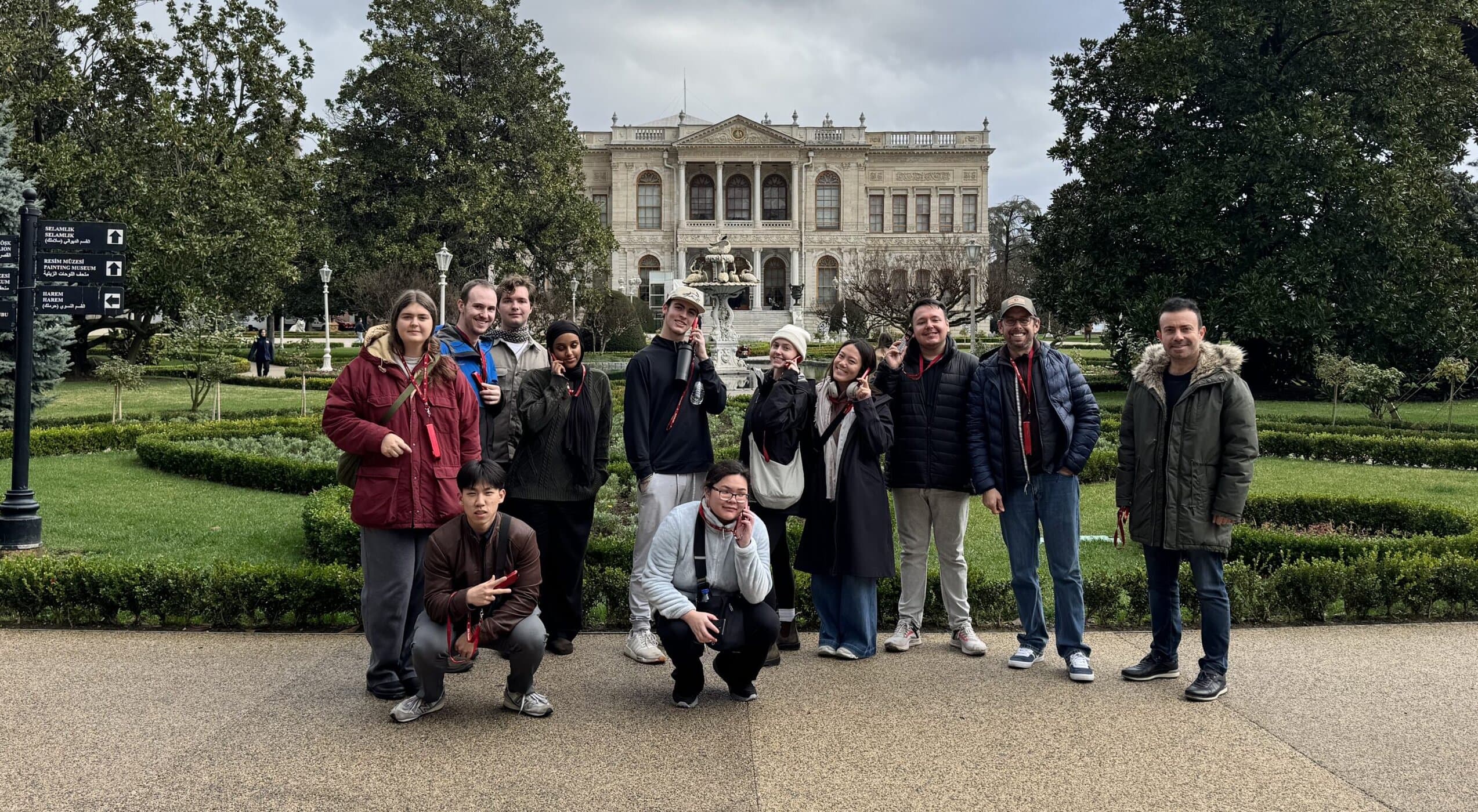
Student safety and risk mitigation come first, however, and with Israel deemed unsafe amid the ongoing conflict, Entrepreneurship@DU Director Ross did what entrepreneurs do best; he pivoted. In 2024, Ross and Murat Kucukvar—Daniels assistant professor of Business Ethics and Legal Studies (BELS)—took students to Turkey for a different perspective. In Istanbul, they met with representatives from universities, governments, accelerators and businesses to gain an understanding of the emerging startup community at the intersection of Europe and Asia. Kucukvar, a Turkish native, was able to provide local connections.
Ross says this trip broadened the horizons for how E@DU could fit in (and stand out) among DU’s plethora of global learning offerings.
“Daniels and DU offer all sorts of trips with different perspectives,” he said. “At E@DU, we are curating global programs centered around understanding how entrepreneurship is framed and formed in different countries based on government structures, culture and economic activity.”
This December, Ross and Entrepreneur in Residence Bill Powell are taking 13 students further north to explore the burgeoning startup communities in Stokholm, Sweden, and Helsinki, Finland.
New business ventures usually start with a problem or question. Ross poses one for E@DU’s new travel destination, too: Why do so many Swedish/Finnish startups (like Spotify, Klarna and Ericsson) move their headquarters to the U.S.? Are their local entrepreneurship communities unable to support startup growth?
Staples isn’t missing out on the chance to uncover those answers and more. She’s making up for the canceled Israel trip by taking the E@DU winter interterm class in the Nordic region—one part of Europe the Slovakian-American and frequent traveler has never been.
Curious about the region’s renowned work-life balance, Staples says she wonders “how these companies can be so successful and still maintain that really good balance, which I feel like we (in the U.S.) struggle with a lot.”
“I’m very interested in how their business structures vary, what their work schedules are like, if it’s more collaborative, just being able to compare and contrast Swedish/Finnish-based companies with American businesses, she added”
Meanwhile, Sebesta will be in Denver preparing for his winter quarter Global Societal Impact and Social Entrepreneurship class, which culminates in a trip to Guatemala with BELS department chair Bruce Klaw during the winter 2026 interterm.
The cross-listed Entrepreneurship/BELS class is open to students from any area of study across the University, and will focus on the power, responsibility and ethics involved with positive business impacts in developing societies. A pre-embarkment project with microfinance organization Friendship Bridge will introduce students to the concept that profit doesn’t need to be about greed but rather can serve as “a mechanism that allows businesses to scale their impact,” Sebesta said.
In Guatemala, students will gain deeper context and firsthand experience with the Central American country’s early-stage business ecosystem that’s reinventing itself 30 years after a civil war tore it apart.
“This trip will expose students to a less-developed nation where they lack structural support,” said Sebesta, who previously lived and worked in Guatemala. “They don’t have credit markets or investment capital. Where traditional systems are not providing societal impact, businesses want to step in and fill that void.”
From Antarctica to the UK, DU’s study abroad programs range from broad general studies to specific, hyperlocal inquiry in destinations that span all levels of socioeconomic development. For students curious about startup business culture in emerging and established markets, E@DU’s travel courses might just be for you—regardless of where in the world they go next.
Stay tuned for recaps on both trips in E@DU’s January and April newsletters, and follow @DUEntrepreneur on Facebook, Instagram and LinkedIn for more updates.