

They say it’s not what you know that sets you apart in the business world, it’s who you know.
The Daniels College of Business Executive MBA (EMBA) is built on those relationships, connections that begin from the first day of class.
“Our in-person cohort model is built on a simple idea: Students learn as much from each other as they do from the faculty who facilitate the classroom,” said Jenny Dobmeier, executive director of the EMBA program. “When a health care executive, an engineer and a nonprofit leader work through the same business case, each one sees the problem differently, and the discussion becomes richer because of it. That range of experience moves the learning from simply applying academic frameworks to practical learning.”
The EMBA is a fully in-person program, specifically tailored to the strengths and needs of professionals with 10-20+ years of experience. Its curriculum focuses on the complex issues that are most critical to senior leaders. Students apply what they learn to the challenges they face on a daily basis. Once the program ends, they enter a diverse, powerful collective of more than 5,000 EMBA alumni.
“Our students leave with a network of senior leaders across multiple industries, people they have debated with, built projects alongside and learned to trust,” Dobmeier said. “That network continues to open doors long after the degree is complete, and our Executive MBA alumni community grows stronger with every cohort.”
Meet some of the students in this fall’s cohort, whose professional backgrounds comprise the construction, security, machinery, education, health care, investing, jewelry and defense industries.
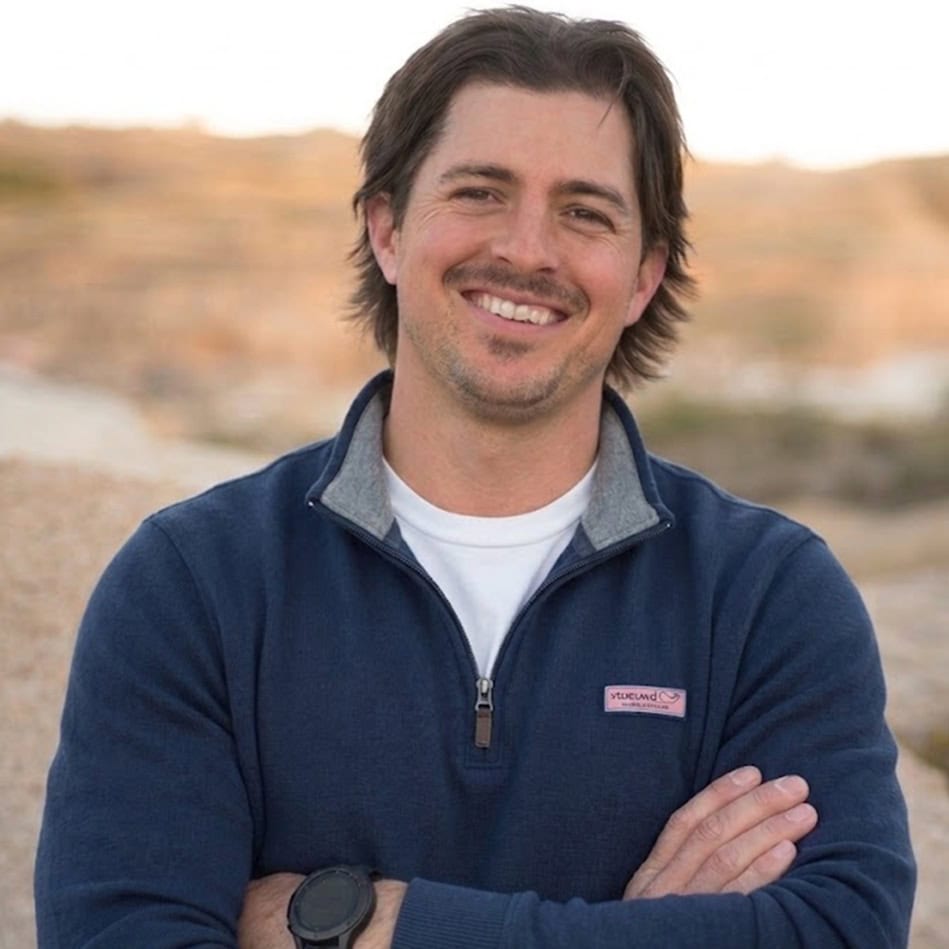
Alex Conley
Facility Development Lead
Singularity Defense
Marine Veteran

Kestly Miller
Customer Experience Manager
Wagner Equipment
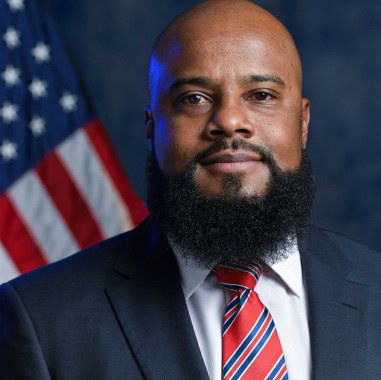
Ike Hubbard
Senior Strategist
Parsons Corporation
Army Veteran

Matt Philabaum
Senior Precon and Estimating Manager
JE Dunn Construction
Why were you interested in joining the EMBA program?

Conley: I looked at Executive MBA programs at several universities. I was drawn to the in-person format and the relationships that come from going through the program alongside a cohort. Daniels also has an excellent reputation, and its support for veterans through the GI Bill and Yellow Ribbon Program is top tier. Experience has taught me a great deal, but I want stronger frameworks in finance, strategy and organizational leadership to support the next stage of my career.

Miller: My professional journey has been anything but conventional. I have a degree in fine arts, with a concentration in painting, and today I lead customer experience strategy for a Caterpillar equipment dealer. Through those experiences, I’ve discovered a genuine passion for people, leadership and the impact that meaningful relationships can have on business success.
I was drawn to the EMBA because I wanted to challenge myself in a new way. I’ve learned so much through experience, but I recognize there’s an enormous opportunity to strengthen my understanding of the broader business landscape. I want to become a more well-rounded, confident leader who can pair my natural strengths in people and relationships with a deeper understanding of finance, strategy and organizational leadership.
Hubbard: My career has never followed a particularly straight line. Often, pursuing one objective exposed opportunities that weren’t visible from the starting point. Following those opportunities created a broader perspective and a professional range that has proven valuable across very different environments.
The opportunity now is to be more intentional about where that accumulated experience leads. The EMBA provides exposure beyond the defense and federal environments and an opportunity to strengthen the commercial, financial, strategic and enterprise dimensions of that experience. It also creates access to people whose careers and industries are very different from my own. A lot of my career has been about adapting to what the mission or opportunity required. Daniels represents an opportunity to put greater intent behind what comes next.

Philabaum: An EMBA has been a goal of mine for my professional career. I chose the Daniels College of Business based on its long-standing stature in the academic community and industry. The sailing trip in San Diego was absolutely amazing, and I’m looking forward to the Global Business immersion class.
What perspective do you feel you bring to a business classroom?
Hubbard: Working across very different disciplines and organizational cultures can change how you look at problems. Technical, operational, financial and human considerations rarely exist independently, and sometimes the most valuable contribution is simply helping connect perspectives that might otherwise remain separate. Rather than needing to be the deepest specialist on every subject, I enjoy understanding how the expertise already in the room fits together. When people begin seeing how their talent connects to the larger objective, the conversation changes. Ideas start building on one another, and the collective result can become much greater than the sum of the individuals contributions.
What has been particularly valuable at Daniels is that the exchange works both ways. There’s genuine curiosity about what other people bring to the table. Different professional backgrounds and personality types aren’t treated as obstacles to the conversation; they become resources for it. That makes the classroom as much an opportunity to challenge my own assumptions as it is to contribute a perspective.
Conley: I’d call myself a bit of a wildcard, mostly in how I approach risk. I learned to evaluate a situation carefully but quickly—and then commit fully, often down a path others might not take. In class, that means I’ll openly name the risk, question assumptions and push the group toward the high-reward option when the analysis supports it. Having worked my way up from sweeping floors to project leadership, estimating and running my own company, I also bring a practical view of how decisions play out in the field, on budgets, and with crews and clients.
Miller: I think one of the most valuable perspectives I bring is a combination of creative thinking and a deeply people-centered approach to business. My background in art taught me to observe, question assumptions, approach challenges from different angles and recognize that there is rarely just one way to solve a problem. Working in customer experience within the heavy equipment industry has also given me a unique perspective on the relationship between people and business performance.
In the classroom, I hope to contribute that customer-back, human-centered lens while also challenging myself to think beyond it. Our cohort includes people with such different professional backgrounds, and I think that’s where the real magic happens. We each see the same challenge through a different lens, and together we can arrive at ideas and solutions we might never have considered independently.
Philabaum: With over 20 years in the industry, the perspective I bring to the classroom is one from a competitive for-profit business, with both large and small construction project experience. I also have a view as a builder who self-performs specific trades of work in the construction industry.
My perspective enriches class discussions by bringing a view of industry that classmates may not have. From running large and complicated projects, assessing and managing areas of risk, and developing logistics plans for technical projects, this allows me to connect academic theory of business matters with real world examples related to construction.
How do you think the EMBA will complement your professional background?
Miller: My career has taught me that relationships, trust and the ability to connect with people are foundational to effective leadership. The EMBA is helping me build on that foundation by developing a stronger understanding of the financial, strategic and operational decisions that drive an organization forward.
In my current role, I work across many different areas of the business, often connecting people, processes and customer feedback to identify opportunities for improvement. Having a more comprehensive understanding of how those areas intersect will allow me to approach challenges more strategically and better articulate the business value of customer experience.
I’m also excited about the personal growth that comes with being surrounded by people who think differently than I do. I don’t want to lose the creativity, empathy or relationship-driven approach that has shaped my career. I want to learn how to leverage those strengths in new ways, challenge my own assumptions, and continue growing into a leader who can make a meaningful impact on both people and business results.
Philabaum: I think the EMBA program will complement my professional background by providing me with the knowledge and tools to advance my career to the next level. As a manager in a large company, this would enable me to grow into a leadership role within the company. The EMBA program will also give me insight to the accounting, marketing and law side of the business, which I currently have limited visibility into.
Conley: My background is very hands on. I know how projects get built, priced and delivered. The EMBA fills in the other half: corporate finance, strategy and leading at the organizational level. My long-term goal is to move beyond managing construction projects into executive leadership, real estate investment and development, and this program gives me the tools and the network to make that move.
Hubbard: Exposure to different industries and business models creates new ways of thinking about familiar questions—strategy, finance, value creation, organizational culture, growth and performance. Those perspectives can then be applied to an existing foundation of leading people, managing complex programs and resources, working with technical organizations, and supporting senior decision-makers.
Longer term, the kind of leadership that interests me isn’t confined to a particular function. It involves accountability for organizational performance while also creating an environment of systems and culture that enable people at different stages of their careers to develop, contribute and find new opportunities.
One of the more encouraging things about Daniels has been seeing elements of that kind of culture already in practice. Across cohorts, career stages and personality types, people are remarkably willing to share experience and deliberately bring others into the conversation. That makes the EMBA more than an academic experience. It provides an opportunity to take a career built largely through adaptability and become much more deliberate about how those experiences come together—and where they lead next.