

The director of graduate admissions is proud to represent a program that prioritizes a hands-on education
 Each Friday this summer, the Daniels Newsroom is telling the stories of the behind-the-scenes staff who empower students, faculty and the College at large. Read past stories on our blog.
The mountains slowly disappeared out the back window of a 1977 Chevy van, shrinking smaller and smaller in the distance. Ten-year-old Luke Parrott kept his neck craned backward and his eyes on the horizon, staring at the breathtaking peaks until they vanished from view.
As much as he loved his hometown of Cincinnati, Ohio, biannual family trips to Estes Park, Colorado, drew a sharp contrast.
“I was pretty captivated, even in grade school,” recalled Parrott, now the director of graduate admissions at the University of Denver’s Daniels College of Business. “I would draw pictures of mountains. So I knew at a young age that I would find my way to Colorado.”
Years later, Parrott is a proud and deeply rooted Colorado resident, taking as much hiking, biking, climbing and jogging as he can. It’s an illustration of his sense of adventure, the value he places in seeing and touching the world around him—as well as his belief in setting goals and reaching them.
In his role in the Office of Graduate Admissions, he’s focused on giving that same experience to high-quality candidates from all over the world.
“You’re meeting students who have aspirations that we’re able to help them achieve,” Parrott said. “We’re trying to put ourselves (at Daniels) in the right place at the right time so that can happen.”
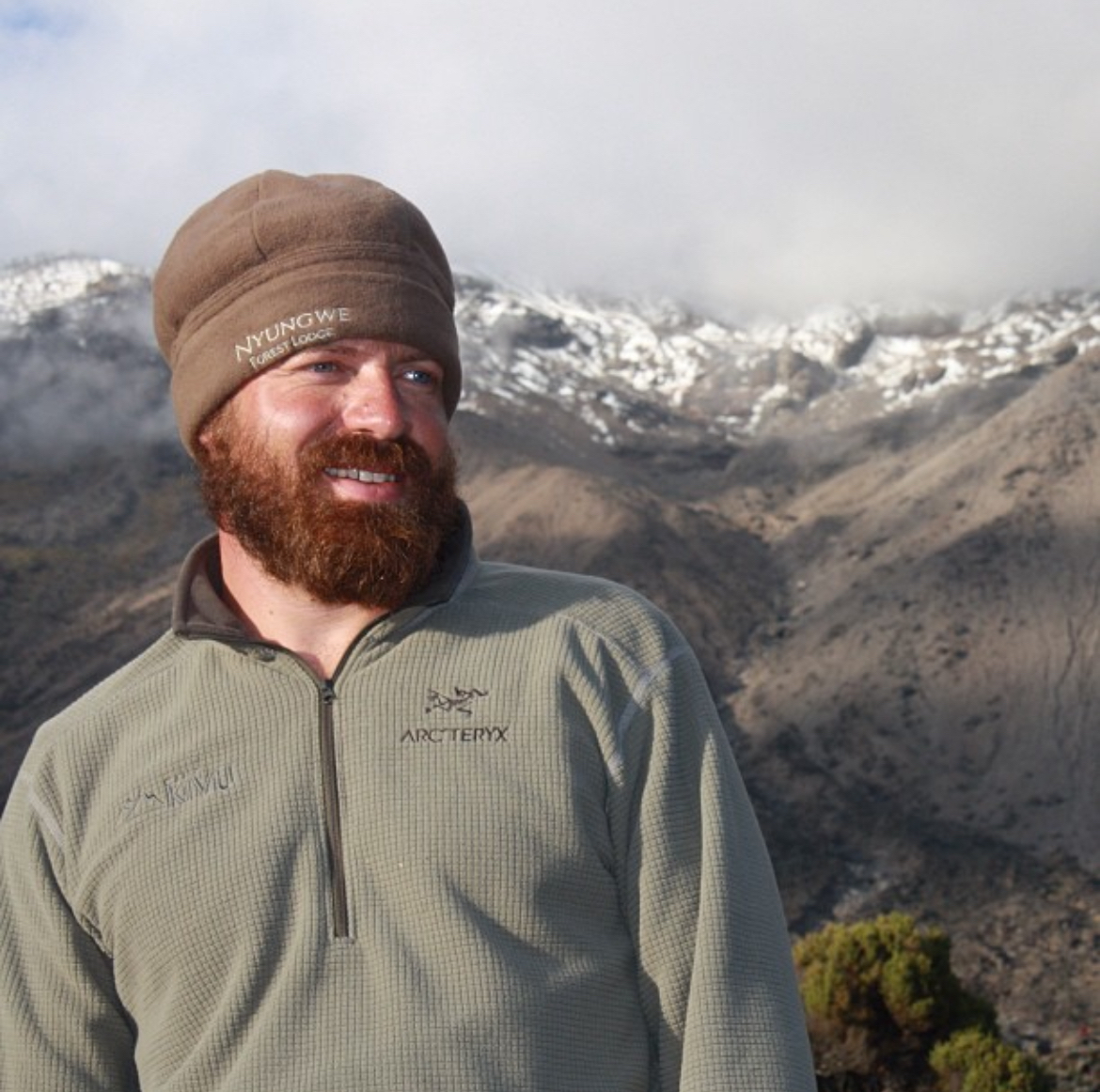
Parrott climbed Mt. Kilimanjaro in 2011, part of the gap year program he ran.
Learning through living
Parrott’s first brush with experiential learning came while he earned his sports management degree at Miami University in Ohio. He spent his summers interning in Durango, Colorado, at camps focused on camping and climbing.
Once he graduated, he worked his way up the camp’s org chart to a role as director of programs. He connected deeply with a mission to shape the lives of high schoolers during their influential years.
“How can we have a formative experience that shapes us and pushes us outside of where we are at today?” Parrott said, describing one of his guiding principles. “The learnings you get when you’re rafting down a river or rock climbing or riding your bike or just being out in the elements are valuable components to me.”
As Parrott grew and matured, he took an interest in guiding older students. He co-founded KIVU Gap Year, a company that created programming that put 17-21-year-olds in home stays in a wide range of domestic and international destinations.
The idea, he said, was a response to a lack of college readiness he observed in the students he worked with. They didn’t know what they wanted to do after high school, but they had a high degree of motivation to learn about the world, and enough of a sense of adventure to hop on a plane to a foreign location.
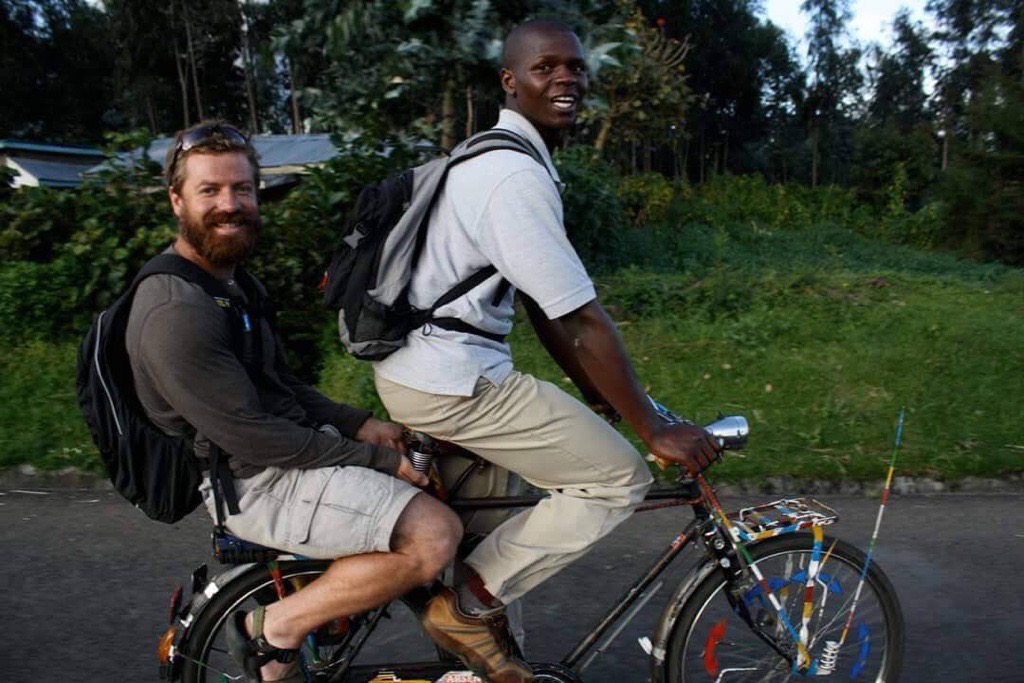
Parrott spent time in Rwanda, living the transformational experience he was selling to students before they went to college.
“A lot of students were asking questions about equity and justice in life,” Parrott said, “and a lot of those questions are better answered when you find those people, live with them and let them tell their story.”
To sell his programming, Parrott realized he had to experience it firsthand. So, he spent months living in a small Rwandan town, working at a local school and integrating himself into a wildly unfamiliar culture. He flew to the Philippines, where he taught lessons in self-sufficiency to people who made less than 50 cents per day. Jordan and Israel also became close to his heart during this time.
Parrott has never stopped to count the number of countries he has visited, though he’s sure it’s dozens. Stamps in his passport always meant less than the depth of life he experienced in each place.
“When people ask, ‘What’s the best place you’ve traveled to?’ I usually say, ‘What do you want to talk about? The food? The geography?’ Because it’s different for every single spot,” Parrott said. “I think in each place I’ve been challenged to think in new ways, to be more open and accepting, and learn that I don’t know as much as I think I know. And every spot is near and dear to me in a different way.”

Parrott and his wife, Mandy, in Jordan’s Wadi Rum Desert.
Rechanneling his interests
Eventually, Parrott realized his ambitions were shifting. A life of global travel wouldn’t be as easy as he started a family. He had never worked in higher education before, but an opening at the University of Denver felt like a good match.
“I saw the way [Daniels students] were getting out of the classroom to experience life and learn,” he said. “That that was a value proposition here.”
His role involves a lot of strategic thinking as he positions the College to meet its goals in a competitive, high-pressure environment. Parrott is also constantly responding to the ever-changing needs of applicants, whether it’s financial aid, collecting transcripts or simply offering unbiased, empathetic guidance.
“At the end of the day, you’re not just selling a trinket to get out the door, you’re helping students find their next step,” said Parrott, who picked up an MBA from Daniels along the way. “That keeps conversations interesting every day. Every day is different. You don’t feel like you’re selling. You feel like you’re coaching people.”
He hasn’t surrendered his passion for formative international education either. He simultaneously serves as an adjunct instructor for a global citizenship course that prepares students for their study abroad experiences.
Parrott will always remember the date of his first day on the job. It’s the day his oldest daughter was born. (Orientation had to be pushed back a couple of weeks.) In the nearly seven years since, he and his wife have added two more little girls to their family of five humans and a silver lab named Buster.
He loves taking them to Estes Park, just like he did when he was a kid.
And he loves that they never lose sight of the mountains on the drive home.