


Gracy Weil
Gracy Weil, a graduate student at the Burns School of Real Estate and Construction Management, is seizing every opportunity to learn, grow and build meaningful connections along the way. With intention, curiosity and a genuine passion for the field, Gracy is shaping a career that reflects both her drive and her values. We’re thrilled to have her as a Burns student and excited she let us peek into her journey.
Gracy (left) is pictured here with classmate Stefanie Genauer on a recent site visit.
Can you share your journey to grad school?
After studying psychology in undergrad, I worked as a social worker for the Colorado Coalition for the Homeless and then at a rehab. Being in social work makes you realize how many systems are broken, so I applied for a couple master’s and PhD programs in social and industrial/organizational psychology. Coincidentally, I stumbled into a position with a land developer at the same time and put school on the back-burner while I tried my hand with master plan communities.
I was really lucky to have a boss that believed in me. She encouraged me to join boards for local associations and attend any and all meetings, classes, seminars and summits to learn. I really fell in love with the industry and saw a way of addressing some of those broken systems from a different vantage point. That being said, I wanted to learn more, faster and felt that I could only do that by going back to school.
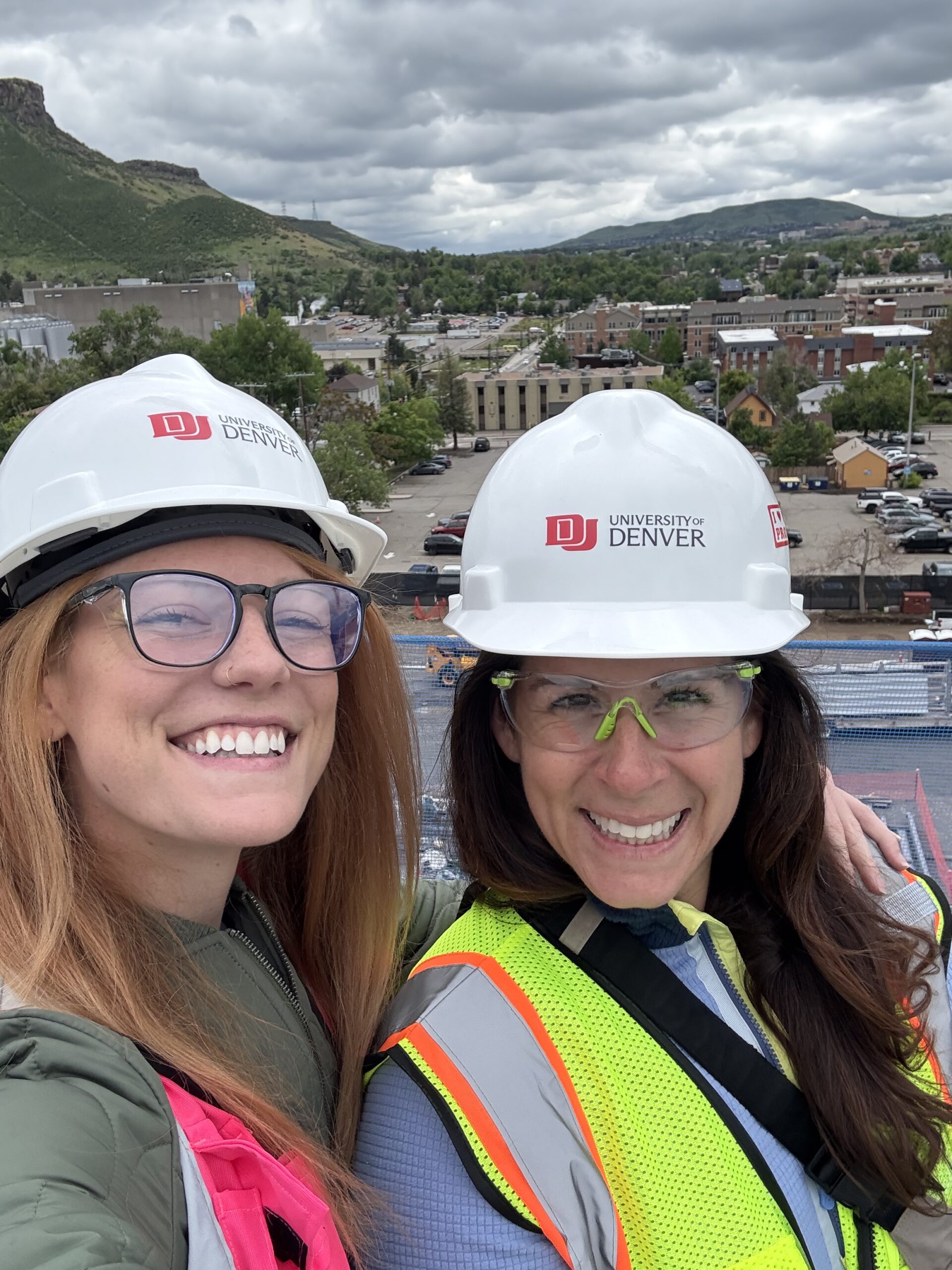
Gracy Weil, left, with classmate Stefanie Genauer on a recent site visit.
What brought you Daniels and the Burns School?
Whenever I make big decisions, I consult just about every person I’ve ever known. I reached out to a couple people that I really admired in the industry, as well as my HBA mentor (a DU alum), about my options. I’d made tables and spreadsheets with all the information comparing and contrasting schools and programs in the state. The consensus was that course work was more applicable, the faculty was more engaged in the industry, and relationship-building and outside opportunities were more emphasized at DU. Burns was the unanimous winner, even from one CU Boulder’s former adjunct professors.
What would people be surprised to know about you?
I think I’ve presented “fake it ’til you make it” to such a high degree that most people don’t realize that I have pretty bad social anxiety. I try to constantly engage in opportunities that make me feel good about myself while promoting my “brand” as someone that deserves to be here and have a seat at the table. Joining the Young Leaders Council also helped with my confidence so that I always had 1-2 friends at each event. It took a really, really long time but I am truly proud of myself these days.
What has been your greatest challenge and lessons learned?
The quarter that I joined the program, my grandmother passed away, my emotional support animal passed. I went through a rough breakup with my live-in partner, and I quit my job. There is no handbook on navigating that many life changes as once. I chose to lean into the program. I spent a LOT of time in the REBE office. I made some of my closest relationships and learned the hardest lessons in that office.
When my business took off and everything seemed to be going too fast and I wanted to scream into the void, “I don’t know what I’m doing!!!,” those same people picked me up again.
Lessons from the REBE office:
- Generally, people want to help you so it doesn’t hurt to ask. The worst they can say is “no.”
- You can’t be everything to everybody. Time and energy are finite resources; boundaries with others and with yourself are important.
- Clear communication and expectation management will help you in every aspect of life.
- Dr. [Eric] Holt knows literally everybody. Leverage that.
- Gratitude, gratitude, gratitude.
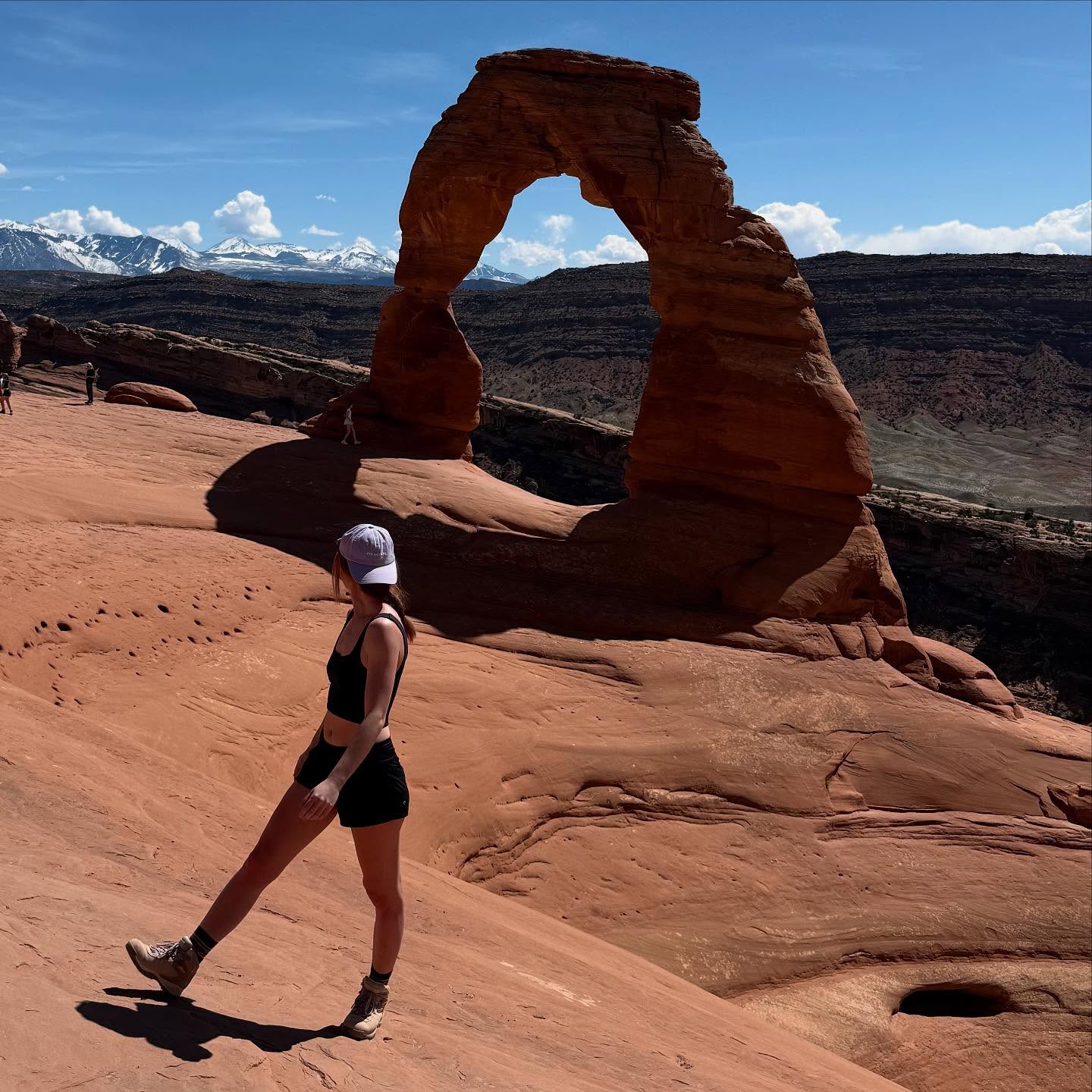
Gracy Weil at Arches National Park
How does a REBE degree fit into your life’s plans?
When I applied, I said that I wasn’t getting this degree to have some more letters behind my name. I wanted to learn everything I could about this industry so that I could be an asset wherever I go next.
In my consulting, I’m able to pull ideas from every class I’ve taken. Two of my clients are in the modular space, so I use lessons from my Planning, Entitlements, and Public Finance; Building Systems; and Sustainable Development classes on a daily basis. (Sorry, Professor Englestad, I’m still going to make other people do the finance.) I plan to continue to scale my real estate consulting business until graduation and then decide if I’d like to return to the structure and safety of working corporate again.
What do you like to do in your free time?
I love to stay active, so I spend the majority of my time doing some kind of functional fitness: pilates, yoga, paddleboarding, volleyball, snowboarding. Traveling, especially solo traveling, has been really big this year. I spent spring break car camping around Utah’s state parks and I treated myself to a three-week backpacking trip in New Zealand after winning some money at a case competition. I also read every single night.
If I had any advice for others entering the program, it would be:
- Join associations. Better yet, get board positions. Real estate is 80% about who you know.
- USE LINKEDIN. BE CRINGEY. ALMOST EVERY OPPORTUNITY I’VE EVER HAD HAS BEEN FROM LINKEDIN.
- Everyone feels imposter syndrome; don’t let that prevent you from trying. Some of my greatest opportunities were things that I felt that I was under-qualified for.