


Joel Onditi
Three years ago, Joel Onditi (MS 2010) shared his ambition to help build Kenya’s “Silicon Savannah”—a global technology hub, similar to Silicon Valley in the U.S. or India, where the country competes on the world stage.
Today, he says, the vision is steadily becoming a reality. “We are on the way,” said Onditi, who graduated with a degree in business information and analytics. “Kenya and Africa are the next frontier.”
Progress is visible in a number of ways, from hundreds of thousands of young Kenyans gaining digital and AI skills, to technology projects with governments and international organizations. And Onditi and his company, Pathways Technologies, are at the center of it all.
Since expanding its operations into Kenya in 2023, Pathways has grown its work across 27 African countries, helping governments, organizations, and businesses use data, analytics, and AI to achieve digital transformation and solve practical problems. Its partners and clients include Microsoft, the World Bank, the United Nations Development Programme, and other public- and private-sector organizations.
Onditi’s ambitions have only grown in the past few years, too.
“It’s around Africa becoming a producer of technology, not just a consumer,” he said.
Building an AI-ready Workforce
One of the most significant developments in Onditi’s work over the past few years has been its growing focus on digital and AI education. Working with the Kenyan government and organizations like Microsoft, Pathways is preparing learners and workers for an increasingly AI-driven economy.
Pathways’ Microsoft Elevate AI National Skilling Programme, for example, focuses on educators and students across Kenya. In its first phase, the program reported reaching 100,000 people and training more than 68,000, with more than 61,000 earning certifications.
The company has also continued building partnerships with the Kenyan government, development partners and universities. A recent collaboration with the Open University of Kenya, for example, is designed to provide industry-driven training in areas including AI, data, cloud computing and analytics.
For Onditi, the emphasis on skills is about more than preparing people for jobs, it’s positioning African countries to participate in—and help shape—the next wave of technological development.
“Africa is looking at a young population, very well-educated,” he said, explaining that his company works with the Kenyan government to help young professionals gain experience in data, AI and digital transformation. “There are lots of university-educated young people, and we have really doubled down on the skilling side of things to really get us to the next level.”
He sees AI as another opportunity for African countries to leapfrog traditional stages of technological development.
Kenya has already demonstrated that ability through mobile money, he said, pointing to the country’s rapid adoption of technology such as M-Pesa, a phone-based transfer service.
Now, he sees a similar opportunity with artificial intelligence. “For us it’s a no-brainer,” he said. “Everybody has to adapt.”
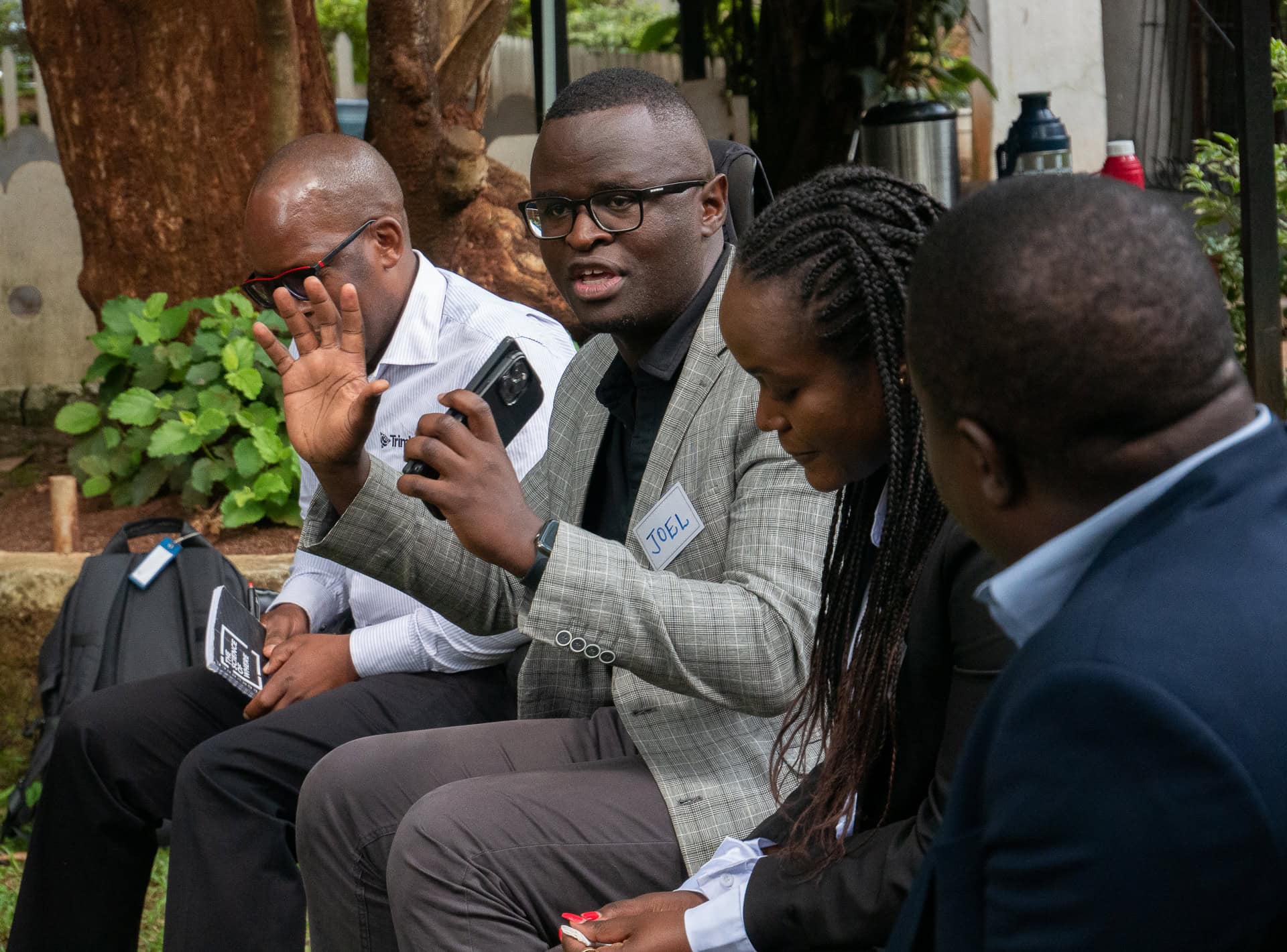
Joel Onditi shares his perspective during a panel discussion on Kenya’s economy, presented to Daniels Executive MBA students in Nairobi.
Bringing Global Perspectives to Daniels Students
Onditi’s work extends beyond his company. He was recently appointed to the board of Kenya’s National Commission for Science, Technology and Innovation, where he hopes to help shape the country’s approach to science, technology and AI.
He sees these responsibilities as connected: bringing international perspectives to Kenya while helping global organizations recognize the expertise and opportunities already present there.
That same philosophy informs his involvement with the Daniels College of Business.
A former adjunct professor at Daniels and a member of the College’s Business Information and Analytics Advisory Board, Onditi is passionate about engaging with students when he’s in Denver.
He also helps Daniels MBA students explore business environments beyond their own. In May 2025, he welcomed a cohort of Executive MBA students to Kenya, hosting them at his home and connecting them with local business and technology leaders.
“Our students saw a lot of amazing things during their time in Rwanda and Kenya, but the dinner at Joel’s home stood out,” said Amanda Cahal, a teaching assistant professor of global leadership, who co-led the global immersion last year. “He opened their eyes to what’s happening in a really vibrant place like Kenya in a humble, authentic way. He really wants to get to know the students; he wants to share his story and hear theirs.
“It reminds the students that leadership comes from authenticity. And in order to be really authentic, you have to open yourself up a bit,” Cahal added. “He shows students that you can be an incredibly successful CEO and you can lead from the heart.”
What has impressed Cahal most is Onditi’s willingness to support Daniels and its students at every level—whether it’s opening up his home, hosting students for company visits or stopping by classes to listen in on project presentations.
When a current MBA student from Kenya was looking for direction and perspective, Cahal sent Onditi a message. She had a feeling he would respond.
“He’s willing to jump in where his experience can be leveraged—and it doesn’t always need to be a big thing,” Cahal said. “From larger strategic initiatives to a conversation with a student he hasn’t met, he continually makes the effort, with open-hearted enthusiasm and infectious curiosity.”
For Onditi, encounters like the dinner in Kenya serve two purposes: broadening students’ understanding of Africa and putting them in a position to recognize opportunities early.
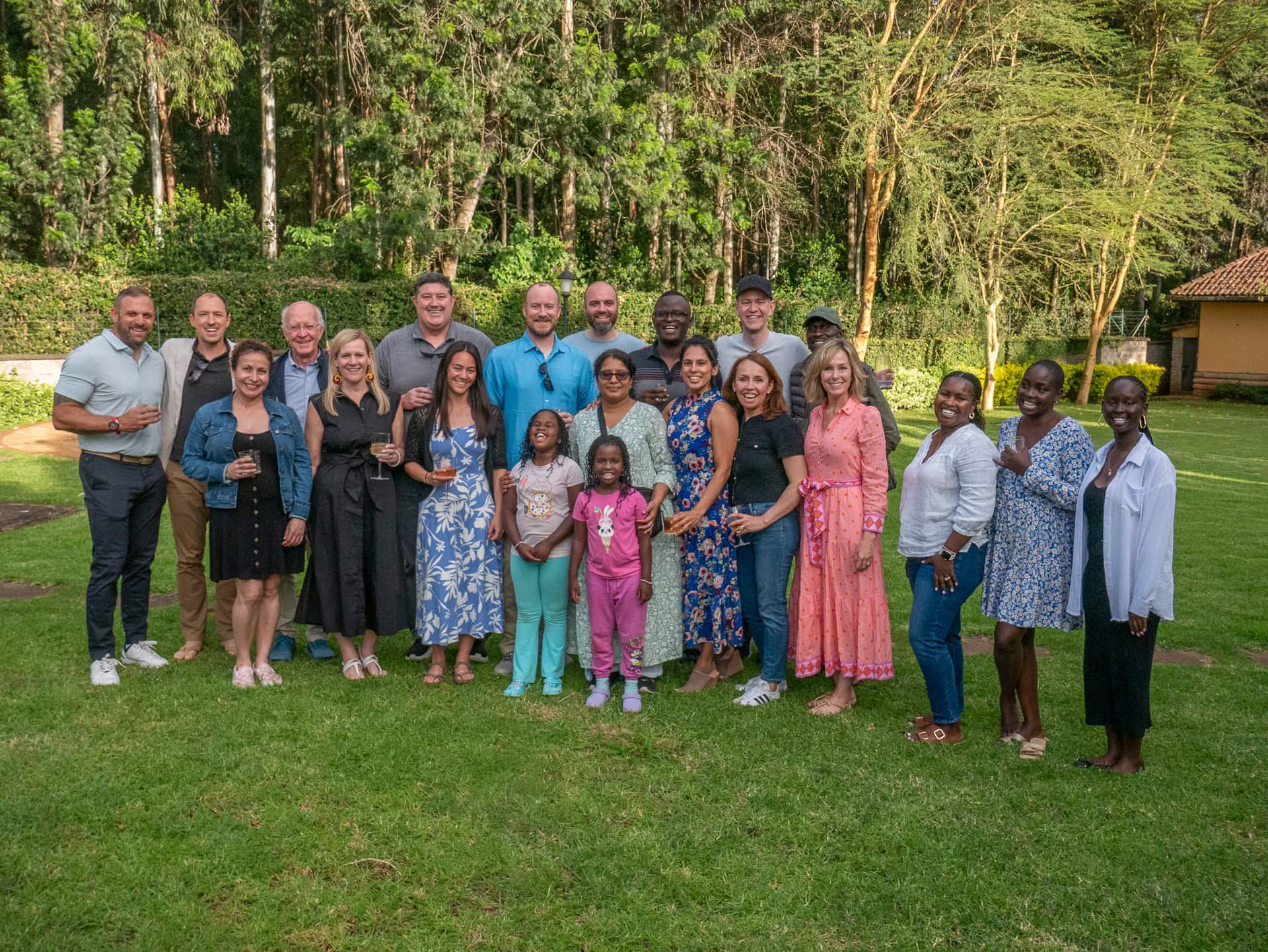
When Daniels Executive MBA students visited Kenya, Onditi hosted them for dinner at his home in Nairobi.
“These are the next executives, the next CEOs of organizations,” he said.
He wants future leaders to see Africa not simply as an emerging market, but as a place where innovation is already happening and where meaningful business opportunities are taking shape.
That vision extends beyond Daniels. Onditi is working to develop what he calls technology corridors—partnerships connecting companies, universities and governments across countries. The goal is to join organizations seeking technological expertise with the institutions and talent equipped to provide it.
He is also exploring relationships with businesses in other international markets, including Ireland, to help create new opportunities for collaboration with Africa.
For him, these connections are essential to the Silicon Savannah’s next phase. Kenya has made progress in developing digital skills and expanding the use of technology across government and business. The challenge now is to connect that growing capacity with global demand.
His goal, he said, is to connect “the Silicon Savannah to the world.”